
Introduction
If you’re aiming to conquer the JLPT N1, you already know it’s no walk in the park. This exam tests advanced Japanese proficiency, requiring mastery of complex kanji, nuanced vocabulary, and high-level grammar. Traditional study methods might not cut it—this is where Anki, the ultimate flashcard system, comes in.
Anki’s spaced repetition algorithm ensures you retain information efficiently, making it a game-changer for JLPT N1 prep. In this guide, we’ll explore:
- Why Anki is perfect for JLPT N1
- Best pre-made Anki decks for N1
- How to create your own custom flashcards
- Advanced study techniques to maximize retention
- Common mistakes to avoid
By the end, you’ll have a proven system to crush the JLPT N1 with confidence.
Why Anki is the Best Tool for JLPT N1
1. Spaced Repetition: Remember More, Forget Less
The JLPT N1 demands long-term retention of thousands of words, kanji, and grammar points. Anki’s spaced repetition system (SRS) shows you flashcards at optimal intervals, ensuring you review material just before you forget it.
Research shows that spaced repetition improves memory retention by up to 80% compared to cramming (source). For N1, this means faster learning with less effort.
2. Customizable Decks for Targeted Learning
Unlike generic textbooks, Anki lets you:
- Focus on weak areas (e.g., business Japanese or rare kanji)
- Add audio clips for listening practice
- Include example sentences for context
3. Study Anywhere, Anytime
With Anki’s mobile app, you can squeeze in reviews during commutes, breaks, or even while waiting in line. Consistency is key for JLPT N1 success, and Anki makes daily practice effortless.
Best Pre-Made Anki Decks for JLPT N1
If you don’t want to build decks from scratch, these pre-made Anki decks are lifesavers:
1. “JLPT N1 Vocabulary” by NihongoShark
- Covers 2,000+ advanced words
- Includes pitch accent markings
- Example sentences for context
- Download here
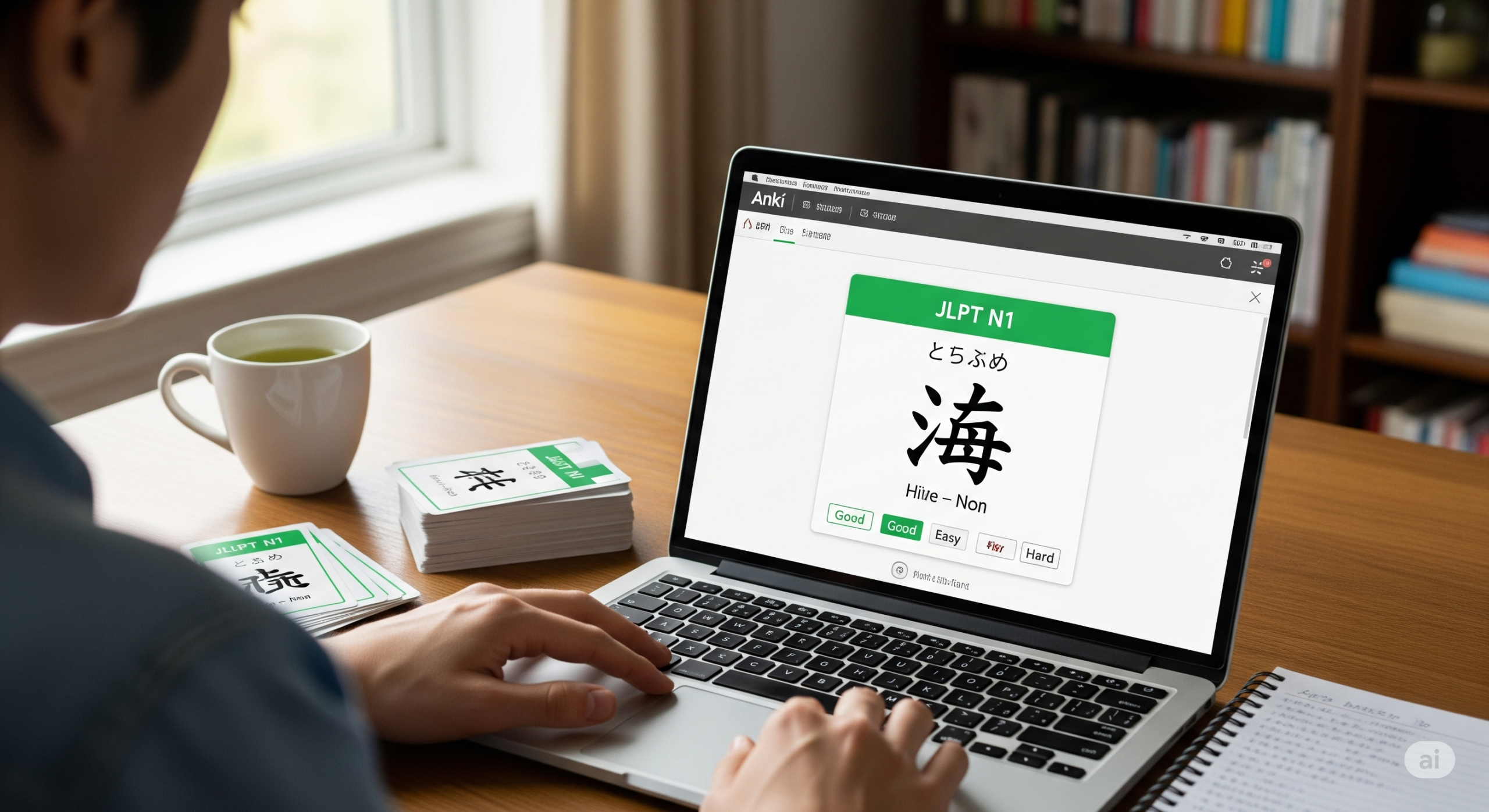
2. “Kanji Odyssey N1” by MattVSJapan
- 1,200+ N1 kanji with mnemonics
- Stroke order diagrams
- Common compound words
- Check it out
3. “JLPT N1 Grammar” by JTest4You
- 200+ grammar structures with explanations
- Real-life usage examples
- Available here
💡 Pro Tip: Combine these decks with immersion techniques (reading NHK News, watching Japanese dramas) for deeper understanding.
How to Create Your Own JLPT N1 Anki Deck
While pre-made decks are great, custom decks tailored to your weaknesses are even better. Here’s how to make them:
Step 1: Gather Resources
- Shin Kanzen Master N1 (best for structured learning)
- Sou Matome N1 (great for daily drills)
- Past JLPT papers (identify frequent patterns)
Step 2: Format Your Cards for Maximum Retention
- Front: Target word/grammar point (e.g., ~に即して)
- Back: Definition + example sentence (e.g., “規則に即して行動する”)
- Extra: Audio (use Forvo) or a personal note
Step 3: Optimize Your Settings
- New cards/day: 15-20 (adjust based on workload)
- Review intervals: Default Anki settings work well
- Enable “Hard,” “Good,” “Easy” for better SRS tuning
🎯 Key Insight: If you struggle with a card, edit it immediately—add more context or a mnemonic.
Advanced Anki Strategies for JLPT N1 Mastery
1. Sentence Mining: Learn in Context
Instead of memorizing isolated words, extract sentences from:
- Novels (e.g., Haruki Murakami’s works)
- News articles (NHK Easy News)
- Podcasts (Nihongo Con Teppei)
This builds natural intuition for N1-level Japanese.
2. Use Anki’s Tags for Organization
Tag cards by:
- Difficulty (e.g., #hard, #medium)
- Category (e.g., #business_japanese, #idioms)
- Source (e.g., #ShinKanzen, #SouMatome)
This helps you track progress and focus on weak spots.
3. Combine Anki with Active Recall & Output
- Speak aloud when reviewing cards
- Write sentences using new vocab
- Teach someone else (explaining reinforces memory)
Common Mistakes to Avoid with Anki JLPT N1
❌ Adding too many cards at once → Burnout risk
✅ Fix: Stick to 15-20 new cards daily.
❌ Skipping reviews → Spaced repetition breaks
✅ Fix: Use Anki’s mobile app for consistency.
❌ Only memorizing, not applying → Passive knowledge
✅ Fix: Practice with mock tests (JLPT Official Site).
Final Thoughts: Is Anki Enough for JLPT N1?
Anki is powerful, but not magic. For best results:
✔ Balance Anki with immersion (reading, listening, speaking)
✔ Take full-length practice tests (timed conditions)
✔ Review mistakes (add them to Anki!)
If you stick with it, Anki + active practice = JLPT N1 success.