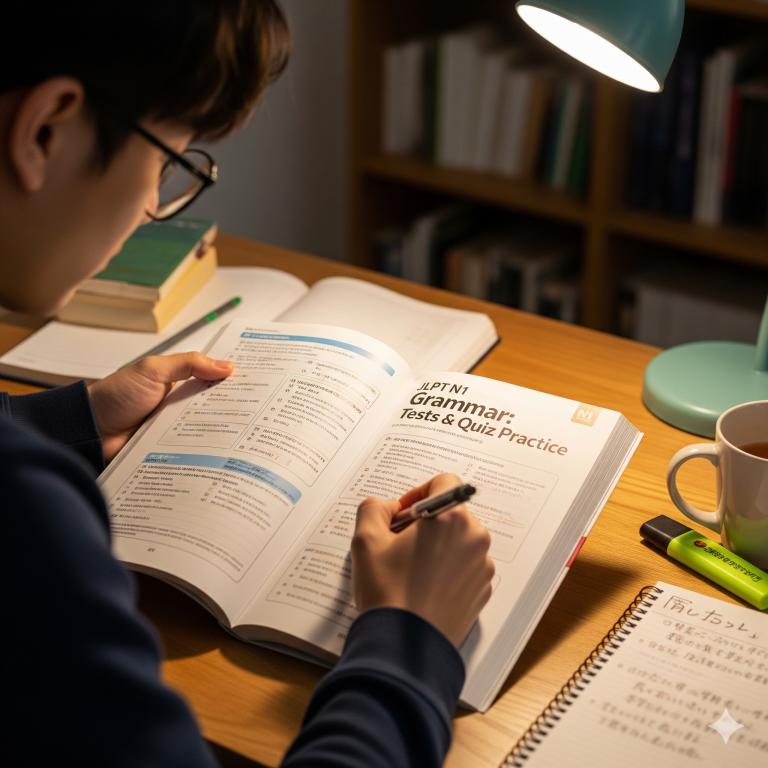
Passing the Japanese Language Proficiency Test (JLPT) N1 is often described as climbing Mount Fuji—a challenging, multi-day endeavor that demands serious preparation. The peak of this linguistic mountain, without a doubt, is the Kanji section.
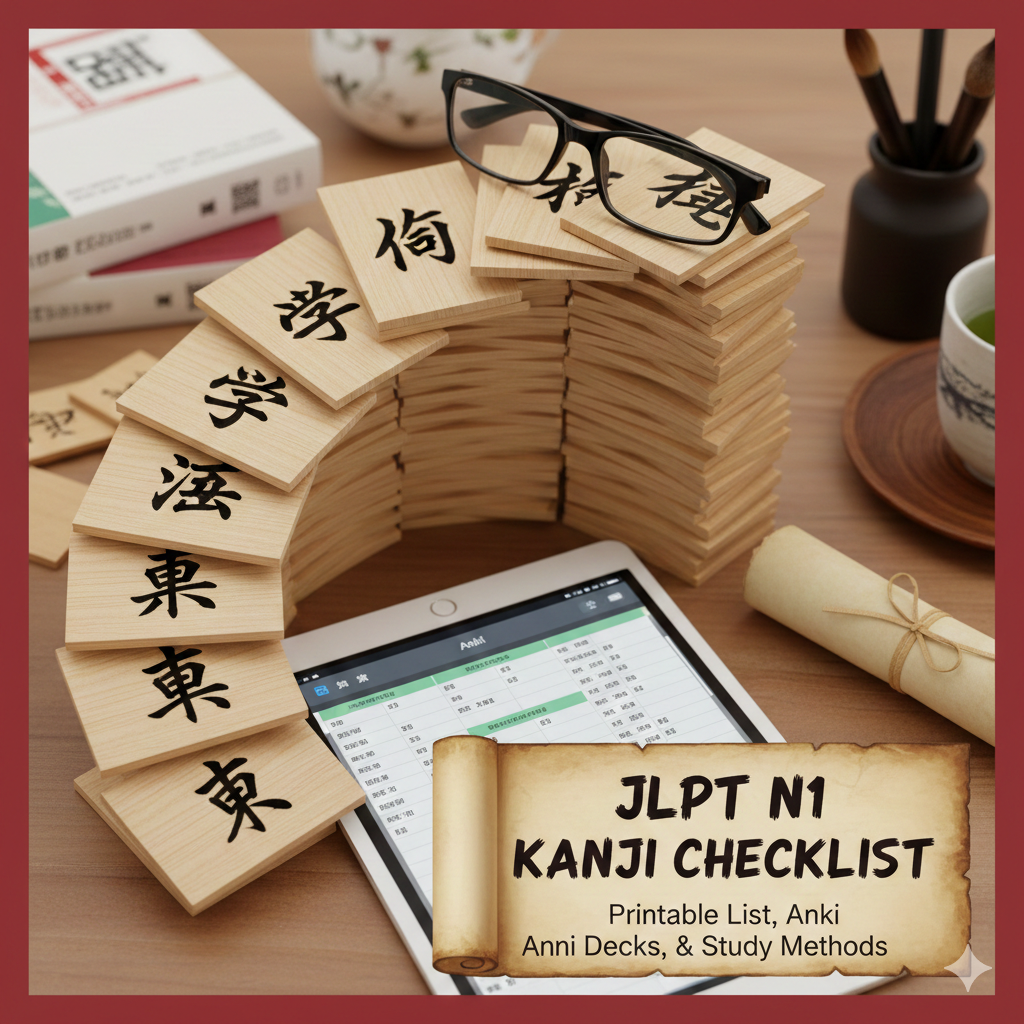
The sheer volume of characters required for N1 can feel overwhelming, a dense forest of complex strokes and subtle readings. You’re not just memorizing; you’re internalizing the very texture of advanced Japanese.
As a fellow language expert and JLPT survivor (yes, I use that word intentionally!), I’m here to tell you that this massive task is entirely manageable with the right strategy and, most importantly, the right tools. We’re going to break down the infamous N1 Kanji, provide you with the most essential resources like a jlpt n1 kanji list pdf and dedicated jlpt n1 kanji anki deck, and share the human-centered, real-world jlpt n1 kanji practice methods that actually stick.
🎯 How Many JLPT N1 Kanji Are We Talking About? The Cold, Hard Facts
Before we dive into the study methods, we need to address the most common, anxiety-inducing question: jlpt n1 kanji how many?
The official JLPT administrators are notoriously vague. They don’t publish an official list, arguing that rote memorization doesn’t reflect real-world language ability. However, based on decades of past exams and the consensus among advanced Japanese learners and prep course providers, the answer is clear:
The Jōyō Kanji and the N1 Scope
- The Baseline (N5 to N2): You are expected to know all the Kanji from the previous levels. This accounts for roughly 1,000 kanji, covering the most common characters found in daily life (from school grades 1-6).
- The N1 Jump: The N1 level then requires you to master the remaining of the 2,136 Jōyō Kanji (常用漢字 – the 2,136 characters designated for general use by the Japanese government).
- The Total N1 Requirement: This means the specific set of new kanji for N1 is approximately 1,100 to 1,200 characters (sometimes listed as 1,136). Crucially, the test is designed to cover the entire Jōyō set.
💡 The Expert Insight: The N1 isn’t just about knowing the meaning of the 2,136 Jōyō Kanji. It’s about knowing their nuanced readings (especially complex Onyomi compounds) and being able to differentiate between kanji that look or sound similar, like 頻・繁・凡 (hin, han, bon). The test assumes you know the basics, and the questions focus on the ambiguities and advanced usage that trip up non-native speakers.
📁 Your Essential Toolkit: JLPT N1 Kanji List PDF and Anki Decks
A disorganized study plan is a recipe for burnout. You need structure, and for that, we turn to the two most beloved resources in the JLPT community: the printable checklist and the digital flashcard engine.
1. The Printable JLPT N1 Kanji List PDF (Your Physical Checklist)
There is a profound satisfaction that comes from physically crossing off an item on a massive list. A printable PDF list gives you that tangible sense of progress.
While I cannot provide a live, functional PDF download here, I can certainly provide you with the structure and key characteristics you should look for in a high-quality jlpt n1 kanji list pdf (or the file you compile yourself):
| Column | Data Point | Why it Matters for N1 |
| Kanji | The character itself (e.g., 擁) | The core element. |
| Onyomi | Chinese reading (e.g., ヨウ) | Crucial for the N1 reading section. You will be tested on complex compounds. |
| Kun’yomi | Japanese reading (e.g., おさ.える) | Essential for words that use the Japanese reading in context. |
| Core Meaning | The English translation (e.g., embrace, hug, protect) | Helps with initial memorization. |
| Status | (Your Checkbox/Date Studied) | For that all-important sense of progress and accountability. |
Actionable Tip: Don’t just print the list and stare at it. Use it as a progress tracker. Highlight the kanji you know well in green, the ones you are struggling with in yellow, and the ones you haven’t touched yet in grey. This visual feedback is a massive human motivator.
2. The Power of Spaced Repetition: JLPT N1 Kanji Anki Deck
If the PDF is your paper map, the jlpt n1 kanji anki deck is your high-speed vehicle. Anki is a Spaced Repetition System (SRS) that presents flashcards to you precisely when you are about to forget them, optimizing your memory retention. For the 1,100+ new kanji of N1, SRS is non-negotiable.
What to Look for in a Great N1 Kanji Anki Deck:
- Kanji > Vocabulary Focus: At this level, you should focus on the readings and meanings of the kanji themselves, but the best decks always use multiple vocabulary words as the example. Don’t just learn 譲 (ゆず.る – concede); learn its use in words like 譲渡 (jōto – transfer) and 互譲 (gojō – mutual concession).
- Contextual Sentences: A flashcard with just the kanji and reading is weak. A card with the kanji, its reading, and a full N1-level Japanese sentence where it is used is gold. This is how the JLPT tests you.
- High-Frequency Priority: Make sure the deck is ordered by frequency of appearance on past exams, not just stroke count or school grade. Tackle the most bang-for-your-buck kanji first.
My Personal Anki Story: When I studied for N1, I spent two weeks creating my own customized Anki deck using textbook vocab. It was tedious, but the act of typing in the kanji, the reading, and the sentence meant I had already studied them once, making the actual review much more effective. Don’t be afraid to tweak existing, popular shared decks to fit your brain!
🧠 The Human-Centric Methods for JLPT N1 Kanji Practice
The biggest mistake N1 students make is treating kanji like a list of separate data points. The truth is, at this level, kanji is an interconnected ecosystem. Your jlpt n1 kanji practice should reflect this holistic view.
Method 1: The Radicals-to-Meaning Association
You’re past the simple mnemonic stage, but you can’t ignore the building blocks. N1 kanji are complex, and breaking them down into radicals is the key to managing their complexity.
| Kanji | Radicals | Mnemonic Connection (My Personal Hook) |
| 顧 (かえりみる) | 頁 (head/page) + 雇 (employ/hire) | The boss (雇) looks back (顧) at the past page (頁) to review a hire’s performance. (Meaning: Look back, review) |
| 濫 (みだ.りがわ) | 氵 (water/liquid) + 監 (oversee/supervise) | The supervision (監) of the water (氵) failed, causing a flood or excess (濫). (Meaning: excessive, overflowing) |
This isn’t just about memorization; it’s about forming a logical, human story that links the components. The more outlandish and personal the story, the more likely your brain is to retain it.
Method 2: The On-Reading Cluster Drill
The N1 kanji questions often focus on reading in compound words (熟語 – jukugo). The best way to master this is to practice kanji that share the same dominant On-reading.
For example, take the reading KO (コ):
- 固 (こ): Firm, hard (e.g., 固定 kotei – fixed, settled)
- 個 (こ): Individual (e.g., 個人 kojin – individual person)
- 故 (こ): Circumstances, reason (e.g., 事故 jiko – accident, incident)
Drill these three, not just as single characters, but as part of those vocabulary words. Your brain starts to recognize the pattern: In this context, the reading is KO. This massively boosts your reading comprehension speed in the actual exam.
Method 3: The Reading Immersion Strategy
This is the most authentic, and arguably the most effective, form of jlpt n1 kanji practice. The N1 exam doesn’t take place in a flashcard app; it takes place within a dense, advanced Japanese text. You must train your brain in that environment.
Action Plan: 30 Minutes of Native Reading Daily
- Choose N1-Level Content: This means Japanese news sites (not the ‘Easy Japanese’ versions), editorials, non-fiction books, or challenging novels.
- Active Reading (The Highlighter Technique):
- Read a paragraph or two.
- Highlight every kanji compound you can’t instantly read or recall the meaning of.
- Look up the word.
- Crucially: Take that word/sentence and immediately input it into a new Anki card. Don’t rely on just the dictionary.
- Passive Reading (Speed and Flow):
- Read for sheer comprehension, without stopping to look up kanji. Train your brain to guess the meaning from context, which is a vital skill for the timed N1 reading section.
- Aim for speed and structural understanding, not 100% vocabulary mastery.
Reading widely and deeply not only introduces the kanji but also the nuance of the vocabulary. This is where your kanji knowledge becomes true Japanese language knowledge.
For excellent, challenging reading material, check out the NHK News Web for daily editorials and news reports written for a native adult audience.
🚀 Interlinking for Holistic N1 Preparation
Kanji doesn’t live in a vacuum. It is intrinsically linked to vocabulary and, through that, the grammar and reading sections of the test. To truly master N1, you must connect the dots.
Connecting Kanji to Vocabulary Mastery
The difference between N2 and N1 vocabulary is often the complexity of the kanji used. For example:
- N2: 計画 (keikaku – plan)
- N1: 企図 (kito – plan, scheme)
Both mean ‘plan,’ but 企 and 図 are much more complex, high-level kanji. The same root idea, but expressed with different, more advanced characters.
To help solidify this connection and move from a purely kanji focus to a true N1 score focus, make sure you are tackling your vocabulary with the same rigor:
👉 Interlink: Dive Deeper into High-Frequency Words
After you finish reviewing your kanji list, jump right into your vocabulary work with our guide: Top 3000 JLPT N1 Vocabulary: Free PDF, Book Recommendations, and The Fastest Way to Memorize.
Maximizing Kanji Practice with Mock Tests
The N1 kanji are designed to be tricky under pressure. The only way to remove that pressure is through extensive, timed practice.
The mock tests will force you to apply your kanji knowledge in the context of the exam format, revealing the specific kanji-compound types that are your personal weaknesses.
👉 Interlink: Put Your Knowledge to the Test
Ready to see how your kanji knowledge stacks up under pressure? Check out: JLPT N1 Past Papers and Mock Tests: Where to Find Them and How to Maximize Your Practice Score.
🏆 The Mindset Shift: From Memorizer to Master
The journey to N1 is a marathon, and the kanji section is the most daunting stretch. But the true secret to passing N1 kanji isn’t a magical list or an ultimate Anki deck; it’s a shift in your approach.
Unique Insight: The “Why” of N1 Kanji
Why does the JLPT require you to know these incredibly difficult, often rare kanji? Because the N1 level certifies you as being able to read and understand complex, professional, and academic Japanese—the language of policy papers, literary criticism, legal contracts, and advanced editorials.
- The kanji 擁 (yō – embrace, support) appears in political discourse (擁護 yōgo – protection, advocacy).
- The kanji 該 (gai – above-mentioned) appears in legal and formal documents (当該 tōgai – the said, the relevant).
- The kanji 賄 (wai – bribe) appears in news articles on corruption (贈賄 zōwai – bribery).
When you practice these kanji, don’t just see a character; see the entire world of Japanese knowledge it unlocks. You are no longer just a student; you are becoming an advanced reader capable of engaging with the deepest levels of the language. This mindset is what keeps you going when the thousands of flashcards seem endless.
Practical Application: The 5-Minute Daily Habit
Don’t let the size of the task paralyze you. The most successful N1 learners incorporate small, daily habits.
- Morning Review (10-20 min): Tackle your Anki reviews for the day. Do this while drinking coffee or commuting. Consistency is your SRS’s best friend.
- Active Reading (30-60 min): Spend dedicated time reading a native Japanese resource, applying the highlighter technique to learn new kanji/vocab in context.
- Evening Self-Quiz (5 min): Before bed, look at your printable jlpt n1 kanji list pdf. Pick one column (e.g., the ‘A’s) and, on a blank piece of paper, try to write the onyomi and a core vocab word for each kanji from memory. This acts as a powerful “testing effect” for long-term retention.
This blend of digital efficiency and human, tactile practice is the winning formula.
Outbound Link 3: (A general, helpful resource for N1)
For a more comprehensive look at all the materials you need—kanji, vocab, and grammar—be sure to review our comprehensive resource guide: The Definitive List of JLPT N1 Resources: Top Books, Apps, and PDF Guides for 2025 (Kanji, Vocab & Grammar).
Conclusion: The Final Push to N1 Mastery
Mastering the JLPT N1 kanji is not an impossible feat of memory; it is a disciplined, systematic process of building a complex knowledge structure. You have the tools—a checklist (the jlpt n1 kanji list pdf), an engine (the jlpt n1 kanji anki deck), and a proven strategy (real-world, contextual jlpt n1 kanji practice).
Embrace the challenge of the 1,100+ characters. Each one you conquer is a key to unlocking another layer of the Japanese language and culture. Stay consistent, stay human, and you will reach the summit.