
Introduction
If you’re preparing for the JLPT N5 (Japanese-Language Proficiency Test, beginner level), you know how overwhelming memorizing vocabulary and kanji can be. With around 800 words and 100 kanji to learn, where do you even start?
That’s where JLPT N5 flashcards come in—a proven, efficient, and engaging way to master Japanese basics. In this guide, we’ll explore:
✔ Why flashcards work for JLPT N5 prep
✔ Best flashcard methods (physical vs. digital)
✔ Free & paid flashcard resources
✔ How to maximize retention with spaced repetition
✔ Common mistakes to avoid
Whether you’re a self-learner or taking classes, this guide will help you study smarter, not harder.
Why Use Flashcards for JLPT N5?
Flashcards aren’t just for kids—they’re a powerful memory tool backed by science. Here’s why they’re perfect for JLPT N5:
1. Active Recall Strengthens Memory
Instead of passively reading a list, flashcards force your brain to retrieve information, strengthening neural connections. Studies show that active recall improves long-term retention significantly.
2. Spaced Repetition (SRS) Optimizes Learning
Digital flashcard apps like Anki and Memrise use spaced repetition algorithms to show you cards just before you forget them. This means less cramming, more remembering.
3. Portable & Flexible
Stuck in traffic? Waiting for coffee? Whip out your JLPT N5 flashcards (physical or app-based) and turn downtime into study time.
4. Breaks Down Complex Kanji
Kanji can be intimidating, but flashcards break them into radicals (components) and mnemonics, making them easier to digest.
Pro Tip: Combine flashcards with listening practice (like JapanesePod101) for well-rounded learning.
Best JLPT N5 Flashcard Resources
1. Anki (Digital + Free)
🔹 Why it’s great: Anki’s spaced repetition system (SRS) is legendary among language learners.
🔹 Best decks:
- “JLPT N5 Vocabulary” (Pre-made decks available)
- “N5 Kanji with Stroke Order” (Helps with writing)
🔹 Get it: AnkiWeb
2. Memrise (Digital + Free/Paid)
🔹 Why it’s great: Gamified learning with native speaker audio.
🔹 Best course: “JLPT N5 Official Vocabulary”
🔹 Try it: Memrise
3. Physical Flashcards (Tuttle, White Rabbit Press)
🔹 Why they’re great: No screen distraction, tactile learning.
🔹 Best picks:
- “Japanese Kanji Flashcards” (White Rabbit Press)
- “Tuttle Japanese Flashcards”
🔹 Where to buy: Amazon
4. Quizlet (Digital + Free)
🔹 Why it’s great: User-friendly, great for quick reviews.
🔹 Best set: “JLPT N5 Vocabulary List”
🔹 Try it: Quizlet
How to Use JLPT N5 Flashcards Effectively
1. Learn in Context
Don’t just memorize words—use them in sentences. For example:
- Word: 食べます (たべます) – “to eat”
- Sentence: 私はりんごを食べます。 (I eat an apple.)
This helps with grammar and real-world usage.
2. Focus on High-Frequency Words First
Not all N5 words are equally important. Prioritize:
- Common verbs (する, 行く, 見る)
- Essential nouns (人, 水, 時間)
- Basic adjectives (大きい, 小さい, いい)
3. Use Mnemonics for Kanji
Kanji look random, but they’re made of radicals (building blocks). Example:
- Kanji: 水 (water)
- Mnemonic: The shape looks like flowing water.
4. Mix Reading & Listening
Some apps (like Memrise) include audio. Say the words aloud to improve pronunciation.
5. Review Consistently (Not Cramming!)
- 5-10 minutes daily > 2 hours once a week.
- Use spaced repetition to avoid forgetting.
Common Mistakes to Avoid
❌ Only Using Romaji – Relying on romaji (English letters) slows progress. Switch to hiragana/kanji ASAP.
❌ Ignoring Stroke Order – Writing kanji correctly matters. Apps like Kanji Study help.
❌ Studying Random Words – Follow a structured JLPT N5 list (like Jisho’s N5 list).
❌ Skipping Speaking Practice – Flashcards help memory, but speaking reinforces learning. Try HelloTalk for conversation.
Free JLPT N5 Flashcard Downloads
Looking for printable JLPT N5 flashcards? Check out:
- Tofugu’s N5 Kanji Flashcards (Download here)
- JLPT Sensei’s Vocabulary List (PDF here)
Final Thoughts: Are Flashcards Enough for JLPT N5?
Flashcards are powerful, but they shouldn’t be your only study tool. Combine them with:
✔ Grammar guides (Try Tae Kim’s Guide)
✔ Listening practice (Like NHK Easy Japanese)
✔ Mock exams (Check JLPT Official Site)
FAQs
1. Can I pass JLPT N5 with just flashcards?
Flashcards help with vocab & kanji, but you also need grammar, listening, and reading practice.
2. How many flashcards should I study per day?
Start with 10-15 new cards/day, plus reviews.
3. Should I make my own flashcards?
If you have time, yes—creating them reinforces learning. Otherwise, use pre-made decks.
Ready to Ace JLPT N5?
JLPT N5 flashcards are a game-changer for vocabulary and kanji. Whether you prefer Anki, Memrise, or physical cards, consistent practice will get you results.
Need more JLPT tips? Check out our Complete JLPT N5 Study Guide for a step-by-step prep plan.
JLPT N5 Results: How to Check and Understand Your Score Report
JLPT N5 Exam Pattern: Structure, Sections, and Scoring Explained
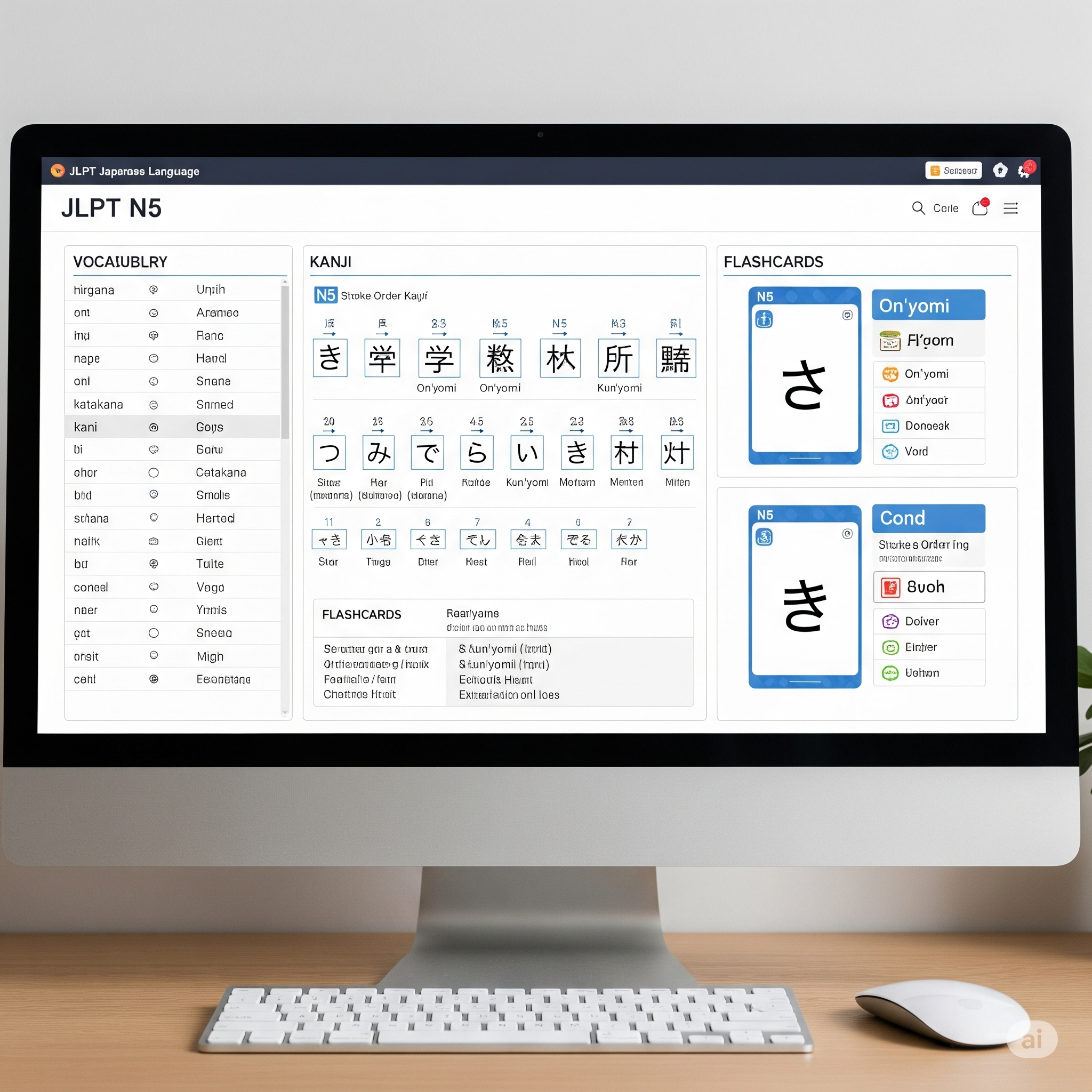
What’s your favorite flashcard method? Let us know in the comments! 🚀


