
Introduction
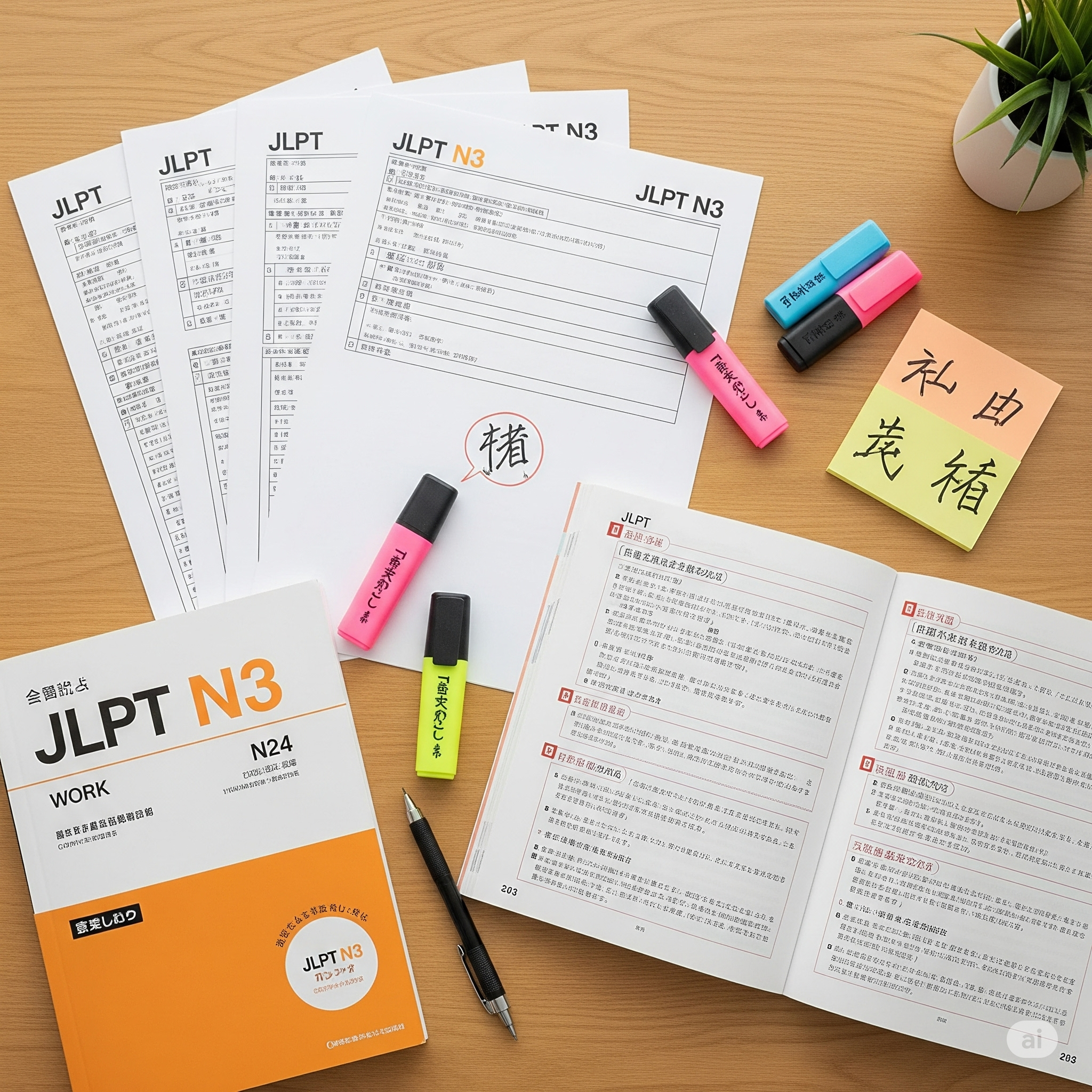
If you’re preparing for the Japanese Language Proficiency Test (JLPT) N3, you already know how crucial practice tests are. But where can you find JLPT N3 old question papers with answers? And how can you use them effectively to boost your score?
In this guide, we’ll cover:
✅ Where to download JLPT N3 past papers (free & paid)
✅ How to use them for maximum retention
✅ Key strategies to tackle each section (Grammar, Vocabulary, Reading, Listening)
✅ Common mistakes to avoid
✅ Additional resources to supplement your study
Let’s dive in!
Why Solving Old JLPT N3 Papers is a Game-Changer
Many students focus only on textbooks and flashcards, but practicing with real past exam papers is what truly bridges the gap between theory and application. Here’s why:
✔ Familiarity with Exam Format – The JLPT N3 has a specific structure, and solving old papers helps you get comfortable with question patterns.
✔ Time Management – The test is timed, and practicing under real conditions prevents last-minute panic.
✔ Identifying Weak Areas – You’ll quickly see which sections (like Kanji or Listening) need more work.
✔ Building Confidence – The more you practice, the less intimidating the actual exam feels.
Where to Download JLPT N3 Old Question Papers (Free & Paid)
1. Official JLPT Website (Limited Past Papers)
The Official JLPT Website provides sample questions (not full papers), but they’re still useful.
👉 JLPT Official Sample Questions
2. Japan Foundation & JEES (Previous Year Papers)
Some past papers are available through JEES (Japan Educational Exchanges and Services).
3. Unofficial but Reliable Sources
Several websites compile N3 past papers:
- JLPT Sensei (Free & Paid Resources)
- Tae Kim’s Guide (Grammar Focus)
- Nihongo-Pro (Mock Tests)
⚠ Caution: Avoid shady websites offering “leaked” papers—stick to trusted sources.
4. Books with Past Papers
If you prefer physical copies, these books are excellent:
- “Shin Kanzen Master JLPT N3” Series
- “So-Matome JLPT N3”
- “TRY! JLPT N3”
How to Use JLPT N3 Old Papers Effectively
Step 1: Simulate Real Exam Conditions
- Set a timer (N3 is 140 mins total).
- No distractions—treat it like the real test.
Step 2: Review Mistakes Thoroughly
- Keep an error log (Note down repeated mistakes).
- Focus on weak areas (e.g., if you keep missing Listening questions, practice more with JapanesePod101).
Step 3: Track Progress
- Compare scores across multiple tests.
- If you’re consistently scoring 60%+, you’re on track!
Section-by-Section Breakdown & Tips
1. Vocabulary & Kanji (言語知識 – 文字・語彙)
- ~30 Questions (25 mins)
- Focus on common N3 Kanji (around 650).
- Use flashcards (like Anki) for memorization.
📌 Pro Tip: Learn compound words (熟語)—many questions test these.
2. Grammar & Reading (言語知識 – 文法・読解)
- ~40 Questions (70 mins)
- Master N3 grammar patterns (e.g., ~ために, ~ばかり).
- Practice speed reading—skim for main ideas first.
📌 Pro Tip: For long passages, underline keywords to save time.
3. Listening (聴解 – 30 mins)
- ~30 Questions
- Listen to Japanese podcasts/news (NHK Easy Japanese) daily.
- Practice note-taking—some questions require remembering details.
📌 Pro Tip: Watch Japanese dramas without subtitles to improve comprehension.
Common Mistakes to Avoid
❌ Ignoring Time Limits – Many fail simply because they run out of time.
❌ Overlooking Listening Practice – It’s ⅓ of the test—don’t neglect it!
❌ Relying Only on Memorization – Understanding context is key.
Additional Resources for JLPT N3
- WaniKani (Kanji Learning)
- Bunpro (Grammar Practice)
- JLPT N3 Study Guide (Full Prep Plan)
- JLPT N3 Practice Test with Answers: Free Resources to Prepare Effectively
Final Thoughts
Practicing with JLPT N3 old question papers with answers is the best way to ensure success. Combine them with structured study, consistent practice, and real-world Japanese exposure (like watching anime or reading manga), and you’ll be well-prepared!


