Introduction
If you’re preparing for the JLPT N5, you already know that kanji is one of the biggest hurdles. But don’t worry—you don’t need to learn thousands of characters right away. The N5 test covers around 100 kanji, and with the right approach, you can master them efficiently.
In this guide, we’ll break down:
✅ Why these 100 kanji matter
✅ Their meanings, readings (onyomi & kunyomi), and common words
✅ Memory tricks to learn them faster
✅ Practical ways to use them in daily life
By the end, you’ll feel more confident in recognizing and using these essential kanji. Let’s dive in!
Why Are These 100 Kanji Important for JLPT N5?
The JLPT N5 is the first step in your Japanese learning journey. While it’s the easiest level, kanji can still be intimidating. However, the test focuses on basic, high-frequency characters used in everyday conversations, signs, and simple texts.
Learning these kanji will help you:
✔ Read basic sentences (menus, schedules, instructions)
✔ Understand common vocabulary (numbers, days, places)
✔ Build a strong foundation for N4 and beyond
How to Study Kanji Effectively
Before jumping into the list, here are some proven strategies to make kanji stick:
1. Learn Stroke Order
Writing kanji correctly helps with memorization. Use resources like Jisho.org to see stroke animations.
2. Use Mnemonics
Associate kanji with stories or images. For example:
- 人 (person) looks like a person walking.
- 山 (mountain) resembles peaks.
3. Practice with Flashcards
Apps like Anki or WaniKani are great for spaced repetition.
4. Read Real-Life Examples
Look for kanji in:
- Street signs (出口 – exit, 入口 – entrance)
- Restaurant menus (水 – water, 肉 – meat)
For more study tips, check out our JLPT N5 Study Plan.
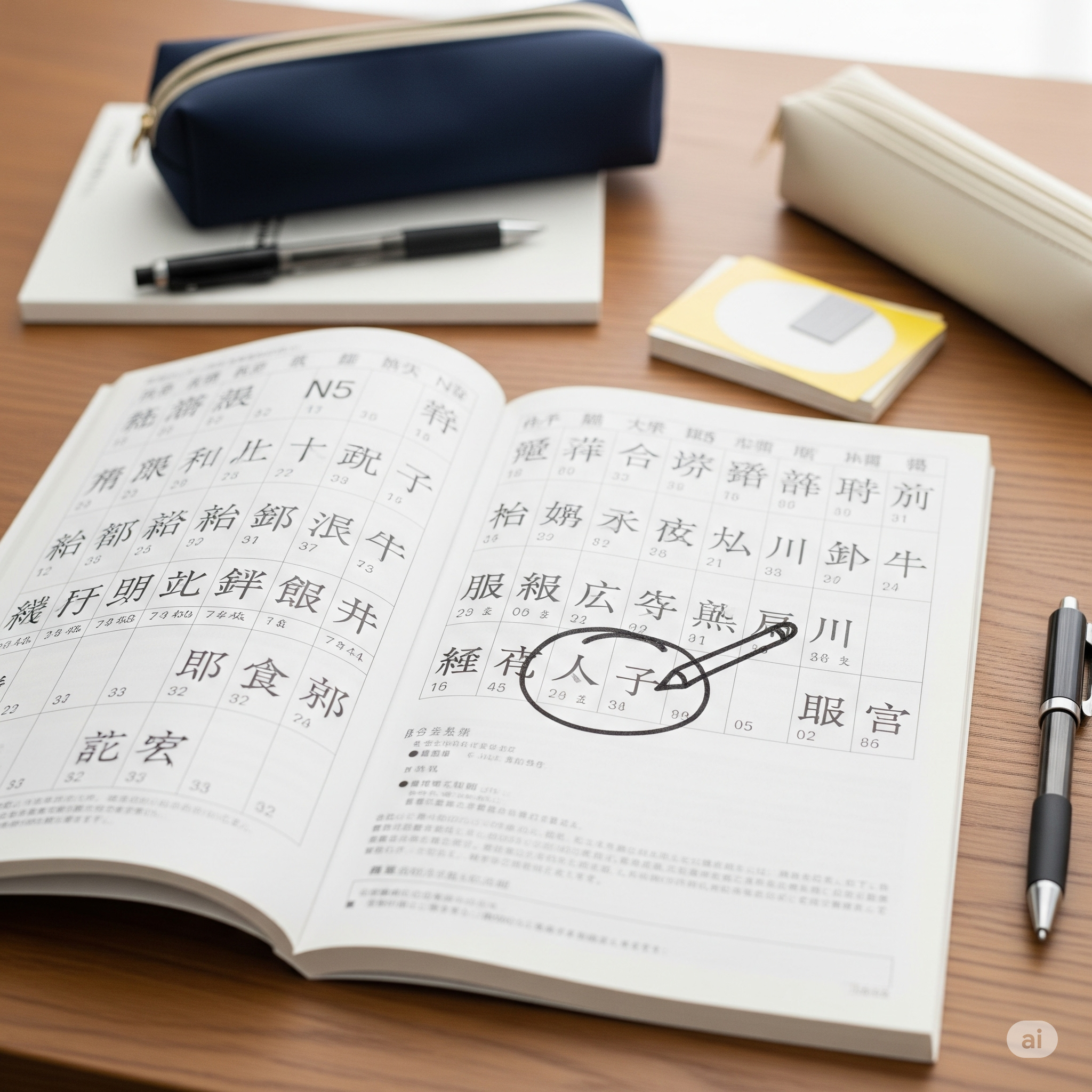
The First 100 Essential Kanji for JLPT N5
Below is a categorized list of the most frequent N5 kanji, along with their readings and example words.
1. Numbers & Time
| Kanji | Meaning | Onyomi | Kunyomi | Example Word |
|---|---|---|---|---|
| 一 | One | いち (ichi) | ひと (hito) | 一人 (ひとり – one person) |
| 二 | Two | に (ni) | ふた (futa) | 二つ (ふたつ – two things) |
| 三 | Three | さん (san) | みっ (mi) | 三日 (みっか – 3rd day) |
| 四 | Four | し (shi) | よん (yon) | 四時 (よじ – 4 o’clock) |
| 五 | Five | ご (go) | いつ (itsu) | 五日 (いつか – 5th day) |
(Continue with 六, 七, 八, 九, 十, 百, 千, 万, 年, 月, 日, 時, 分, 前, 後)
📌 Pro Tip: Numbers are everywhere—practice by reading prices, dates, and train schedules!
2. People & Relationships
| Kanji | Meaning | Onyomi | Kunyomi | Example Word |
|---|---|---|---|---|
| 人 | Person | じん (jin) | ひと (hito) | 日本人 (にほんじん – Japanese person) |
| 男 | Man | だん (dan) | おとこ (otoko) | 男の子 (おとこのこ – boy) |
| 女 | Woman | じょ (jo) | おんな (onna) | 女の子 (おんなのこ – girl) |
| 子 | Child | し (shi) | こ (ko) | 子供 (こども – child) |
| 友 | Friend | ゆう (yuu) | とも (tomo) | 友達 (ともだち – friend) |
(Continue with 父, 母, 兄, 弟, 姉, 妹, 先生, 学生)
📌 Pro Tip: Use these kanji to introduce yourself! Example:
- 私は学生です。 (わたしはがくせいです – I am a student.)
3. Common Objects & Nature
| Kanji | Meaning | Onyomi | Kunyomi | Example Word |
|---|---|---|---|---|
| 山 | Mountain | さん (san) | やま (yama) | 富士山 (ふじさん – Mt. Fuji) |
| 川 | River | せん (sen) | かわ (kawa) | 川で泳ぐ (かわでおよぐ – swim in the river) |
| 木 | Tree | もく (moku) | き (ki) | 木の下 (きのした – under the tree) |
| 火 | Fire | か (ka) | ひ (hi) | 火曜日 (かようび – Tuesday) |
| 水 | Water | すい (sui) | みず (mizu) | 水を飲む (みずをのむ – drink water) |
(Continue with 金, 土, 天, 気, 雨, 車, 電, 話, 本, 店, 食, 飲)
📌 Pro Tip: Spot these kanji in daily life—水 (water) on bottles, 火 (fire) in safety signs.
4. Directions & Places
| Kanji | Meaning | Onyomi | Kunyomi | Example Word |
|---|---|---|---|---|
| 上 | Up | じょう (jou) | うえ (ue) | 上に行く (うえにいく – go up) |
| 下 | Down | か (ka) | した (shita) | 下さい (ください – please) |
| 中 | Inside | ちゅう (chuu) | なか (naka) | 中国 (ちゅうごく – China) |
| 外 | Outside | がい (gai) | そと (soto) | 外国人 (がいこくじん – foreigner) |
| 右 | Right | ゆう (yuu) | みぎ (migi) | 右に曲がる (みぎにまがる – turn right) |
(Continue with 左, 東, 西, 南, 北, 駅, 門, 国, 学校, 会社)
📌 Pro Tip: Essential for navigation—駅 (eki – station), 出口 (deguchi – exit).
How to Practice These Kanji Daily
- Label Your Home – Stick notes with kanji on objects (e.g., ドア – door, 窓 – window).
- Write Simple Sentences – Example: 今日は月曜日です (Today is Monday).
- Use Apps – Try Kanji Study for interactive quizzes.
- Watch Kids’ Shows – Programs like “Anpanman” use simple kanji with furigana.
For more practice, check our Free JLPT N5 Kanji Worksheet.
Common Mistakes to Avoid
❌ Ignoring stroke order → Leads to messy, unrecognizable writing.
❌ Only memorizing readings → Learn words, not just isolated kanji.
❌ Cramming last-minute → Consistency beats intensity.
Final Thoughts
Mastering these 100 essential kanji will give you a solid foundation for JLPT N5 and real-life Japanese. Remember:
✔ Start small – Learn 5-10 kanji daily.
✔ Use them actively – Read, write, and speak.
✔ Stay patient – Kanji takes time, but it’s worth it!
Ready for the next step? Explore our JLPT N4 Kanji Guide to keep progressing!