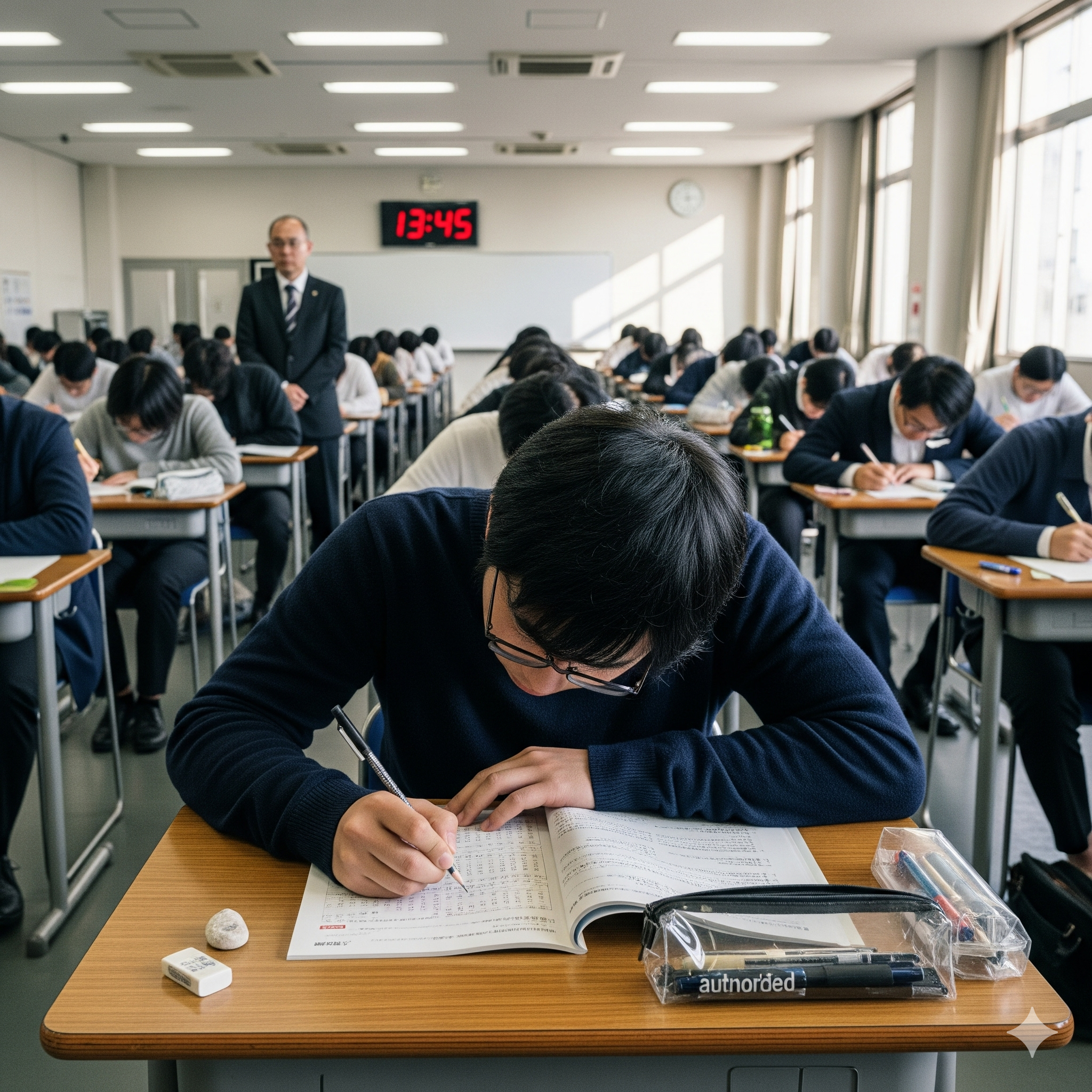
So, you’ve done it. You’ve spent months, maybe even years, buried in your 新完全マスター (Shin Kanzen Master) textbooks, grinding through anki decks, and listening to NHK news until you could hear the polite, precise cadence of the news anchors in your dreams. The JLPT N1 is no small feat—it’s the summit of Japanese language proficiency testing for most learners.
And now, the big day is almost here.
I’ve been there. The mix of excitement, dread, and sheer curiosity about what the actual test day holds is a unique feeling. As someone who has both taken and now taught students through this exam, I want to pull back the curtain. This isn’t just a list of test sections; this is a full, human experience walkthrough of your JLPT N1 exam day, from the moment you wake up to the moment you (happily) put your pencil down.
Let’s demystify it together.
Before You Leave Home: The Morning Of
Your exam day starts long before you enter the testing room. Preparation is key.
- A Good Night’s Sleep > Last-Minute Cramming: I cannot stress this enough. The N1 is a marathon of focus. A well-rested brain will recall vocabulary and parse complex grammar far better than a sleep-deprived one that skimmed one more blog post last night. Trust what you know.
- Eat a Brain-Boosting Breakfast: Choose something sustaining but not too heavy. Oatmeal, eggs, or toast—something that will give you steady energy without causing a crash. Avoid a giant, sugary coffee that will leave you jittery. A little caffeine is fine, but know your limits.
- The Sacred Pouch: Your test voucher and photo ID are your golden tickets. Pack them the night before. Also, bring several sharpened HB pencils (mechanical pencils are often not allowed—check your test voucher!), a good eraser, and a watch. Yes, a watch. Many test centers don’t have clocks, or they’re hard to see. A simple analog watch is your best friend for time management.
The Test Center Atmosphere: Settling In
You’ll likely be testing at a university or conference center. Arrive early. Give yourself time to find the room, use the bathroom, and just breathe.
The atmosphere is… quiet intense. You’ll see hundreds of other learners, all with the same goal. Some will be frantically flipping through notes. My advice? Don’t be one of them. This last-minute panic is contagious. Instead, put on your headphones and listen to some calming music or a familiar Japanese podcast to get your brain into “Japanese mode.” You’ve prepared. You’re ready.
You’ll be directed to your seat. The instructions will be in Japanese, so listen carefully. The proctors will guide you through filling out your answer sheet. This part is crucial—make sure you fill in your exam level (N1) and your registration number correctly. Double-check it.
Alright. The moment arrives. The test papers are distributed. Let’s break down what happens in each section.
Section 1: 言語知識・読解 (Language Knowledge & Reading) – 110 Minutes
This is the big one. 110 minutes of sheer mental endurance. It’s divided into two parts, but the clock runs for both combined.
Part A: 言語知識 (Language Knowledge) – Vocabulary, Grammar
You’ll start with the 文字・語彙 (Moji/Goi – Characters/Vocabulary) section. This tests your knowledge of kanji readings, word formation, and context-based definitions.
- What to Expect: The questions are often trickier than practice books. They love to use words with similar meanings but different usage (類似語の使い分け). Don’t rush. Read the entire sentence.
- Pro Tip: If you don’t know a word, don’t freeze. Use context clues. Look at the kanji compounds. Can you break it down? Often, you can make an educated guess.
Next is the 文法 (Bunpou – Grammar) section.
- What to Expect: The N1 grammar points are less about individual particles and more about complex sentence structures that convey nuance (e.g., ~ばこそ, ~とあって, ~にもまして). You’ll need to quickly arrange sentences and choose the correct grammar for a longer passage.
- Pro Tip: Time management is everything here. You cannot afford to spend 10 minutes agonizing over a single grammar question. The reading section is worth more points and is far more time-consuming. If you’re stuck, circle your best guess and move on. Seriously.
Part B: 読解 (Dokkai – Reading) – The Real Battle
This is where the N1 is won or lost. The passages are long, dense, and abstract. You’ll encounter essays, editorials, and literary critiques.
- The Types of Texts:
- Short Passages: Quick reads, usually with a clear main idea.
- Medium Passages: Often comparative, asking you to understand the opinions of two authors.
- Long Passages: The big one. Complex arguments about society, culture, or philosophy.
- Integrated Comprehension: Combining information from a graph and a text.
- Thematic Search: Finding specific information within a longer text, like a brochure or article.
- My #1 Strategy: Read the questions first. Before you even look at the passage, skim the questions. This tells your brain what information to look for. You are not reading for pleasure; you are reading to extract specific answers.
- Pacing Yourself: With 110 minutes for everything, I recommend a hard rule: You must begin the reading section with at least 60-65 minutes left on the clock. This means you have about 45-50 minutes for the Language Knowledge section. Use your watch!
(Internal Link: For a deep dive on conquering N1 reading, check out my post: [Mastering JLPT N1 Reading: Strategies for Dense and Abstract Texts])
The Break – 10-15 Minutes
You’ve survived the first half. You’ll get a short break. Use it.
- Stand up. Stretch.
- Go to the bathroom. There will be a line, so go immediately.
- Eat a small snack—a banana, a granola bar, something with natural sugar for energy.
- Do not, I repeat, do not start discussing the answers with friends. It will only stress you out. You can’t change your answers, and you might be wrong anyway. Clear your mind for the listening section.
Section 2: 聴解 (Choukai – Listening) – 60 Minutes
The listening section is played over speakers for the entire room. The audio is only played once. There are no repeats. This is the ultimate test of your real-time comprehension.
- The Setup: You’ll have five different question types, each designed to test a different skill:
- 課題理解 (Kadai Rikai): Understanding the immediate task. “What should the person do next?”
- ポイント理解 (Pointo Rikai): Understanding the key point. Often involves why something happened or a specific reason.
- 概要理解 (Gaiyou Rikai): Grasping the main idea. This is tough. You hear a long monologue, and the question is “What is the speaker’s main point?” You have to listen for the gist, not the details.
- 即時応答 (Sokuji Outou): Immediate response. You hear a short phrase and have to choose the most natural response. This tests your “feel” for the language.
- 統合理解 (Tougou Rikai): Integrated understanding. The longest part, often involving two people talking and comparing opinions.
- How to Survive:
- Use the “dumb” time wisely. Before each audio clip, you get time to look at the choices. Use this time to aggressively skim the answers and predict the topic. Underline keywords.
- Take minimal notes. Don’t try to write full sentences. Jot down keywords, numbers, or names to keep track. Your primary focus must be on listening.
- The biggest trap: dwelling on a previous question. The audio moves on without you. If you missed one, you have to let it go immediately. If you don’t know, guess and refocus. The next question is already playing.
(Internal Link: Struggling with listening? My guide on [How to Train Your Ear for the JLPT N1 Listening Section] is a great resource.)
After the Exam: The Aftermath
It’s over. You’ll hand in your answer sheet, and a wave of relief will wash over you. You might feel exhausted, elated, or a little confused.
My advice? Go celebrate. You just completed one of the most challenging tasks a Japanese learner can undertake. Go get a nice meal, meet up with friends, and do not spend the next three hours Googling answers. It’s done. The outcome is out of your hands, and the unofficial answer keys that float online are often incorrect and will only cause unnecessary anxiety.
Final Words of Wisdom
The JLPT N1 is a beast, but it’s a predictable one. Your success on exam day is determined by two things: your months of consistent preparation and your cool-headed strategy on the day itself.
You have the knowledge. Now, you have the blueprint for the experience. Walk into that room with confidence, manage your time like a pro, and trust in the hard work you’ve put in.
頑張ってください!(Ganbatte kudasai!) You’ve got this.
JLPT N1 Full Form & What the Exam Really Means
JLPT N1 Exam Fees in Different Countries (India, US, Canada)
JLPT N1 Exam Time Duration & Full Marks Breakdown