As a Japanese language expert and a long-time JLPT instructor, I’ve seen countless students—from toddlers to corporate executives—struggle with the initial “wall” of Japanese. That wall usually consists of three writing systems, a completely different sentence structure, and those intimidating Kanji characters.
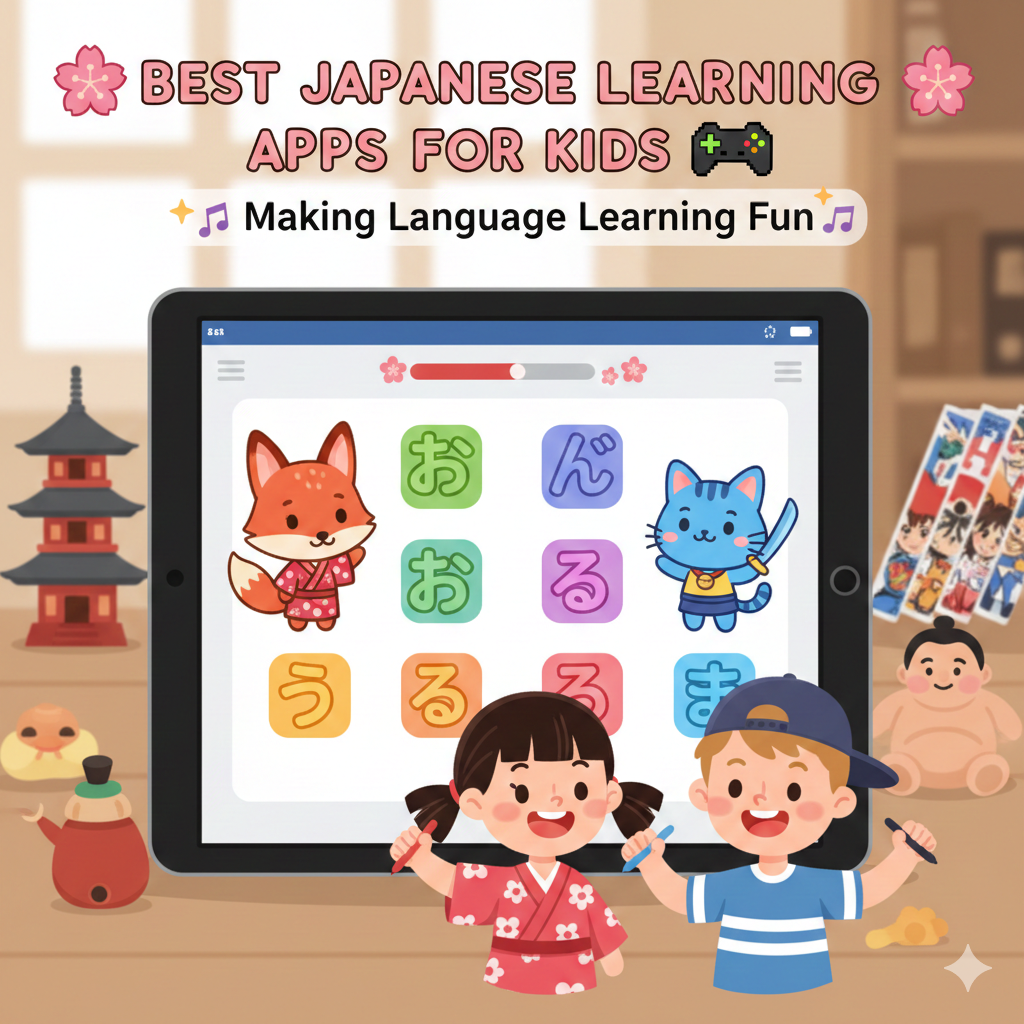
However, there is a secret weapon that kids have which adults often lack: limitless curiosity and a brain built for immersion. When we talk about the best japanese learning app for kids, we aren’t just looking for a digital textbook. We are looking for an experience that doesn’t feel like “studying” at all. In 2026, the landscape of educational technology has shifted. We no longer just tap pictures; we interact with AI-driven characters and immerse ourselves in virtual Tokyo streets.
In this guide, I’ll break down the absolute best tools to help your child master Hiragana, Katakana, and basic conversation while having a blast.
Why Start Japanese Early? (The Expert Insight)
Before we dive into the apps, let’s talk about why you’re doing this. Research into cognitive development consistently shows that children who learn a second language—especially one as structurally different as Japanese—develop better problem-solving skills and higher cognitive flexibility.
In my years of teaching, I’ve noticed that kids who start with japanese learning apps for beginners designed for their age group don’t just learn words; they learn how to think in another language. They don’t translate “Apple” to “Ringo” in their heads; they see the red fruit and the word “Ringo” appears naturally. This is the “Immersion Window,” and it’s a gift you can give your child.
1. DinoLingo: The King of Immersion
If you want an app that feels like a Saturday morning cartoon, DinoLingo is the gold standard.
Why It Works
DinoLingo uses a “Total Immersion” method. This means your child won’t hear much English at all. Instead, they learn through context, repetition, and high-quality animations. It’s perfect for younger children (ages 2–7) who are still developing their first language.
- Gamification: Kids earn “dinosaur rewards” and trophies for completing lessons.
- Content Variety: It’s not just an app; it includes worksheets, flashcards, and even stories.
- Safety: 100% ad-free and child-safe.
Expert Tip: Use DinoLingo’s printable worksheets alongside the app. Tangible practice helps solidify the muscle memory needed for writing Hiragana later on.
2. Mondly Kids: The Best for Interactive Conversations
Mondly has been a giant in the language space for years, but their dedicated “Mondly Kids” version is specifically tailored for the 5–10 age group. It’s arguably the best japanese learning app for kids who enjoy a more “quest-like” experience.
Unique Features
- Speech Recognition: One of the hardest parts of Japanese is the pitch accent. Mondly’s AI listens to your child and gives instant feedback on their pronunciation.
- Topic-Based Journeys: Instead of boring grammar drills, kids learn through topics like “Animals,” “Family,” and “Food.”
For more details on how Mondly compares to other budget-friendly options, check out our post on Top 10 Best Free Japanese Learning Apps (That Actually Work).
3. Gus on the Go: Best for Vocabulary Foundations
For parents who want something simple, affordable, and effective, Gus on the Go: Japanese is a fantastic entry point. It follows Gus, a friendly owl, as he travels through Japan.
Why Beginners Love It
It focuses heavily on the basics. If you are looking for japanese learning apps for beginners that won’t overwhelm a 4-year-old, this is it. It uses native speaker audio (crucial for ear training!) and covers nearly 90 essential vocabulary words through interactive games.
Note from the Sensei: Gus on the Go uses only Hiragana and Katakana. This is excellent because it prevents kids from relying on Romaji (English letters), which can actually hinder long-term Japanese fluency.
4. Duolingo & Duolingo ABC: The “Streak” Motivation
We can’t talk about apps without mentioning the green owl. While the standard Duolingo app is great for older kids (10+), Duolingo has become much more kid-friendly in 2026 with its “Path” system.
Pros:
- Highly Addictive: The streak system keeps kids coming back every day.
- Visual Learning: The characters (Duo, Zari, Lily) have distinct personalities that make the lessons feel like a story.
- Zero Cost: It remains one of the most accessible free options.
However, be warned: Duolingo can sometimes feel repetitive. If you find your child getting bored, it might be time to look into our The Best Japanese Learning Apps for Android and iOS: 2026 Comparison to find a more specialized tool.
5. HeyJapan: For the Future JLPT Star
If your child is a bit older (8–12) and shows a serious interest in Japanese culture or even moving toward the JLPT (Japanese Language Proficiency Test), HeyJapan is a brilliant choice.
It bridges the gap between “fun game” and “serious learning tool.” It breaks down lessons into 40-minute daily chunks (though for kids, I recommend 15-minute sessions) and focuses on the N5 level (beginner) requirements.
Key Highlights:
- Writing Practice: It has a fantastic interface for tracing Hiragana and Katakana.
- Badges and Rewards: It keeps the motivation high with a structured “level up” system.
Comparing the Top Choices: A Quick Guide for Parents
| App Name | Best For | Age Group | Price Point |
| DinoLingo | Total Immersion | 2 – 7 | Subscription |
| Mondly Kids | Pronunciation/AI | 5 – 10 | Free/Premium |
| Gus on the Go | Basic Vocabulary | 3 – 6 | One-time Buy |
| Duolingo | Daily Consistency | 8+ | Free |
| HeyJapan | Structured Growth | 7 – 12 | Free/Premium |
Practical Application: How to Turn Screen Time into Fluency
As a teacher, I always tell parents: The app is the spark, but you are the fuel. Even the best japanese learning app for kids won’t work if it’s used in a vacuum. Here is how you can make the learning “stick” in the real world:
1. The “Label” Game
Once your child learns the word for “Apple” (Ringo) or “Chair” (Isu), put a small sticky note on those items in your house. Seeing the word in their physical environment creates a powerful neural link.
2. Watch “Easy” Japanese Content
Supplement the apps with Japanese media. Shows like Anpanman or even the simplified Japanese versions of NHK World Kids are incredible for hearing the rhythm of the language.
3. Celebrate “Mistakes”
In Japanese culture, there is a concept called Kaizen—continuous improvement. Encourage your child to speak out loud, even if they get the “desu” or “masu” endings wrong. The goal at this age is confidence, not grammatical perfection.
Is it Worth Paying for a Kids’ App?
This is the most common question I get. Many parents start with free versions but find themselves hitting a “paywall” just as their child starts to get excited.
In my professional opinion, a small investment in a premium app is often worth it for two reasons: No Ads (safety first!) and Structured Curriculum. When you pay, you’re usually getting a path designed by linguists rather than just a collection of random vocabulary.
For a deeper dive into this debate, read our analysis: Paid vs. Free: Is a Paid Japanese Learning App Worth the Investment?.
Transitioning from “Kid Apps” to Serious Study
As your child grows, their needs will change. They will move from recognizing a picture of a cat (Neko) to wanting to read a manga or write a letter to a penpal in Tokyo.
This is where you transition them into more robust tools. But remember, the foundation laid by these early apps is what makes that transition possible. For a bird’s-eye view of the entire Japanese learning journey, you must see our pillar post: The Ultimate Guide to the Best Japanese Learning Apps in 2025: Ranked and Reviewed.
Final Thoughts from the Sensei
Learning Japanese is a marathon, not a sprint. For a child, that marathon should feel like a fun run through a theme park. By choosing the best japanese learning app for kids that aligns with your child’s personality—whether they love dinosaurs, owls, or competing for high scores—you are setting them up for a lifetime of cultural appreciation and cognitive growth.
Don’t worry about the JLPT N5 or N4 yet. Just focus on the joy of the first “Konnichiwa.”