If you have ever sat staring at a blinking cursor, wondering if your opening line is “too formal” or “not formal enough” for a Japanese client, you are not alone. In the world of Japanese business, an email isn’t just a medium for information—it is a digital handshake, a reflection of your company’s brand, and a litmus test for your cultural competence.
As someone who has spent years navigating the JLPT (Japanese Language Proficiency Test) and working directly within the Tokyo corporate ecosystem, I can tell you that Japanese Email Etiquette is less about “writing” and more about “positioning.” It is the art of showing respect (keigo) while maintaining efficiency.
In this deep dive, we will peel back the layers of the Japanese inbox. We’ll look at why certain phrases are non-negotiable, how to avoid the “rude foreigner” trap, and how to structure your emails so they get read, understood, and respected.
The Pillar of Digital Respect
Before we get into the nitty-gritty, it’s important to see the bigger picture. If you are looking for a complete repository of templates, you should start with The Ultimate Guide to Business Japanese Email Templates (With Real Examples & Free Downloads). This will serve as your foundation as we explore the etiquette rules below.
1. The Subject Line: The “Face” of Your Email
In Japan, the subject line (kenmei) is often the only thing a busy manager sees before deciding to archive or reply. A vague subject like “Question” or “Hello” is a cardinal sin.
The Do’s:
- Be Specific: Include your company name and the core topic.
- Use Brackets: Using 【 】 (square brackets) to categorize the email is highly effective.
- Example: 【御見積のご依頼】株式会社ABCの佐藤です (Request for Quote: Sato from ABC Corp)
The Don’ts:
- Don’t leave it blank: This is seen as incredibly unprofessional.
- Don’t be too long: Ensure the most important info is in the first 20 characters.
2. The Opening: More Than Just a “Hi”
The first line of a Japanese email is almost always a fixed set of greetings (aisatsu). Unlike Western emails where you might dive straight into “I hope you’re doing well,” Japanese emails require a formal acknowledgment of the relationship.
Even if it’s the first time you’re emailing, you must use specific Japanese Business Email Greetings: Correct Openings, Closings & Formal Styles to set the right tone.
The Power of “Osewa ni narimasu”
The phrase Osewa ni narimasu (お世話になっております) is the bread and butter of Japanese Email Etiquette. It translates roughly to “Thank you for your ongoing support/kindness,” but its cultural weight is much heavier. It acknowledges the mutual debt and respect between two parties.
If you are a student or a new hire, you might find that Japanese Business Email Examples for Beginners (Copy‑Ready Templates) can help you master these opening rituals without the stress of grammar mistakes.
3. The “Keigo” Hierarchy: A JLPT Expert’s Insight
As a JLPT expert, I often see students struggle with the three levels of Keigo: Teineigo (polite), Sonkeigo (honorific), and Kenjougo (humble). In email, these aren’t just for the exam; they are survival tools.
- Sonkeigo: Used for the recipient’s actions (e.g., goran ni naru instead of miru for “to see”).
- Kenjougo: Used for your own actions (e.g., haiken suru instead of miru).
Using these correctly shows that you understand the social hierarchy. If you’re still mastering these, don’t worry—you can always rely on 8. Essential Japanese Business Email Phrases Every Professional Should Know to ensure your Keigo is spot on.
4. The Body: The “Kushon Kotoba” (Cushion Words)
Directness is often interpreted as aggressiveness in Japan. To soften the blow of a request or a rejection, we use “Cushion Words.” These are phrases like:
- Otesū desu ga… (I’m sorry to bother you, but…)
- Osoreirimasu ga… (I am filled with fear/respect, but…)
These phrases act as a buffer. If you are in the real estate industry, for instance, asking for a viewing or a price drop requires extreme delicacy. I recommend looking at Real Estate Japanese Email Templates: Professional Phrases & Sample Messages to see how these cushions are applied in high-stakes negotiations.
Similarly, if you are making inquiries about a specific property, Property Inquiry Email Templates in Japanese: Polite & Effective Examples will show you how to be firm yet incredibly polite.
5. The Art of the CC and BCC
In Japanese culture, the “group” (uchi) is vital. When you email a person, you are often emailing their department.
- Do: CC everyone who was in the meeting.
- Don’t: Forget to address the person with the highest rank first in the address line if you are writing to multiple people.
- The “To” Field: If you are using Outlook, make sure your settings are optimized for Japanese characters. You can find help with this in 11. The Best Business Email Templates for Outlook (Japanese + English Versions).
6. Closing with Grace
You cannot simply end with “Thanks” or “Best.” The closing (musubi no aisatsu) is a final bow.
- Yoroshiku onegaishimasu: The most versatile closing.
- Go-kentō no hodo, yoroshiku onegaishimasu: “Please give this your kind consideration” (perfect for sales).
For sales professionals, the closing is where you seal the deal. Check out 13. Business Sales Email Templates for Japanese Clients (High‑Response Examples) to see how to transition from a polite body to a persuasive closing.
7. Practical Application: Real-World Scenarios
Let’s look at how this etiquette applies to different industries.
Sales and Conversions
If you are in commercial real estate, your emails need to be professional but also fast-acting. Balancing the slow, polite nature of Japanese etiquette with the speed of sales is a fine art. For those in this niche, 3. Free Commercial Real Estate Email Templates for Fast Client Conversions provides a perfect balance.
If you are struggling to get a response, it might be your phrasing. Use 12. 5 Sales Email Templates That Actually Work (Japanese + English) to see how subtle changes in your Japanese Email Etiquette can drastically improve your open and reply rates.
General Business Needs
Sometimes you just need a quick template to get the job done. I always suggest keeping a folder of 7. Japan Email Templates for Work: Professional Messages You Can Copy Today on your desktop.
For more variety, 6. How to Write a Polite Japanese Email: 15 Ready‑to‑Use Sample Messages offers solutions for everything from scheduling meetings to apologizing for a delay.
8. Common Pitfalls: The “Don’ts” of Japanese Emailing
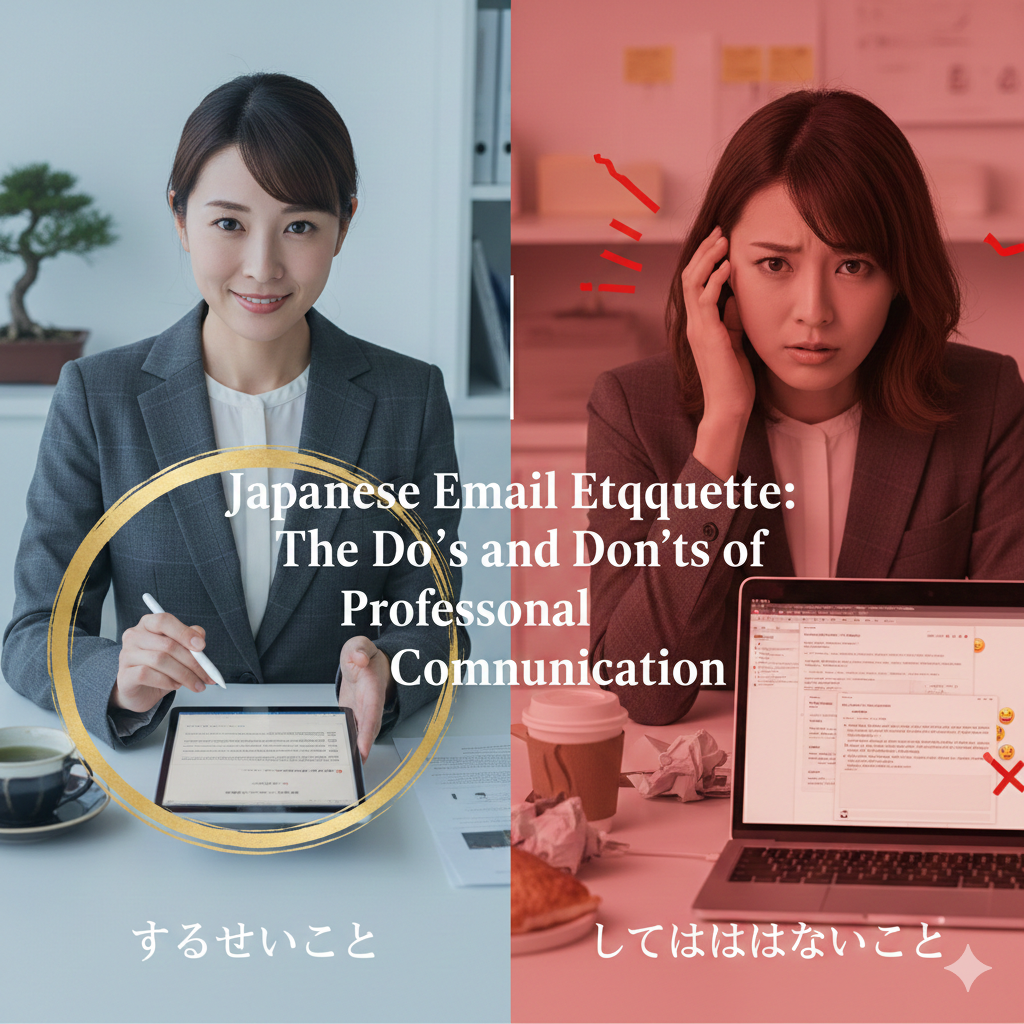
- Don’t use Emojis: Even a simple smiley face can be seen as “frivolous” (fuzaketeru) in a formal B2B context.
- Don’t forget the signature: Your signature (shomei) should include your name, company, department, address, and phone number. It is your digital business card.
- Don’t be too casual with “San”: If you are writing to a client, use Sama. If you are writing to someone within your own company but in a different branch, San is usually fine, but Sama is safer for superiors.
For a deeper look at the standards of the Japanese language, you can refer to the Official JLPT Website to understand the proficiency levels required for professional communication, or check the JETRO (Japan External Trade Organization) for business culture guides.
The Human Element: Why It Matters
At the end of the day, remember that there is a human being on the other side of that screen. While the rules of Japanese Email Etiquette seem rigid, they are designed to prevent friction. When you take the time to use the correct keigo or a thoughtful greeting, you are telling the recipient: “I value your time, I value your culture, and I am a reliable partner.”
In my years of teaching Japanese, the students who succeed aren’t always the ones with the best grammar—they are the ones who understand the heart behind the etiquette. They understand that a well-crafted email is a sign of omotenashi (hospitality) in the digital age.
Summary Table: Quick Do’s and Don’ts
| Feature | The “Do” | The “Don’t” |
| Subject Line | Clear, bracketed, includes company name. | Vague or empty. |
| Greeting | Osewa ni narimasu (always!). | “Hi [Name]” or “Hello.” |
| Hierarchy | Address the highest-ranking person first. | Random order in the CC list. |
| Punctuation | Use standard Japanese periods (。) and commas (、). | Excessive exclamation marks (!!!). |
| Attachments | Mention them in the body and use a password if required. | Attach huge files without warning. |
Final Insights from a JLPT Expert
If you are preparing for the N2 or N1 levels, pay close attention to the “Honorific” sections of your textbooks. The grammar you learn there is exactly what is used in these emails.
However, don’t let the fear of making a mistake paralyze you. Most Japanese professionals are incredibly forgiving of non-native speakers, provided they see that an effort has been made to follow the basic structure of Japanese Email Etiquette.
For more practice on specific grammar patterns that appear in business contexts, I recommend visiting Tofugu’s Guide to Keigo for a very human and relatable breakdown of honorific speech.
Ready to level up your professional communication?
Mastering the etiquette is the first step, but having the right tools makes the journey much smoother.