
Introduction
So, you’ve decided to learn Japanese—congratulations! The Japanese Language Proficiency Test (JLPT) N5 is the perfect starting point for beginners. It’s the most basic level, designed to test your foundational understanding of Japanese.
But where do you begin? How do you prepare? And what can you expect on exam day?
In this guide, we’ll break down everything you need to know about the JLPT N5, from exam structure to study strategies, recommended resources, and real-life applications. Whether you’re learning for travel, work, or just for fun, this post will set you on the right path.
(👉 Already familiar with the basics? Check out our JLPT N4 Guide for the next step!)
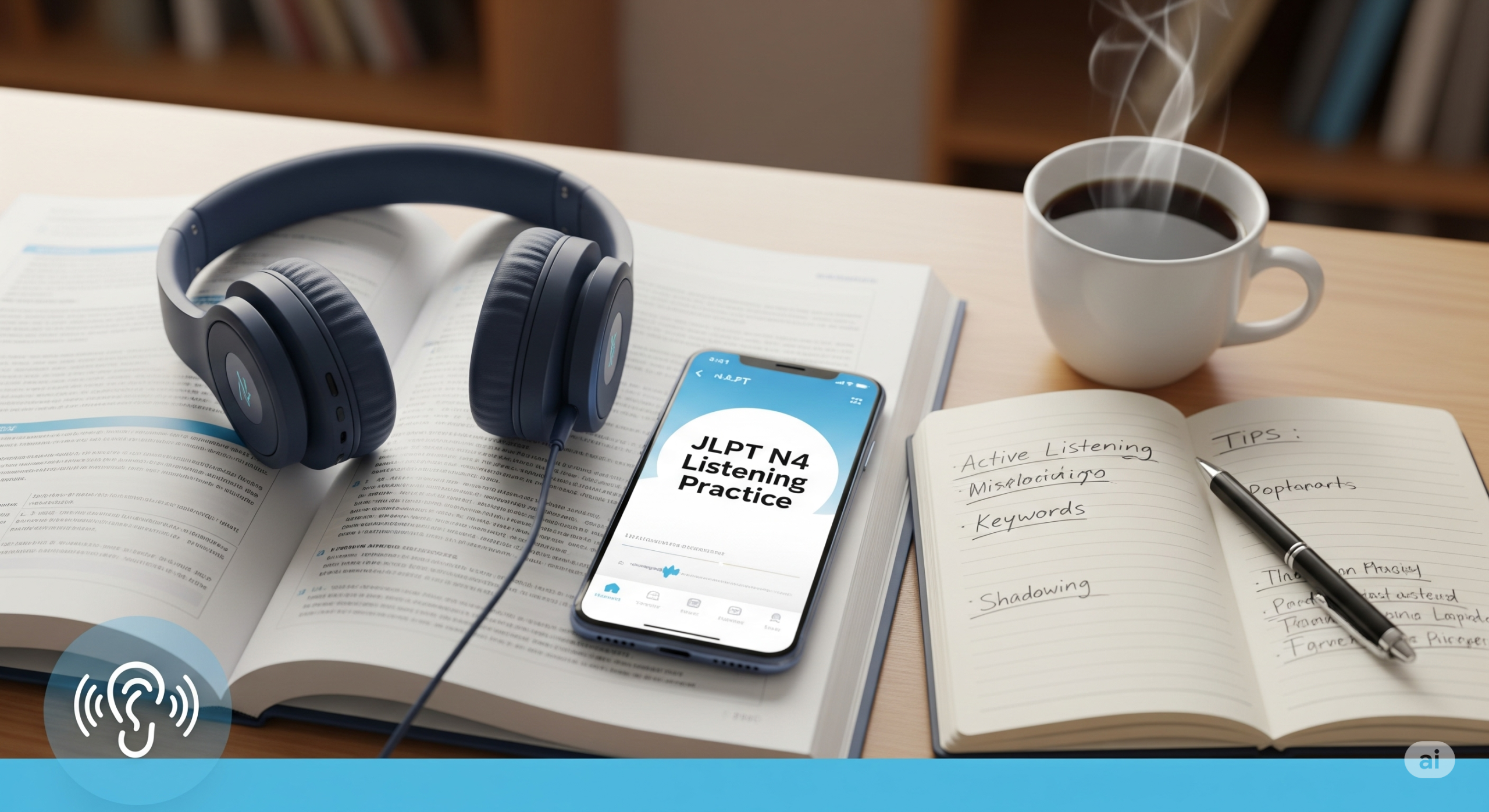
What is the JLPT N5?
The JLPT (Japanese Language Proficiency Test) is the most widely recognized Japanese language exam for non-native speakers. It has five levels, with N5 being the easiest and N1 the most advanced.
Why Take the JLPT N5?
- Measure Your Progress: Passing N5 proves you’ve mastered basic Japanese.
- Boost Confidence: It’s a great milestone for beginners.
- Academic & Career Benefits: Some schools and jobs require JLPT certification.
- Motivation: Having a goal keeps you disciplined in your studies.
(🔗 Learn more about JLPT’s official website)
JLPT N5 Exam Structure
The N5 test evaluates three key areas:
- Vocabulary (語彙 – Goi) – ~25 min
- Basic words (e.g., 食べる – taberu – “to eat”)
- Kanji recognition (~100 characters)
- Grammar & Reading (文法・読解 – Bunpō, Dokkai) – ~50 min
- Simple sentence structures
- Short passages (e.g., signs, notices)
- Listening (聴解 – Chōkai) – ~30 min
- Everyday conversations (e.g., greetings, shopping)
No speaking or writing section!
(📌 Pro Tip: Time management is key—practice with mock tests!)
How to Study for JLPT N5
1. Master Hiragana & Katakana First
Before diving into kanji, ensure you can read and write hiragana and katakana fluently. These are the building blocks of Japanese.
- Free Resources:
- Tofugu’s Hiragana Guide
- Real Kana for practice
2. Learn Essential Kanji (100+ Characters)
N5 requires recognizing around 100 kanji. Focus on common ones like:
| Kanji | Meaning | Reading |
|---|---|---|
| 日 | Sun/Day | にち (nichi) / ひ (hi) |
| 月 | Moon/Month | げつ (getsu) / つき (tsuki) |
| 人 | Person | じん (jin) / ひと (hito) |
(📖 Need a structured approach? Try WaniKani or Kanji Study App)
3. Build Basic Vocabulary (~800 Words)
Start with everyday terms:
- Greetings: こんにちは (Konnichiwa – Hello)
- Numbers: 一 (ichi – 1), 二 (ni – 2)
- Common Verbs: 行く (iku – to go), 見る (miru – to see)
(🎧 Listen & repeat with JapanesePod101 for better retention)
4. Understand Basic Grammar
N5 grammar includes:
- Particles (は, を, で, に)
- Example: わたしはがくせいです (Watashi wa gakusei desu – “I am a student.”)
- Verb Conjugation (Present, Past, Negative)
- Example: たべます (tabemasu – eat) → たべません (tabemasen – don’t eat)
(📘 Recommended book: Genki I – Great for beginners!)
5. Practice Listening Daily
Since listening is ⅓ of the test, immerse yourself in Japanese:
- Watch kids’ shows (e.g., Doraemon, Sazae-san)
- Use apps like NHK Easy Japanese
- Repeat phrases aloud to improve pronunciation
Best Study Resources for JLPT N5
| Resource | Type | Why It’s Useful |
|---|---|---|
| Genki I | Textbook | Covers N5 grammar & vocab |
| Minna no Nihongo | Textbook | Great for self-study |
| Anki | Flashcard App | Spaced repetition for memorization |
| JLPT N5 Practice Tests | Mock Exams | Simulate real test conditions |
| Bunpro | Grammar Site | Interactive grammar exercises |
(🔍 Looking for free options? Try Tae Kim’s Guide or JLPT Sensei)
Practical Tips for Passing JLPT N5
1. Take Practice Tests
Mock exams help you:
- Get familiar with the format
- Identify weak areas
- Improve time management
(📝 Download free JLPT N5 practice papers here)
2. Join a Study Group
Learning with others keeps you motivated. Check:
- Reddit’s r/LearnJapanese
- Local language exchange meetups
3. Use Japanese Daily
- Label household items with sticky notes
- Keep a simple journal in Japanese
- Chat with native speakers on HelloTalk
4. Don’t Cram—Consistency Wins
Even 20-30 minutes daily is better than last-minute studying.
What to Expect on Exam Day
- Arrive early (bring your ID & admission ticket).
- No dictionaries or phones allowed.
- Listening section is played once—focus!
(⚠️ Avoid common mistakes like misreading kanji or skipping instructions.)
After Passing JLPT N5: What’s Next?
- Move to JLPT N4 (expand vocabulary & grammar).
- Try speaking more (apps like iTalki help).
- Explore Japanese media (anime, manga, news).
(🚀 Ready for the next challenge? Read our JLPT N4 Guide!)
Final Thoughts
The JLPT N5 is an excellent first step in your Japanese journey. While it’s the easiest level, passing it requires dedication. Use the right resources, practice consistently, and immerse yourself in the language.
がんばってください!(Ganbatte kudasai! – Good luck!)
FAQs About JLPT N5
Q: How long does it take to pass JLPT N5?
A: Typically 3-6 months with regular study (1-2 hours/day).
Q: Is JLPT N5 useful for jobs?
A: Mostly for personal achievement—higher levels (N3+) are better for careers.
Q: Can I retake the test if I fail?
A: Yes! The JLPT is held twice a year (July & December).
Liked this guide? Share it with fellow learners!
(📌 For more Japanese learning tips, check out our Complete JLPT Guide or Best Apps to Learn Japanese.)


