Introduction
If you’re learning Japanese, you’ve probably heard of NHK Easy Japanese (NHK News Web Easy)—a fantastic free resource designed to help learners read and understand real Japanese news in a simplified way.
But why is it such a powerful tool? And how can you make the most of it?
In this post, we’ll explore:
✅ What NHK Easy Japanese is
✅ Why it’s perfect for learners
✅ Practical ways to use it daily
✅ Tips to maximize your learning
By the end, you’ll see why this resource is a must-have for anyone serious about mastering Japanese.
(Looking for more beginner-friendly resources? Check out our guide on the Best Free Tools to Learn Japanese
What Is NHK Easy Japanese?
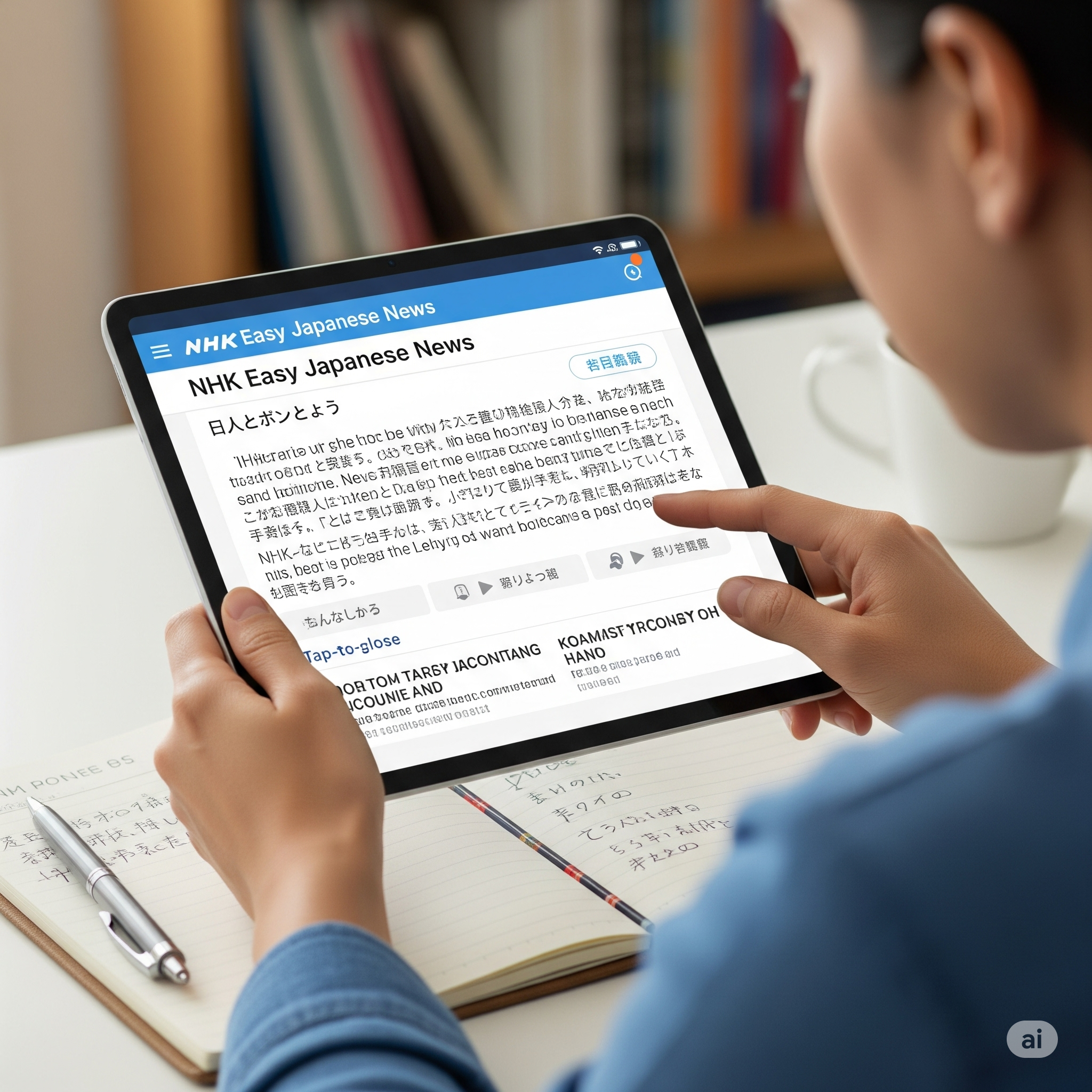
NHK Easy Japanese (or NHK News Web Easy) is a free online service by Japan’s national broadcaster, NHK. It provides simplified news articles written in easy-to-understand Japanese, complete with furigana (small hiragana above kanji) and audio narration.
Key Features:
✔ Simplified News Articles – Shorter sentences, basic vocabulary
✔ Furigana Support – Helps with kanji reading
✔ Audio Narration – Listen to native pronunciation
✔ Vocabulary Explanations – Hover over words for definitions
✔ Original Article Links – Compare with the full NHK news version
This makes it an ideal stepping stone between textbook Japanese and real-world content.
(Want to improve your listening skills? Try these Top 5 Japanese Podcasts for Learners
Why NHK Easy Japanese Is Perfect for Learners
1. Real-World Japanese (Without the Overwhelm)
Most learners struggle with transitioning from textbooks to native materials. NHK Easy Japanese bridges that gap by offering authentic news in a learner-friendly format.
Instead of diving into complex articles, you get:
- Simplified grammar
- Common vocabulary
- Contextual learning
This builds confidence before tackling harder materials like novels or newspapers.
2. Improves Reading & Listening Simultaneously
Since each article has audio narration, you can:
📖 Read along to improve reading speed
👂 Listen first, then check comprehension
🗣 Shadow the audio to practice pronunciation
This dual input (reading + listening) reinforces learning effectively.
3. Builds Kanji & Vocabulary Naturally
With furigana and hover definitions, you learn kanji in context—not just through rote memorization.
For example:
- 見つける (みつける, mitsukeru) – “to find”
- 発表する (はっぴょうする, happyou suru) – “to announce”
Seeing words repeatedly in news stories helps them stick.
(Struggling with kanji? Try these Kanji Learning Hacks
4. Daily Updates Keep Learning Fresh
New articles are posted almost daily, meaning:
- No outdated content
- Exposure to current events
- Motivation to check back regularly
This makes it a sustainable habit rather than a one-time resource.
5. Free & Accessible
Unlike paid apps or textbooks, NHK Easy Japanese is completely free and works on any device.
How to Use NHK Easy Japanese Effectively
Step 1: Start with the Headlines
Scan the headlines and pick an article that interests you. Interest = better retention!
Step 2: Read Without Translations First
Try understanding the gist before relying on furigana or definitions. This trains your brain to process Japanese naturally.
Step 3: Listen to the Audio
Play the narration after reading to check comprehension. Then, listen first and see how much you catch.
Step 4: Note Down New Words
Keep a vocabulary journal or use an app like Anki to review later.
Step 5: Compare with the Original Article
Once comfortable, click the 普通のニュース (regular news) link to see the full version. Notice differences in phrasing and complexity.
Bonus: Use It for Speaking Practice
- Shadow the audio (repeat after the narrator)
- Summarize articles aloud in Japanese
(Need speaking practice? Try these Conversation Practice Tips
Common Challenges & How to Overcome Them
1. “The Articles Are Still Too Hard!”
- Start with shorter pieces (look for 1-2 paragraph news)
- Use a pop-up dictionary (like Rikaikun (outbound link))
- Read the same article multiple times over a few days
2. “I Don’t Know Enough Kanji Yet.”
- Focus on recognizing kanji rather than writing them first
- Use the furigana as support, but try reading without it sometimes
3. “I Get Bored with News Topics.”
- Pick articles related to your interests (sports, tech, culture)
- Supplement with other easy-reading resources like Tadoku Graded Readers
Final Thoughts: Why NHK Easy Japanese Stands Out
Many Japanese learners waste time on ineffective methods—memorizing random words, relying too much on romaji, or avoiding real-world content.
NHK Easy Japanese solves these problems by offering:
✅ Structured yet natural language exposure
✅ Daily updates for consistent learning
✅ Free, accessible, and practical content
If you’re serious about fluency, make this a daily habit. Even 10-15 minutes a day will make a huge difference in your reading and listening skills.
(Want more structured study plans? Check out our 3-Month Japanese Study Guide
Your Turn!
Do you use NHK Easy Japanese? What’s your favorite feature? Let us know in the comments!
And if you found this guide helpful, share it with fellow learners—they’ll thank you later. 😊
Keep learning, stay consistent, and 頑張って (ganbatte)!