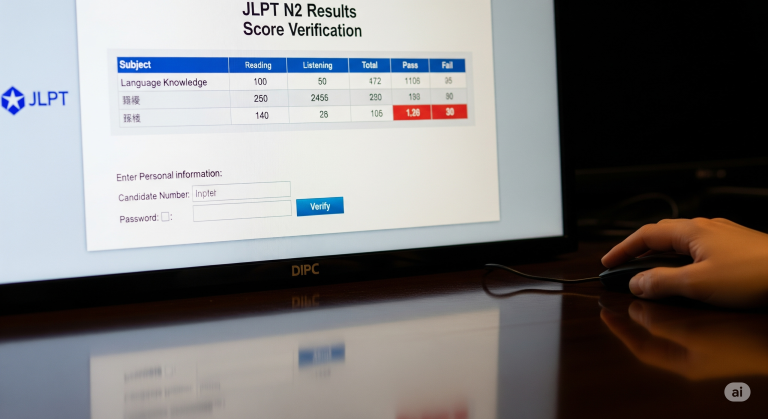
The envelope arrives. Or maybe you nervously refresh the JLPT results page for the tenth time in a minute. You see your candidate number and then… the result. 不合格 (Fugoukaku). Not Pass.
A wave of disappointment washes over you. All those months of studying, the flashcards on your phone, the weekends spent hunched over practice tests—it can feel like it was all for nothing. That sinking feeling is real, and it’s okay to sit with it for a moment.
But listen to me, as someone who has both passed and failed language exams in my time: This is not the end. This is a data point.
Failing the JLPT N2 isn’t a reflection of your intelligence or your ability to learn Japanese. It’s a signal that your strategy needs adjusting. Think of it not as a failure, but as a costly practice test that gave you incredibly specific feedback.
I’m here to help you read that feedback. Let’s turn this setback into your most powerful tool for success. Here’s your actionable, step-by-step plan to bounce back stronger.
Step 1: Feel the Feels, Then Shift Your Mindset
First, give yourself 24 hours to be disappointed. Eat some ice cream, vent to a friend, watch your favorite show. Get it out of your system. Then, we make a crucial shift.
Stop saying: “I failed the JLPT N2.”
Start saying: “I haven’t passed the JLPT N2 yet.”
That little word “yet” is powerful. It implies future success. It frames this not as a permanent state but as a temporary situation on your longer language journey. Remember why you started learning Japanese in the first place. Was it to connect with people? To understand anime without subtitles? To advance your career? Passing the JLPT is a milestone, not the final destination. Your Japanese ability is still there, still valuable, and still growing.
Step 2: Conduct a Deep Dive Post-Mortem (The Most Important Step)
You can’t fix what you don’t understand. The JLPT provides a score report, and it’s your new best friend. It breaks down your performance into three sections:
- 言語知識(文字・語彙・文法) – Language Knowledge (Vocabulary/Grammar)
- 読解 – Reading Comprehension
- 聴解 – Listening Comprehension
Your mission is to analyze this report like a detective. Don’t just look at the scores; look at the score differences.
- Did you fail by a few points or a wide margin? A narrow miss means you’re very close! You likely just need to fine-tune your test-taking strategy and plug a few knowledge gaps. A larger gap means your study approach needs a more significant overhaul.
- Which section was your weakest? This is your biggest opportunity for growth.
- Low on Language Knowledge? This is often the easiest to improve. It means you need to drill more vocabulary and master N2-level grammar patterns. Your foundation might be shaky.
- Low on Reading? This is a common killer for N2 candidates. The passages are long, complex, and time is your enemy. A low score here suggests you need to work on reading speed, comprehension strategies, and stamina.
- Low on Listening? This indicates you need much more active, focused listening practice. Passive listening while cooking isn’t enough for the speed and nuance of the N2 exam.
If you want a deeper guide on how to interpret every part of your score report, I wrote a whole post on it: [Internal Link: How to Read Your JLPT Score Report and Actually Understand It].
Step 3: Build Your “Comeback Kid” Study Plan
Armed with the insights from your score report, you can now build a targeted, smarter study plan. Ditch what didn’t work last time.
For Vocabulary & Grammar (言語知識):
- Quality over Quantity: Instead of trying to memorize 20 words a day, focus on 10 and really learn them. Use them in a sentence. Find them in the wild. Use a proper SRS (Spaced Repetition System) like Anki (Outbound Link) to ensure they stick.
- Context is King: Don’t just study isolated grammar points. The JLPT tests grammar in context. Use a textbook like Shin Kanzen Master N2 Grammar or *So-Matome N2 Grammar* and pay close attention to the example sentences. How is the grammar used with specific verbs or in specific situations?
- Mine Your Mistakes: Create a dedicated “Error Notebook.” Every time you get a grammar or vocab question wrong on a practice test, write down the correct answer and the reason why. Review this notebook weekly.
For Reading Comprehension (読解):
- Read for Speed and Stamity: The N2 reading section is a marathon. You must practice reading long-form texts under time pressure. Set a timer for 10 minutes and try to read a short news article on NHK News Web Easy (Outbound Link) or a blog post, then summarize it.
- Learn to Skim: You don’t have time to read every word deeply. Practice identifying the main idea of a paragraph quickly. Look for topic sentences, concluding sentences, and key particles that indicate the author’s opinion (例えば、〜と思う、〜はずだ).
- Tackle Different Genres: The JLPT uses everything from newspaper editorials to product manuals. Don’t just read what you enjoy. Force yourself to read opinion pieces, explanations, and letters. This was a game-changer for me, and I detailed my method here: [Internal Link: How I Conquered the Dreaded JLPT N2 Reading Section].
For Listening Comprehension (聴解):
- Active vs. Passive Listening: Passive listening (having Japanese TV on in the background) is great for immersion, but for the JLPT, you need active practice. Use past papers or dedicated JLPT listening practice books. Listen to a dialogue once without looking at the questions, then again while looking, and try to answer.
- Focus on the “Why”: When you get a listening question wrong, don’t just check the answer. Go back and listen again. Why did you get it wrong? Did you miss a key word? Did you misunderstand a negative form? Was the speaker’s tone sarcastic? This micro-analysis is how you improve.
- Immerse in Realistic Audio: The listening section uses audio that can have background noise, quick conversations, and mumbled replies. Practice with realistic materials. Great free resources are podcasts like Nihongo Con Teppei (Outbound Link) for advanced beginners or Bilingual News for a serious challenge.
Step 4: Master the Test Itself
Knowing Japanese and knowing how to take the JLPT are two different skills.
- Practice Tests are Non-Negotiable: In the 2-3 months leading up to the exam, you should be taking one full, timed practice test every weekend. This isn’t just for knowledge; it’s for building the mental and physical stamina to concentrate for two hours straight.
- Learn Pacing: You cannot spend too long on any one question in the reading section. If you’re stuck, guess, mark it, and move on. A question in the first section is worth the same as a question in the last. You must collect points where you can.
- Simulate Test Day: Wake up early, eat the same breakfast you plan to eat, and take the practice test at the same time of day as the real exam. This reduces unknown variables and test-day anxiety.
For a complete rundown of what to expect on test day, from what to bring to how to manage your answer sheet, check out this resource: [Internal Link: Your JLPT Test Day Checklist: Don’t Forget These 5 Things].
Step 5: Register, Execute, and Trust the Process
Sign up for the next test immediately. Committing financially and putting it on your calendar makes it real. Then, trust the plan you’ve built.
There will be days you don’t want to study. That’s normal. On those days, just do five minutes. Often, starting is the hardest part. Remember your “why,” look back at your error notebook to see how far you’ve come, and keep going.
You Are More Than a Test Score
The JLPT N2 is a tough exam. Failing it doesn’t make you a failure. It makes you a student who is still learning. And that’s exactly what you are.
Your journey with Japanese is filled with small victories every day—understanding a song lyric, having a smooth conversation with a friend, reading a street sign. Don’t let one test, one fugoukaku, overshadow all of that.
Use this experience. Learn from it. Let it fuel you. When you finally see that 合格 (Goukaku) on your score report, it will taste all the sweeter because of the journey it took to get there.
頑張ってください。応援しています!
(Ganbatte kudasai. Ouen shiteimasu!)
Good luck. I’m rooting for you!
Internal Blog Posts to Link To (as placeholders used in the article):
- How to Read Your JLPT Score Report and Actually Understand It (A detailed breakdown of the scoring system and what each number means)
- How I Conquered the Dreaded JLPT N2 Reading Section (Personal anecdotes and specific skimming/scanning techniques)
- Your JLPT Test Day Checklist: Don’t Forget These 5 Things (A practical guide on what to bring, the answer sheet format, and mental preparation for the test environment)
- The Best SRS Apps for Learning Japanese Vocabulary (That Aren’t Just Anki) (A review of different Spaced Repetition Systems to suit different learning styles)