So, you’ve set your sights on the summit of Japanese language proficiency: the JLPT N1. かなりやるね!(That’s seriously impressive!).
As a long-time Japanese language sensei and someone who has guided countless students through this journey, I know exactly what you’re feeling—a mix of excitement, determination, and maybe a little bit of healthy fear. The N1 isn’t just a test; it’s a milestone that represents years of dedication. It opens doors to careers in translation, academia, and top-tier companies, both in Canada and Japan.
But navigating the logistics of taking the test here in Canada can feel almost as difficult as the test itself! Where do you sign up? How much does it cost? And most importantly, how on earth do you prepare?
Take a deep breath. Brew a cup of green tea. I’ve got you covered. This is your comprehensive, step-by-step guide to tackling the JLPT N1 in Canada, infused with practical advice you won’t find anywhere else.
What is the JLPT N1 Really Like?
Before we dive into the “how,” let’s be crystal clear about the “what.” The N1 is designed to certify that you can understand Japanese used in a wide variety of real-life situations. We’re not just talking textbook Japanese anymore.
- Reading: You’ll need to comprehend complex logical writings (like editorials) and abstract topics. You’ll read at speed, grasping the nuanced intent of the author, not just the surface meaning.
- Listening: You’ll follow fast-paced conversations, news reports, and lectures, understanding the relationships between speakers and their points of view. The audio is only played once, so focus is key.
It’s a beast, but a conquerable one with the right strategy.
Key Details for the JLPT in Canada (2024 Focus)
The JLPT in Canada is administered by a consortium of universities and cultural foundations. The main hosts are The Japan Foundation, Toronto (for Ontario and Eastern Canada) and University of Calgary (for Western Canada). A few other institutions also act as test sites.
- Test Date (2024): The JLPT is held twice a year, in July and December. For 2024, the confirmed dates are:
- Sunday, July 7, 2024
- Sunday, December 1, 2024 (anticipated)
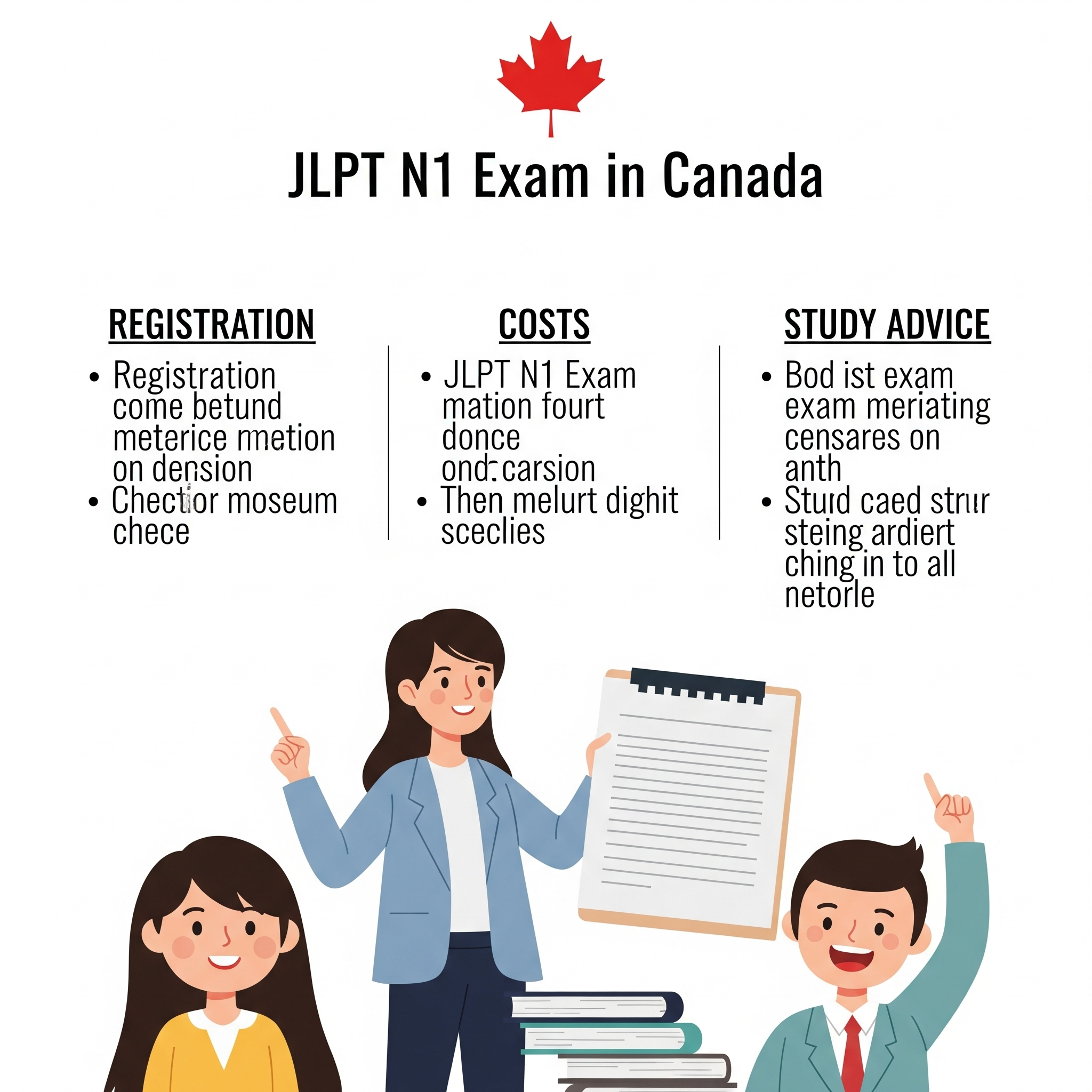
- Registration Period: This is CRUCIAL. Registration typically opens in mid-March for the July test and mid-August for the December test. It’s a short window, often just 3-4 weeks. Spots fill up incredibly fast, especially for N1. Mark your calendar now!
The Step-by-Step Guide to JLPT N1 Registration in Canada
This is where most people panic. Don’t. Just follow these steps.
- Find Your Closest Test Center: First, identify which institution serves your region. The main website for all of Canada is the JLPT Canadian Office. This site will direct you to your local test site’s specific registration page. Popular sites include UBC, U of T, U of A, U of Calgary, and McGill.
- The Registration Window Opens: On the first day of registration, be ready to go online. I’m not kidding. Have your credit card handy and your personal information prepared.
- Fill Out the Online Form: You’ll need to provide basic info, select your level (N1), and upload a digital passport-style photo. Make sure your photo meets the requirements (recent, plain background, no hats). This is a common stumbling block.
- Pay the Fee: You’ll pay online via credit card. See the cost breakdown below.
- Confirmation is Key: You will receive an email confirmation. SAVE THIS. A few weeks before the test, you will receive your official test voucher. Print this out—it’s your ticket into the exam room.
Pro Tip from a Sensei: Set a reminder for the day registration opens. If the website is slow or crashes (it happens), be patient and keep trying. The demand, especially in major cities, is very high.
Breaking Down the JLPT N1 Cost in Canada (2024)
Let’s talk numbers. Taking the JLPT is an investment in your future.
- Test Fee: The fee for the JLPT N1 in Canada is typically around $100 CAD. This is consistent across most test centers. For example, in recent years, the fee has been exactly $100 at most major universities.
- The “Hidden” Costs: The real cost of the N1 goes beyond the registration fee. Be prepared for:
- Study Materials: Textbooks, workbooks, and online resources. A good set of So-Matome, Shin Kanzen Master, or Kanji Look and Learn books can cost $150-$200.
- Practice Tests: Essential. Budget for at least the official practice workbook.
- Shipping: If you order books from Japan, shipping can be expensive.
- Potential Travel: If you don’t live near a test center, factor in gas, parking, or even a hotel room.
View the entire cost as an investment in your certification.
Crafting Your N1 Study Plan: Advice from the Front Lines
Okay, this is the part you came for. How do you actually study for this thing? Cramming won’t work. You need a sustainable, intelligent plan.
1. Master the Test Format
First, become intimately familiar with the structure. The test is divided into two sections with a break in between:
- Language Knowledge (Vocabulary/Grammar) & Reading (110 mins)
- Listening (60 mins)
Knowing the question types—like knowing that the reading section is a marathon of comprehension, not a sprint—will help you manage your time. Time management is your #1 enemy on the N1.
2. Go Beyond the Textbooks: Immerse Yourself
This is my number one piece of unique advice. To pass the N1, you must move from studying Japanese to using Japanese as a medium.
- Read Real Japanese Material: Don’t just read textbook passages. Read Japanese news articles (NHK News Web Easy is a start, but graduate to mainichi.jp or asahi.com). Read opinion pieces and editorials—this is exactly the style of writing you’ll see on the test.
- Listen to Native Content Daily: Your listening practice shouldn’t be limited to JLPT practice CDs. Listen to Japanese podcasts (like ひいきびいき or 4989 American Life), watch Japanese news (ANN News on YouTube), and watch dramas or anime without subtitles. Force your brain to process natural speed and cadence. For more on this, check out my post on How to Use Japanese Media to Ace the JLPT.
- Shadowing Technique: Repeat aloud what you hear in real-time. This builds listening comprehension, pronunciation, and speed all at once.
3. Target Your Weaknesses: Kanji, Grammar, and Vocab
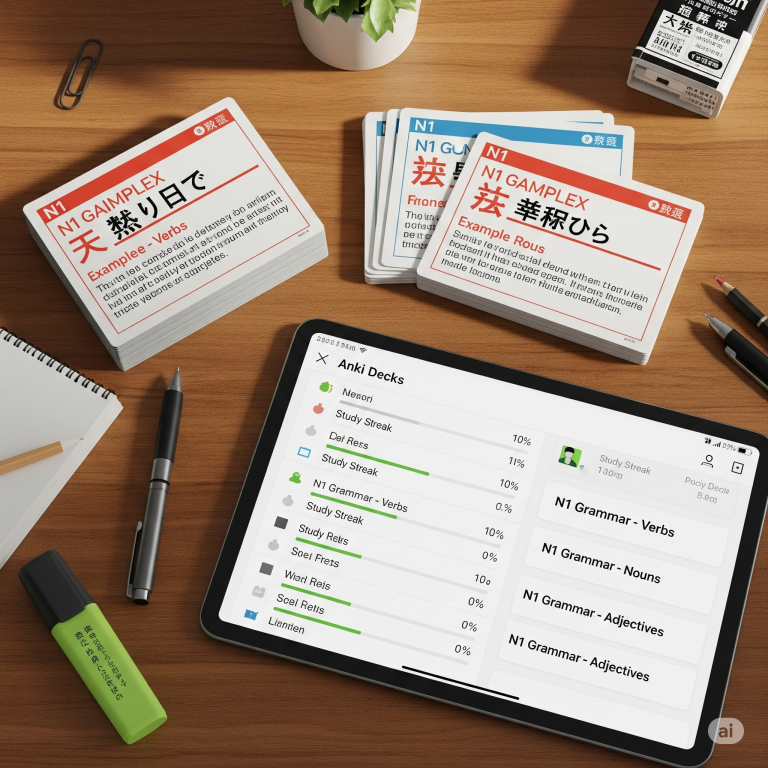
- Kanji: By N1, you’re expected to know around 2000 kanji. But it’s not just recognition; it’s understanding subtle differences in compounds. Use apps like Anki or Kanji Study for daily, spaced repetition. Don’t just memorize the character; learn its soul—its common compounds and nuances.
- Grammar: N1 grammar points are highly abstract (e.g., ~ばこそ, ~を余儀なくされる). A series like Shin Kanzen Master N1 Grammar is gold. Create sentences using each new grammar point. If you can’t use it, you don’t truly know it.
- Vocabulary: You’ll encounter sophisticated, academic, and business vocabulary. Read widely to encounter words in context. Keep a dedicated vocabulary notebook or digital list.
4. Practice Tests Are Non-Negotiable
You must take full, timed practice tests under exam conditions. This is the most critical part of your preparation.
- Why? It builds stamina. A 3-hour test is mentally exhausting.
- It reveals your weaknesses. Do you always run out of time on reading? Are you losing points on the listening “quick response” section? Practice tests will show you exactly where to focus your final weeks of study.
- It familiarizes you with the pressure. For a realistic challenge, try the Official JLPT Practice Workbook (outbound link).
Unique Insights for Canadian Learners
You have unique advantages living in Canada! Leverage them.
- Major Cities Have Resources: If you live in Toronto, Vancouver, or Calgary, you have access to Japanese cultural centres and libraries with Japanese sections. The Japan Foundation, Toronto, has an incredible library full of resources. Use it!
- Find a Study Group: Connect with other N1 aspirants at local universities or through Meetup groups. Having peers to struggle and practice with is invaluable. Explaining a grammar point to someone else is the best way to solidify it in your own mind.
- Consider a Tutor for the Final Push: For the speaking practice you don’t get on the test? Absolutely not. But a good tutor, especially one familiar with the JLPT, can provide structure, explain those devilishly tricky grammar points, and hold you accountable. Wondering if you need one? I break it down in Do You Need a JLPT Tutor? A Candid Look.
Test Day: What to Expect and Bring
- What to Bring: Your test voucher, a valid photo ID (passport or driver’s license), HB pencils, a good eraser, and a watch (non-digital, non-smartwatch to keep track of time).
- The Atmosphere: It’s formal and quiet. Listen carefully to the proctor’s instructions. They are usually given in both English and Japanese.
- The Answer Sheet: It’s a bubble sheet. Be careful to mark your answers clearly and in the correct section. You don’t get extra time for filling it out.
Final Words of Encouragement
The journey to N1 is a marathon, not a sprint. There will be days you feel like you’re not making progress. Trust the process. Every article you read, every podcast you half-understand, every kanji you review is a step forward.
Remember, your goal isn’t just to pass a test. It’s to unlock a level of fluency that allows you to truly connect with Japanese culture, literature, and people on a deeper level. That is a reward worth every single hour of study.
頑張ってください!(Ganbatte kudasai!) Give it your all!
JLPT N1 in Boston: Test Centers, Dates & Preparation Tips
Taming the Beast: Your Expert Guide to JLPT N1 Example Questions and Practice Exercises
JLPT N1 Full Test Experience: What to Expect on Exam Day