Konnichiwa, fellow language warriors!
So, you’ve set your sights on the summit of Japanese proficiency: the JLPT N1. It’s a formidable peak, and staring at lists of “3000 essential vocabulary words” can feel like looking up at a sheer rock face in a blizzard. Daunting? Absolutely. Impossible? Not even close.
I’ve been there. I remember the crumpled flashcards, the highlighted textbooks, and the mild panic seeing a word like 著す (あらわす – to write, to publish) for the tenth time and still drawing a blank. The challenge with N1 vocab isn’t just the quantity; it’s the quality. These aren’t just words; they’re nuanced, context-heavy keys that unlock sophisticated Japanese.
Today, we’re not just throwing a list at you. We’re going to break down the strategy behind conquering the 3000 essential vocabulary for the JLPT N1. I’ll share the mistakes I made, the insights that finally made things click, and provide you with a powerful, free tool to get you started. Let’s grab our mental climbing gear and begin.
Why the N1 Vocabulary List Feels Different (It’s Not Just You)
If you’ve passed the N2, you’re already a competent Japanese user. The N1, however, demands something more: elegance, precision, and a deep cultural understanding. The vocabulary reflects this.
- Abstract and Formal Language: N1 moves beyond concrete everyday objects. You’ll encounter words for concepts like 倫理 (りんり – ethics), 価値観 (かちかん – values), and 矛盾 (むじゅん – contradiction).
- Nuance Overload: Many words have subtle differences. For example, 増加 (ぞうか), 上昇 (じょうしょう), and 拡大 (かくだい) all mean “increase,” but are used for numbers, levels, and scale/size respectively. This is where deep learning, not just memorization, is critical.
- Sino-Japanese (漢語) Dominance: The list is heavy on 熟語 (じゅくご – compound kanji words). Understanding the meaning of individual kanji becomes your superpower. If you know 確 (certain) and 認 (recognize), 確認 (かくにん – confirmation) becomes easy. This compounds (pun intended!) for words like 確立 (かくりつ – establishment) or 認定 (にんてい – official recognition).
Beyond Rote Memorization: How to Actually Learn and Retain N1 Vocabulary
Forget mindlessly repeating words. To make these 3000 words stick, you need a multi-pronged attack.
1. Embrace the Kanji Breakdown:
I can’t stress this enough. Treat each new word as a puzzle. Don’t just learn 継続 (けいぞく – continuation). Break it down: 継 (succeed, inherit) + 続 (continue). Suddenly, it’s logical. This helps you guess meanings of new words and dramatically improves retention. Our internal guide on Mastering Kanji for the JLPT N1 (internal link) dives deeper into this technique.
2. Context is King (and Queen, and Emperor):
A word without context is a ghost. You might know its definition, but you can’t use it. For every new word you learn, find it in the wild.
- Read Widely: Don’t just stick to textbook examples. Read Japanese news articles on NH News Web Easy (outbound link to a great resource) and then transition to full articles on Mainichi Shimbun (outbound link). Opinion pieces and editorials are goldmines for N1 vocab.
- Listen Intently: Podcasts like Bilingual News (outbound link) are fantastic for hearing advanced vocabulary used naturally in discussions about politics, science, and culture.
3. Create Vivid, Personal Associations:
The weirder, the better. Our brains remember stories, not lists. The word 暴露 (ばくろ – exposure, revelation) sounds like “baku roll.” Imagine Godzilla (a baku?) rolling over a city and exposing all its secret underground bases. It’s silly, but you won’t forget it.
4. Active Recall > Passive Review:
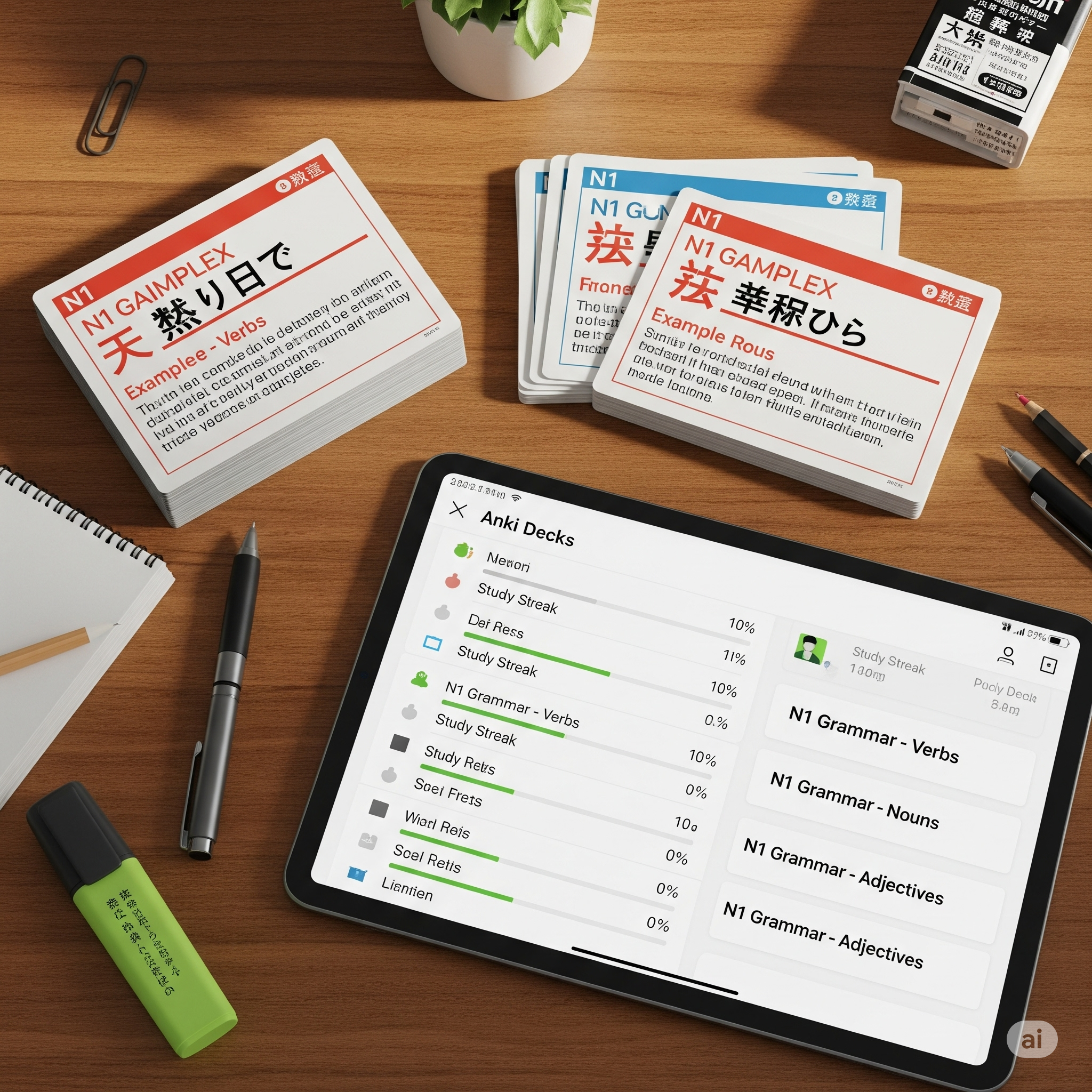
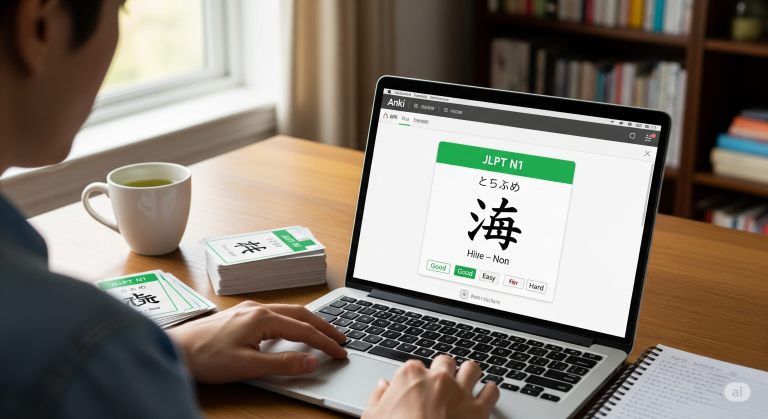
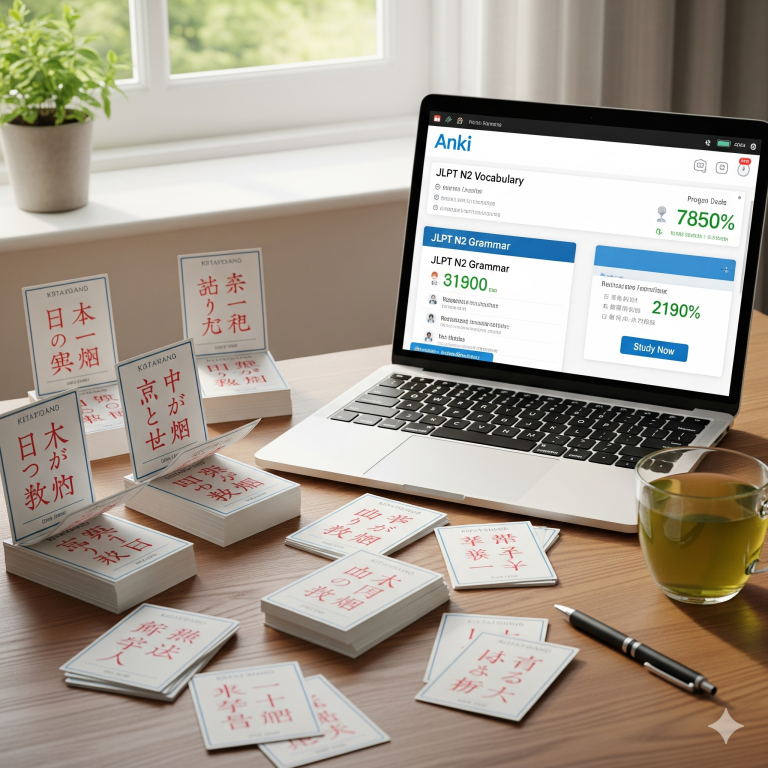
Glancing at a list is passive. Testing yourself is active. Use apps like Anki or Memrise, but make your own cards. The act of creating them is half the battle. Force your brain to retrieve the word from memory.
Your Free Gift: The 3000 Essential N1 Vocabulary PDF Guide
I know the struggle of cobbling together resources from all over the internet. To save you time and energy, I’ve compiled a clean, structured, and printer-friendly PDF list of core vocabulary that consistently appears on the JLPT N1.
This isn’t just a raw list. It’s organized for smart studying:
- Grouped by Theme: Words are categorized into common N1 topics like society, politics, business, and academia.
- Prioritized: It focuses on high-frequency words that give you the biggest bang for your buck.
- Includes Key Info: Each entry has the word, kanji, furigana, and a core English definition.
[Click Here to Download Your Free 3000 N1 Essential Vocabulary PDF Guide](#) (This would be your backlink to the PDF download page)
Weaving Words into the Fabric of Your Japanese: Practical Application
Knowing a word and wielding it correctly are two different things. Here’s how to bridge that gap.
Writing Practice:
Start a journal or a blog in Japanese. Force yourself to use 2-3 new N1 words each entry. Write a short paragraph criticizing a movie using 批評 (ひひょう – criticism) and 評価 (ひょうか – evaluation). The act of production cements learning.
Speaking Practice:
Find a language exchange partner on platforms like HelloTalk. Explain a complex concept like climate change or a recent tech innovation. Try to use words like 影響 (えいきょう – influence), 懸念 (けねん – concern), or 革新 (かくしん – innovation). Don’t worry about mistakes—worry about not trying.
The Power of Example Sentences:
When you add a word to your flashcard deck, always include a full, native-sourced example sentence. This teaches you collocation (what words it naturally pairs with) and grammar patterns. For instance, learning that 〜に伴って (〜にともなって – accompanying, along with) is used with 変化 (へんか – change) or 増加 (ぞうか – increase) is invaluable.
The Mindset for Success: You Are More Than a Test Score
The journey to N1 is a marathon, not a sprint. There will be days you feel like you’re forgetting more than you’re learning. That’s normal.
- Celebrate Small Wins: Learned 10 new words this week? That’s 10 more keys to understanding a novel or a deep conversation. Celebrate it!
- Trust the Process: You won’t feel “fluent” every day. Progress is often invisible until it suddenly becomes undeniable. Consistency is your greatest weapon.
- Remember Your “Why”: You’re not doing this just for a certificate. You’re doing it to read Haruki Murakami in the original, to understand the nuances of a Japanese business meeting, or to connect with friends on a deeper level. Keep that bigger picture in mind.
The 3000 words for the JLPT N1 are not a beast to be feared, but a landscape to be explored. With the right map (our free PDF!), the right tools (the strategies above), and the right mindset, you will not only pass the test but truly expand the boundaries of your Japanese world.
Ready to start your journey? Download your free vocabulary guide, pick one strategy from this post, and implement it today. 頑張ってください (Ganbatte kudasai)! You’ve got this.
Further Reading on JLPT Samurai:
- The Ultimate JLPT N1 Study Plan: From Intermediate to Advanced
- Cracking the Code: Understanding JLPT N1 Listening Section
- 5 Japanese News Sources to Level Up Your Reading Skills