Konnichiwa, future JLPT N5 champions!
So, you’ve decided to take the plunge and conquer the Japanese Language Proficiency Test, starting at the N5 level. Congratulations! This is where an incredible journey begins. You’re probably grappling with hiragana, katakana, and that looming, seemingly mystical world of kanji.
I’ve been there. I remember staring at my first kanji textbook, feeling overwhelmed by where to even start. Which of these hundred-plus characters are truly important? Should I learn them in the order the book presents them? Alphabetically?
Here’s a secret from someone who has been through it and now guides students through it: Not all N5 kanji are created equal.
While the official JLPT N5 list has around 100-120 kanji, some appear constantly in everyday Japanese, while others are more niche. Focusing on the most frequent ones first is like building the strongest pillars of a house before worrying about the interior decor. It’s efficient, strategic, and incredibly motivating because you’ll start recognizing them everywhere—in your textbook, on restaurant menus, on street signs, and in anime.
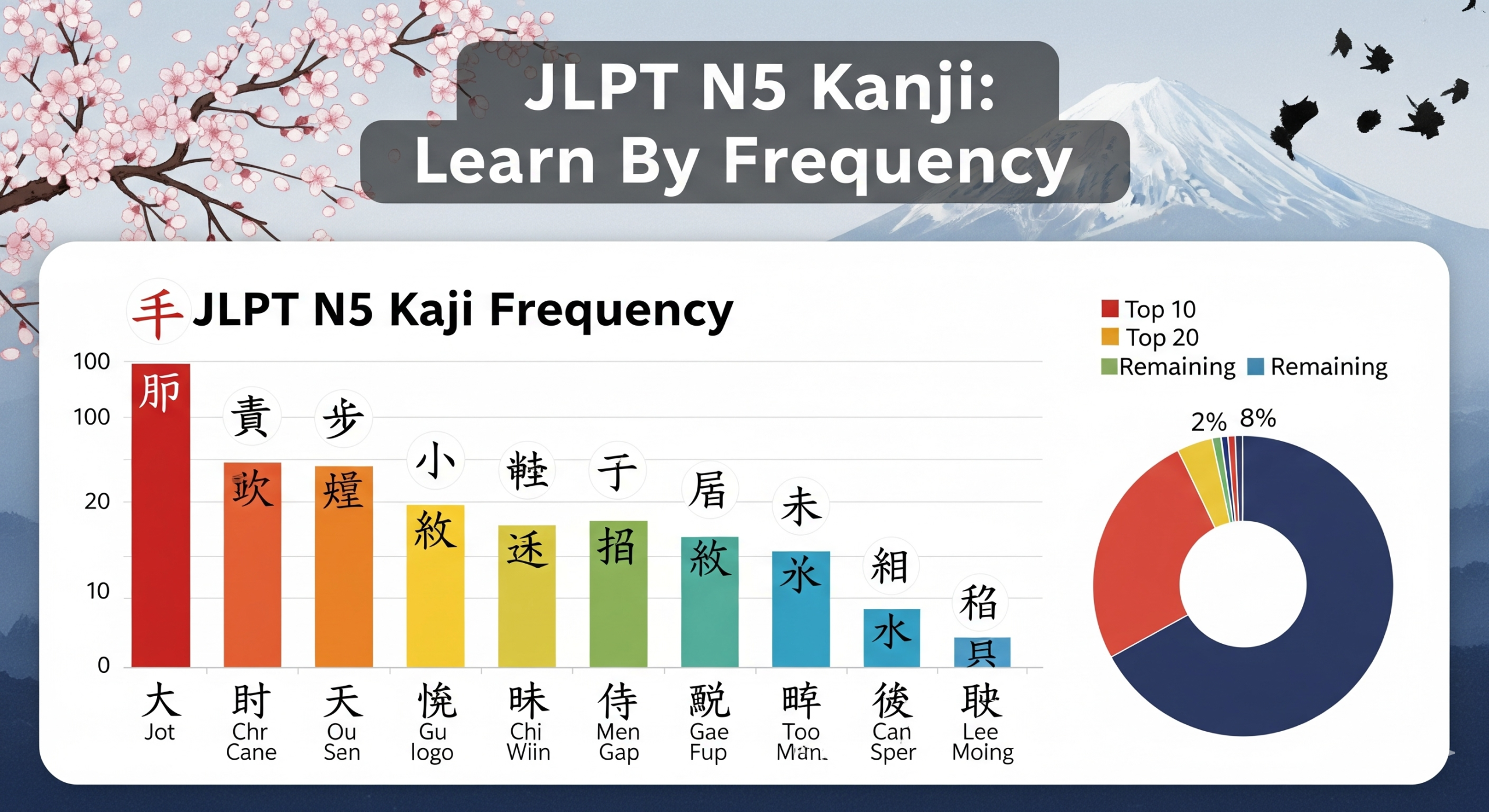
This guide will break down the JLPT N5 kanji by frequency, giving you a data-driven roadmap to the characters that will give you the biggest bang for your study buck. Let’s turn that anxiety into action!
Why Learning Kanji by Frequency is a Game-Changer
Before we dive into the list, let’s talk strategy. Why is this approach so powerful?
- Immediate Practicality: You learn the kanji you’ll encounter immediately. Seeing a character you just studied on a convenience store sign (コンビニ, konbini) is a thrilling reward that fuels your motivation.
- Efficient Vocabulary Building: High-frequency kanji are the building blocks for high-frequency words. Learn the kanji 人 (person), and you instantly unlock words like 日本人 (Japanese person), 大人 (adult), and 人口 (population).
- Faster Reading Comprehension: Since these characters appear most often, mastering them will allow you to understand a significant portion of the text you see at the N5 level, making reading practice less daunting.
- Smarter Study Sessions: Instead of wasting time on obscure characters you might not see for months, you invest your precious time where it matters most.
Understanding the “Frequency” in Our JLPT N5 Kanji List
This list isn’t just pulled from thin air. It’s based on an analysis of past JLPT N5 exams, beginner-level textbooks like Genki and Minna no Nihongo, and databases of common word usage (corpora). We’ve categorized them into tiers so you can prioritize your learning effectively.
Tier 1: The Absolute Non-Negotiables (Top 20%)
These are the rockstars. You cannot go a single study session without seeing them. Master these first, and you’ve already won half the battle.
| Kanji | Meaning | On’yomi (Chinese Reading) | Kun’yomi (Japanese Reading) | Key Vocabulary |
|---|---|---|---|---|
| 人 | person | ジン、ニン | ひと | 人 (ひと – person)、日本人 (にほんじん – Japanese person) |
| 日 | day, sun | ニチ、ジツ | ひ、 -か、-び | 日 (ひ – day/sun)、日曜日 (にちようび – Sunday) |
| 一 | one | イチ、イツ | ひと- | 一 (いち – one)、一人 (ひとり – one person) |
| 二 | two | ニ | ふた- | 二 (に – two)、二人 (ふたり – two people) |
| 三 | three | サン | み、みっ- | 三 (さん – three)、三日 (みっか – 3rd day) |
| 時 | time | ジ | とき | 時 (じ – time o’clock)、時間 (じかん – time, hours) |
| 行 | to go | コウ、ギョウ | い-く、ゆ-く | 行く (いく – to go)、銀行 (ぎんこう – bank) |
| 見 | to see | ケン | み-る | 見る (みる – to see)、見せる (みせる – to show) |
| 来 | to come | ライ | く-る | 来る (くる – to come)、来年 (らいねん – next year) |
| 大 | big | ダイ、タイ | おお- | 大きい (おおきい – big)、大学 (だいがく – university) |
| 国 | country | コク | くに | 国 (くに – country)、中国 (ちゅうごく – China) |
| 本 | book, origin | ホン | もと | 本 (ほん – book)、日本 (にほん – Japan) |
| 出 | to exit | シュツ | で-る、だ-す | 出る (でる – to exit)、出す (だす – to take out) |
| 語 | language, word | ゴ | かた-る | 英語 (えいご – English)、語る (かたる – to talk) |
- Pro Tip: Notice how many of these form the names of countries and languages? 日+本=日本 (Japan), 中+国=中国 (China), 英+語=英語 (English). This is the power of kanji compounds. Learn one, unlock many.
Tier 2: The Essential Building Blocks (Next 50%)
These kanji are incredibly common and form the core of everyday vocabulary. Once you have Tier 1 down, move here.
| Kanji | Meaning | On’yomi | Kun’yomi | Key Vocabulary |
|---|---|---|---|---|
| 食 | to eat, food | ショク | た-べる、く-う | 食べる (たべる – to eat)、食事 (しょくじ – meal) |
| 飲 | to drink | イン | の-む | 飲む (のむ – to drink)、飲み物 (のみもの – drink) |
| 車 | car | シャ | くるま | 車 (くるま – car)、電車 (でんしゃ – train) |
| 電 | electricity | デン | – | 電車 (でんしゃ – train)、電話 (でんわ – telephone) |
| 言 | to say | ゲン、ゴン | い-う、こと | 言う (いう – to say)、言語 (げんご – language) |
| 年 | year | ネン | とし | 年 (とし – year)、今年 (ことし – this year) |
| 上 | above, up | ジョウ | うえ、あ-げる | 上 (うえ – up)、上手 (じょうず – skilled) |
| 下 | below, down | カ、ゲ | した、さ-げる | 下 (した – down)、下手 (へた – unskilled) |
| 学 | to study | ガク | まな-ぶ | 学校 (がっこう – school)、学生 (がくせい – student) |
| 生 | life, birth | セイ、ショウ | い-きる、う-む | 学生 (がくせい – student)、生きる (いきる – to live) |
- Insight: The kanji 生 is one of the most complex in Japanese, with a dozen readings. At N5, just focus on the core meanings and the vocabulary listed. Don’t try to learn all its readings at once!
Tier 3: Important but More Specific (Final 30%)
These kanji are still required for N5, but their usage might be slightly more specific or they often appear in set words.
| Kanji | Meaning | On’yomi | Kun’yomi | Key Vocabulary |
|---|---|---|---|---|
| 駅 | station | エキ | – | 駅 (えき – station)、駅前 (えきまえ – in front of station) |
| 魚 | fish | ギョ | さかな、うお | 魚 (さかな – fish)、金魚 (きんぎょ – goldfish) |
| 道 | road, way | ドウ、トウ | みち | 道 (みち – road)、道具 (どうぐ – tool) |
| 耳 | ear | ジ | みみ | 耳 (みみ – ear)、耳鼻科 (じびか – otolaryngology) |
| 手 | hand | シュ | て | 手 (て – hand)、手紙 (てがみ – letter) |
| 足 | foot, leg | ソク | あし、た-りる | 足 (あし – foot/foot)、足りる (たりる – to be enough) |
For more practice, please check out JLPT N5 Kanji Reading Practice with Example Sentences
How to Actually Learn and Memorize These Kanji (Beyond Rote Repetition)
Knowing the list is one thing; retaining it is another. Here are techniques that actually work:
- Learn with Vocabulary, Not in Isolation: Never just memorize 語 as “language.” Memorize it as 英語 (えいご – English) and 日本語 (にほんご – Japanese). This gives the kanji context and immediate utility.
- Embrace Radicals (The Building Blocks): Kanji are often made of smaller parts called radicals. For example, the kanji 語 (language) contains the radicals 言 (to say) and 吾 (I, myself)—pretty logical for “language”! Spotting radicals makes new kanji less intimidating. For a deeper dive into this, check out our post on Conquer the JLPT N5: Your Ultimate, Free Kanji PDF Guide & Study Plan.
- Spaced Repetition Systems (SRS) are Your Best Friend: Tools like Anki (outbound link to a great free tool) are digital flashcard systems that use an algorithm to show you cards just before you’re about to forget them. It’s brutally efficient.
- Write, But Write Smart: Writing a kanji 50 times mindlessly is boring and ineffective. Instead, write it 5-10 times while saying its meaning and readings out loud. Then, use it in a sentence. Write 私は本を読みます (I read a book) instead of just 本本本本.
- Get Input Everywhere: Change your phone’s language to Japanese. Follow Japanese learners on social media. Try to read children’s manga. Actively look for the kanji you’re learning in the wild. This is where frequency-based learning shines—you’ll find them everywhere!
Practice Makes Perfect: Applying Your Knowledge
Let’s test your skills with a mini-reading passage. See how many of the high-frequency kanji you can spot!
今日は日曜日です。私は一人で電車で行きました。大きい本屋で日本語の本と英語の本を買いました。その後、駅の前で友達に会いました。一緒に美味しい日本食を食べました。
Kyou wa nichiyoubi desu. Watashi wa hitori de densha de ikimashita. Ookii honya de nihongo no hon to eigo no hon o kaimashita. Sono ato, eki no mae de tomodachi ni aimashita. Issho ni oishii nihonshoku o tabemashita.
(Today is Sunday. I went by train by myself. I bought a Japanese book and an English book at a big bookstore. After that, I met a friend in front of the station. Together, we ate delicious Japanese food.)
Did you see them? 日、人、電、車、行、大、本、語、駅、食—all from our high-frequency tiers! This is the progress you can make.
For more details, please visitJLPT N5 Kanji Quiz: Test Your Knowledge
Beyond N5: Building a Lifelong Kanji Habit
Mastering the JLPT N5 kanji by frequency isn’t just about passing a test; it’s about setting up a successful, sustainable system for the rest of your Japanese learning journey. The same frequency principles apply to N4, N3, and beyond.
As you continue, you’ll start to see patterns and stories in the characters, transforming them from scary scribbles into fascinating pieces of history and logic. If you’re curious about what’s next after conquering N5, our guide on JLPT N5 Kanji Master Guide: List, Meanings, Stroke Order & Practice is a great next read.
Your Next Steps
- Download Our Free PDF: We’ve created a handy downloadable PDF chart of this entire JLPT N5 kanji by frequency list, complete with vocabulary and space for your notes. [Sign up for our newsletter to get it!] (internal link to a lead magnet)
- Start an Anki Deck: Create flashcards for the Tier 1 kanji today. Just 5-10 new cards a day is a perfect start.
- Be Consistent: 15 minutes of daily practice is infinitely better than 2 hours once a week.
Learning kanji is a marathon, not a sprint. Celebrate the small victories—every character learned is a step forward. You’ve got this!
頑張ってください (Ganbatte kudasai – Do your best)!
Further Free Resources:
- Jisho.org: An incredible online Japanese dictionary.
- Tofugu’s Kanji Learning Guide: A great resource for learning more about radical-based methods.
- JLPT N5 Kanji Stroke Order Guide with Diagrams