If you’ve spent any time working in a Japanese company or dealing with Japanese clients, you know that the real business doesn’t always happen in the boardroom. It happens over frosty mugs of Sapporo and plates of yakitori.
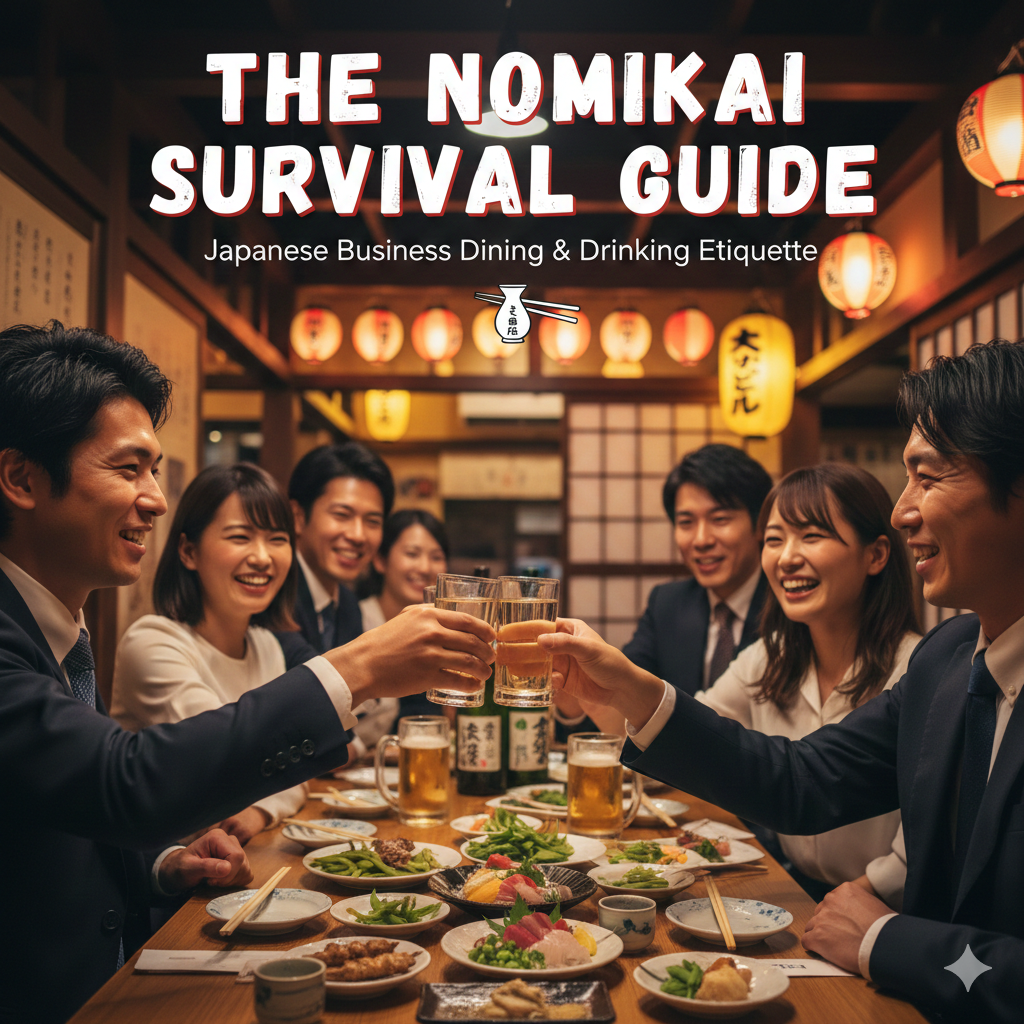
Welcome to the Nomikai (drinking party).
To an outsider, it might look like a group of coworkers simply letting off steam. But look closer, and you’ll see a complex, choreographed dance of social hierarchy, mutual respect, and tradition. As a Japanese language expert who has navigated countless “bonenkai” (year-end parties) and “shinkenkai” (welcome parties), I can tell you that your behavior at the table often carries more weight than your PowerPoint skills.
In this guide, we’re going to break down Japanese business drinking etiquette so you can navigate your next dinner with confidence, poise, and—most importantly—a polite level of intoxication.
1. The Arrival: Understanding the Seating Chart (Kamiza)
Before the first drink is even poured, the etiquette begins. In Japan, where you sit matters. This is rooted in the concept of Kamiza (the “upper seat”) and Shimoza (the “lower seat”).
- Kamiza: This is the seat of honor, reserved for the highest-ranking person or the guest. It is typically the seat furthest from the entrance, often in front of an alcove or a beautiful piece of art.
- Shimoza: This is for the junior employees. It is the seat closest to the door—the person here is expected to handle the “logistics,” like calling the waiter, ordering more drinks, and passing around the food.
Before you sit down, wait for your host or senior to point you to a seat. If you are the guest, you will likely be ushered to the Kamiza. If you are the junior staff member, head straight for the door!
Insight: If you’re unsure, it’s always better to try and sit in the “humblest” seat first. Your host will insist you move to a better spot, which allows you to show modesty—a highly valued trait in Japanese culture.
For more on how hierarchy plays out in formal settings, check out our guide on Decoding the Japanese Meeting: Seating Charts (Kamiza), Hierarchy, and Decision Making.
2. The First Drink: “Kampai!”
The Japanese business meal etiquette dictates that you never, ever drink alone. You must wait for the group toast.
The Pouring Ritual
In Japan, you don’t pour your own drink. It is a gesture of hospitality to pour for others. If you see your boss’s glass getting low (around 1/3 full), pick up the bottle with both hands and refill it.
- For Beer: Hold the bottle with your right hand and support the bottom with your left. Ensure the label is facing upward.
- Receiving a Drink: If someone pours for you, hold your glass with both hands and take a small sip before putting the glass back on the table. This shows you appreciate the gesture.
The Toast
When everyone’s glass is full, the leader will offer a few words. Then, everyone raises their glass and shouts “Kampai!” (Cheers).
Expert Tip: If you are clinking glasses with a superior, ensure the rim of your glass is slightly lower than theirs. This is a subtle but powerful way to acknowledge their seniority.
3. Master the Tools: Japanese Dining Etiquette and Chopsticks
Food in a Nomikai is usually served “Izakaya style,” meaning large plates are shared among the group. This is where many foreigners accidentally stumble. Mastering japanese dining etiquette chopsticks (hashi) is non-negotiable.
The “Taboos” of Chopsticks
- No “Sagashigashi” (Searching): Don’t use your chopsticks to rummage through the bowl for the best piece of meat. Take what is on top.
- No “Sashigashi” (Spearing): Never stab your food with a chopstick to pick it up.
- The Deadly Sin (Piling Rice): Never stick your chopsticks vertically into a bowl of rice. This resembles incense sticks at a Japanese funeral and is considered extremely unlucky.
- No Passing Food: Never pass food directly from your chopsticks to someone else’s. This also mimics a funeral rite. Instead, place the food on their small individual plate (torizara).
What is Hashioki?
You might notice a small ceramic or wooden object next to your plate. What is hashioki? It is a chopstick rest. When you aren’t eating, your chopsticks should be placed neatly on the hashioki, never resting on the rim of the bowl or directly on the table. It keeps the table clean and signifies that you are taking a break from eating.
If there is no hashioki, you can fold the paper sleeve your chopsticks came in into a small triangle to create your own!
4. Navigating the Conversation: “Bureiku” (Breaking the Ice)
The Nomikai is a time for Honne (true feelings) versus Tatemae (public face). While the office is formal, the Izakaya is where people speak more freely.
However, “freely” doesn’t mean “recklessly.” Even in a relaxed setting, you should maintain professional boundaries. It’s a great time to ask your colleagues about their hobbies, families, or their favorite Japanese travel spots.
If you’re worried about your communication skills, remember that a warm smile and a polite bow go a long way. You can learn more about non-verbal cues in our article Beyond the Bow: Formal Greetings and Body Language in Japanese Business.
5. Practical Insights: The “Dry” Reality
While it’s called a “drinking party,” you don’t actually have to consume alcohol to participate.
- Non-drinkers: It is perfectly acceptable to order oolong tea (uron-cha) or ginger ale. The “etiquette” is about the participation in the toast, not the alcohol content of your glass.
- The “Oshibori”: You will be given a wet towel (oshibori) at the start. Use it to wipe your hands only, not your face or neck (though you may see older Japanese men doing this, it’s generally considered a bit “uncool” in a professional setting).
6. The Exit and Payment
In a business Nomikai, the payment is usually handled by the most senior person or the company. You will rarely see a “split the bill” situation at a high-level business dinner.
The Proper Thank You:
- At the table: Thank the host/senior as you prepare to leave.
- At the door: Bow and thank them again.
- The Next Morning: This is the most important step. When you see the person in the office the next day, walk over to their desk and say: “Sakujitsu wa gochisousama deshita” (Thank you for the meal yesterday). This reinforces the bond created during the dinner.
Summary Checklist for a Successful Nomikai
| Step | Action | Why it matters |
| Seating | Sit in the “lower” seat (Shimoza) unless told otherwise. | Shows humility and respect for hierarchy. |
| Pouring | Pour for others; never yourself. Use two hands. | Demonstrates hospitality and “omotenashi.” |
| Chopsticks | Use the hashioki; never stick chopsticks in rice. | Avoids cultural taboos and funeral associations. |
| The Toast | Keep your glass lower than the boss’s. | Subtle acknowledgement of status. |
| Follow-up | Say “Gochisousama” the next morning. | Solidifies the relationship. |
Conclusion
Navigating japanese business drinking etiquette might feel like walking through a minefield, but it’s actually an incredible opportunity to build “Nyu-shaku”—the deep, personal connections that make business in Japan thrive. By showing that you respect these traditions, you’re signaling to your partners that you value their culture and their business.
If you are looking to truly master the professional landscape in Japan, don’t stop at the dinner table. Be sure to read our cornerstone guide: The Ultimate Guide to Japanese Business Etiquette & Culture (2025-26 Edition).
Ready to level up your professional presence? Check out these related guides:
- Mastering the Meishi: The Essential Guide to Japanese Business Card Etiquette
- How to Write Professional Japanese Business Emails: Etiquette, Phrases, and Zoom Rules
- The Art of Giving: Japanese Business Gift Etiquette (Omiyage and Temiyage)
- What to Wear: The Modern Japanese Business Dress Code for Men and Women
For more official resources on Japanese culture and language certification, you can visit the Official JLPT Website or explore the Japan National Tourism Organization’s guide to Izakaya.