Are you looking to turn your passion for Kanji and Katakana into a lucrative career? As a Japanese language expert and JLPT specialist, I have seen the Indian job market for Japanese speakers transform from a niche requirement into one of the most high-paying professional domains in the country.
With the deepening of Indo-Japan strategic ties and the surge in Japanese investments across IT, automotive, and manufacturing sectors, the demand for skilled translators is at an all-time high. But the question remains: What is the actual Japanese translator salary in India in 2026?
In this comprehensive guide, we will break down the numbers by experience, JLPT level, and city, providing you with the unique insights you need to negotiate your worth.
Overview: Japanese Translator Salary in India (2026)
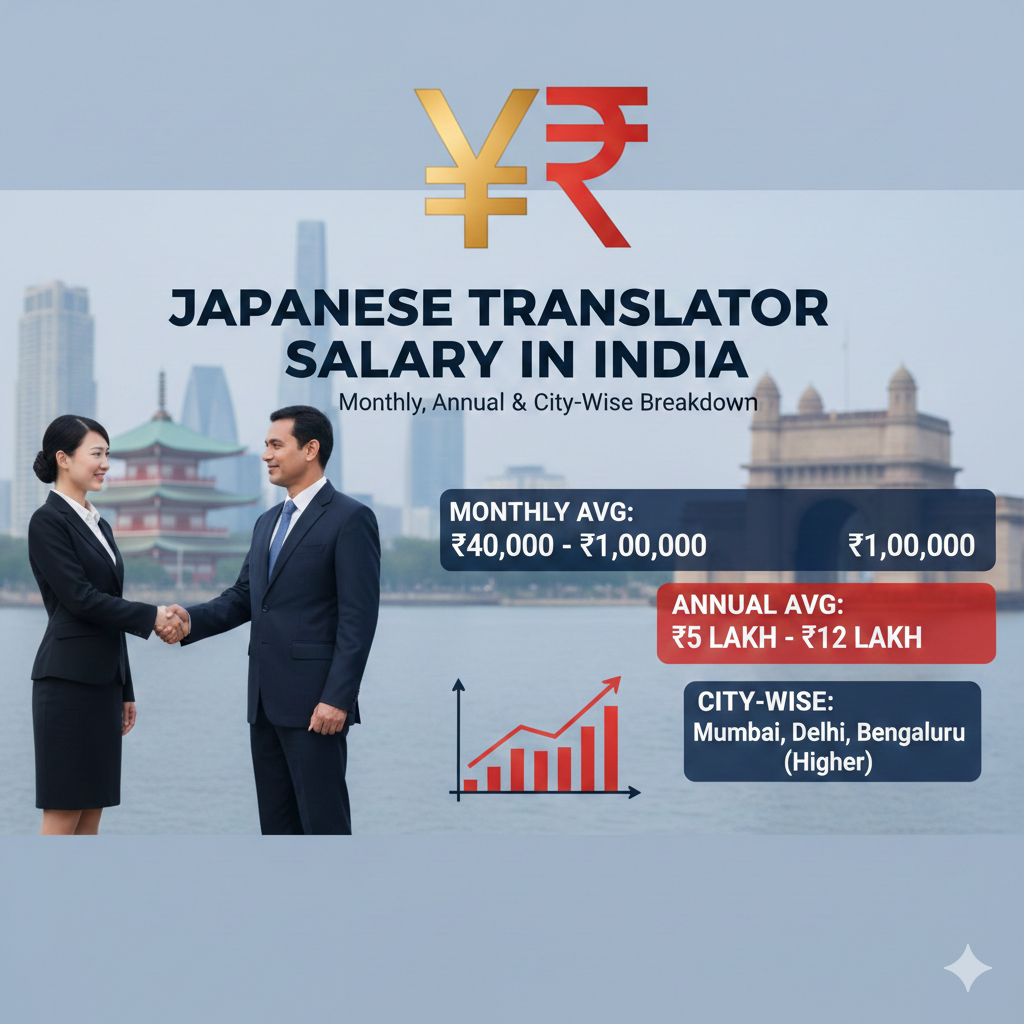
In 2026, the average annual salary for a Japanese translator in India ranges between ₹5,80,000 and ₹15,00,000, depending heavily on your JLPT (Japanese Language Proficiency Test) certification and industry specialization.
While a fresher might start at a respectable figure, a seasoned expert—especially one who handles technical or legal documents—can easily command a package that rivals top-tier software engineers.
Quick Snapshot
| Metric | Average Range (INR) |
| Average Annual Salary | ₹6,00,000 – ₹14,00,000 |
| Monthly Take-home | ₹45,000 – ₹1,20,000+ |
| Top Earners (N1/N2 + Tech) | ₹18,00,000 – ₹25,00,000 |
The Monthly & Annual Breakdown
When we talk about “salary,” it is essential to distinguish between a general translator and a bilingual professional who brings technical expertise to the table.
1. Entry-Level (0–2 Years Experience)
Freshers who have cleared JLPT N3 or N2 can expect a starting monthly salary of ₹35,000 to ₹55,000.
- Annual Package: ₹4.2 LPA to ₹6.6 LPA.
- Insight: Most companies prefer N2 for translation roles, but N3 holders can find opportunities in BPO/KPO sectors or as “Junior Translators” in manufacturing setups.
2. Mid-Level (3–7 Years Experience)
As you gain experience and move toward JLPT N2 or N1 certification, your value spikes.
- Monthly Salary: ₹70,000 to ₹1,10,000.
- Annual Package: ₹8.5 LPA to ₹13.5 LPA.
- Practical Application: At this stage, you aren’t just translating words; you are translating context. Professionals here often bridge the gap between Japanese clients and Indian technical teams.
3. Senior/Expert Level (8+ Years Experience)
For those with JLPT N1 and a deep understanding of a specific domain (like SAP, Patent Law, or Automotive Engineering), the sky is the limit.
- Monthly Salary: ₹1.5 Lakhs+.
- Annual Package: ₹18 LPA to ₹30 LPA+.
The “JLPT Level” Factor: How much does each level pay?
Your JLPT certificate is your “currency” in the Indian job market. Here is how it typically influences your paycheck:
- JLPT N3: Often considered the “threshold.” You can earn ₹4 LPA to ₹6 LPA. It’s a great starting point, but most high-paying translation roles will ask you to upgrade to N2.
- JLPT N2: This is the Gold Standard for the industry. Most MNCs in Bangalore, Pune, and Chennai look for N2 as a minimum requirement. Salaries range from ₹8 LPA to ₹14 LPA.
- JLPT N1: The elite level. N1 holders are rare and highly sought after for high-stakes interpretations and complex document translations. Expect ₹15 LPA to ₹25 LPA.
For more details on global comparisons, check out our Japanese Translator Salary Guide 2026: Country-by-Country Income Comparison.
City-Wise Salary Comparison: Where should you work?
The city you choose to work in can change your lifestyle and your bank balance significantly.
| City | Average Annual Salary (INR) | Dominant Industry |
| Bangalore | ₹7,50,000 – ₹16,00,000 | IT, Software, Tech Support |
| Gurgaon/Delhi NCR | ₹6,50,000 – ₹14,00,000 | Consulting, Embassies, Trade |
| Pune | ₹6,00,000 – ₹13,00,000 | Automotive, Manufacturing |
| Chennai | ₹6,00,000 – ₹12,50,000 | Automotive, Electronics |
| Mumbai | ₹7,00,000 – ₹15,00,000 | Finance, Legal, Media |
Bangalore remains the highest payer because of the “Bilingual IT” boom. If you can code or manage projects while speaking Japanese, you are in the top 1% of earners. Read more about specific trends in our Japanese Translator Salary in Bangalore: Freshers, Experienced & Top Companies guide.
Industry Breakdown: Who pays the most?
- IT & Software: Companies like Accenture, IBM, and TCS offer high-end salaries for bilingual project managers. Check out the Accenture Japanese Translator Salary: Pay Range & Career Growth for a deep dive.
- Manufacturing & Auto: Fujitsu, Toyota, and Honda are major employers. They often provide stable roles but may require relocation to industrial hubs. See Fujitsu Japanese Translator Salary: What Professionals Actually Earn.
- Specialized Domains: Medical and Legal translation are niche but high-paying. You can find more about this in our report on Medical Japanese Translator Salary: Earnings, Demand & Qualifications.
Freelance vs. Full-Time: Which path is for you?
If you value flexibility, the freelance route is incredibly promising. Many translators charge per word (ranging from ₹2.5 to ₹6 per word) or per hour (starting at ₹1,500/hour).
However, full-time roles come with benefits like health insurance and bonuses. For a comparison of potential earnings, visit our guide on Freelance Japanese Translator Salary: How Much Can You Really Earn?.
Insider Tips to Boost Your Salary
As an expert, I always tell my students: “Don’t just learn the language; learn a skill.”
- Upskill in IT: Knowing SQL, Python, or SAP alongside Japanese can double your salary. For trends in this sector, see IT Japanes e Translator Salary: Industry Expectations & Pay Trends.
- Cultural Nuance: Understanding Keigo (honorific Japanese) is vital. Companies pay more for someone who won’t just translate, but will also navigate the “unspoken” Japanese business etiquette.
- Networking: Join platforms like the Japan Foundation or follow updates on the Official JLPT Website to stay ahead of certification dates and career fairs.
Conclusion
The Japanese translator salary in India is on an upward trajectory. Whether you are a fresher with an N3 or an expert with an N1, the opportunities are vast. The key is to match your language skills with a specific industry demand.
Are you curious about how these salaries compare to other regions? You might find these interesting:
- How Much Does a Japanese Translator Earn in Japan? 2025 Updated Guide
- Japanese Translator Salary in the US: Pay Scale, Hourly Rate & Growth
- Are Japanese Translators in Demand? Job Market Trends for 2025