
Introduction
The JLPT N4 Listening (Choukai) section can be tricky, especially if you’re not used to natural Japanese conversations. Many learners find it challenging because spoken Japanese is often faster and more casual than textbook language.
But don’t worry—with the right strategies, consistent practice, and good resources, you can improve your listening skills and pass this section with confidence.
In this guide, we’ll cover:
✔ Understanding the JLPT N4 Listening Test Structure
✔ Essential Tips to Improve Your Listening Skills
✔ Best Practice Methods for JLPT N4 Choukai
✔ Recommended Study Resources (Free & Paid)
✔ Common Mistakes & How to Avoid Them
Let’s dive in!
Understanding the JLPT N4 Listening Test Structure
The JLPT N4 Choukai (Listening) section has three main question types:
- Task-Based Comprehension (課題理解) – You listen to a short conversation and answer a question about what to do next.
- Point Comprehension (ポイント理解) – You focus on key details like time, location, or reasons.
- Quick Response (即時応答) – You choose the best reply to a short spoken phrase.
- General Comprehension (総合理解) – Longer conversations where you must follow the discussion and answer questions.
Total Time: ~35 minutes
Questions: ~28
Since you only hear each clip once, sharp listening skills are crucial.
Essential Tips to Improve Your JLPT N4 Listening Skills
1. Get Used to Natural Japanese Speech
- Textbook Japanese is often slower and clearer than real-life speech.
- Solution: Listen to Japanese podcasts, YouTube channels, and dramas to train your ear.
- Recommended: Nihongo Con Teppei (Podcast) (Beginner-friendly)
- Also helpful: Japanese Ammo with Misa (YouTube)
2. Focus on Context, Not Just Words
- If you miss a word, don’t panic! Use context clues.
- Example: If someone says “駅までどうやって行きますか?” (How do I get to the station?), the answer will likely involve directions (train, bus, walking).
3. Practice with JLPT-Style Questions
- Familiarize yourself with the test format.
- Free Practice Tests:
4. Shadowing Technique (Repeat & Mimic)
- Listen to a short Japanese phrase, pause, and repeat it exactly as you heard it.
- Improves pronunciation, rhythm, and comprehension.
5. Learn Common Phrases & Fillers
- Real conversations use filler words like:
- ええと (eeto) – “Umm…”
- そうですね (sou desu ne) – “Well…”
- あの (ano) – “Uh…”
Best Practice Methods for JLPT N4 Choukai
1. Daily Listening Practice (Even 10 Minutes Helps!)
- Use apps like NHK Easy Japanese or JLPT Listening Drills.
- Try watching anime or dramas without subtitles (start with slice-of-life shows like Shirokuma Cafe).
2. Simulate Test Conditions
- Take timed practice tests to get used to the pressure.
- Avoid replaying audio—train yourself to catch details in one go.
3. Break Down Conversations
- After listening, write down:
- Who was speaking?
- What was the main topic?
- What decision was made?
4. Use Flashcards for Key Vocabulary
- Anki decks like “JLPT N4 Listening Common Phrases” can help.
- Download: JLPT N4 Anki Deck
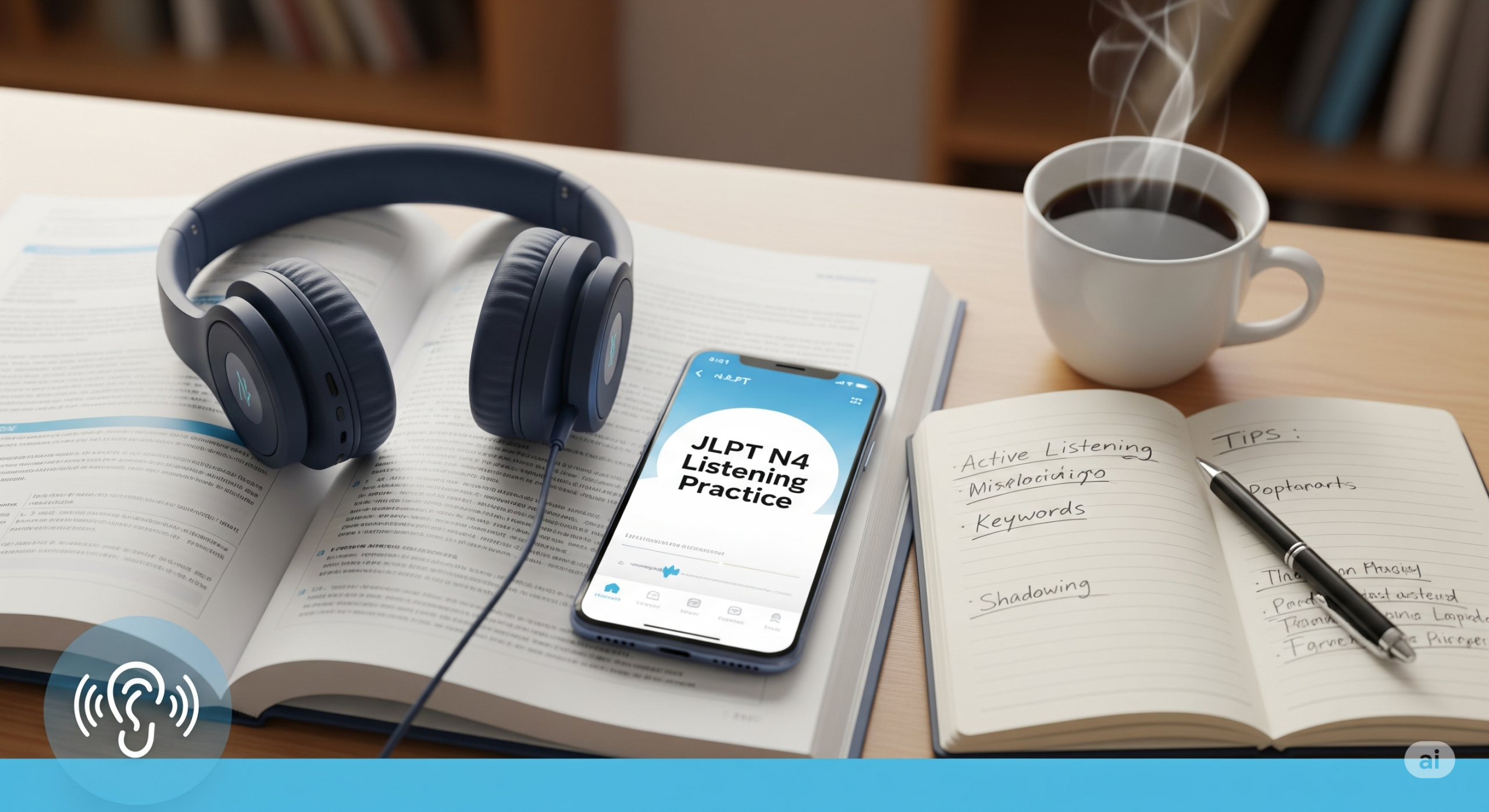
Recommended Study Resources for JLPT N4 Listening
Free Resources:
- JLPT Sensei – N4 Listening Practice (Sample questions)
- JapanesePod101 (Free listening lessons)
- YouTube: N4 Listening Practice
Paid Resources:
- “Shin Kanzen Master N4 Listening” (Best for structured practice)
- “Sou Matome N4 Listening” (Good for daily drills)
- “Pimsleur Japanese” (Great for auditory learners)
Common Mistakes & How to Avoid Them
❌ Mistake 1: Trying to translate every word in your head.
✅ Fix: Focus on key phrases (who, what, where, when).
❌ Mistake 2: Not practicing with a timer.
✅ Fix: Take mock tests under real conditions.
❌ Mistake 3: Ignoring intonation & pauses.
✅ Fix: Pay attention to rising/falling tones—they often indicate questions or confirmations.
Final Thoughts
The JLPT N4 Listening section is tough but manageable with the right approach. Daily exposure to spoken Japanese, active practice, and test simulations will boost your confidence.
Need more JLPT N4 help? Check out our JLPT N4 Grammar Guide and JLPT N4 Vocabulary List.
Good luck with your studies—頑張ってください!(Ganbatte kudasai!)


