
Introduction
Preparing for the JLPT N2 can feel overwhelming. With complex grammar, thousands of vocabulary words, and kanji that seem impossible to remember, how do you stay on track?
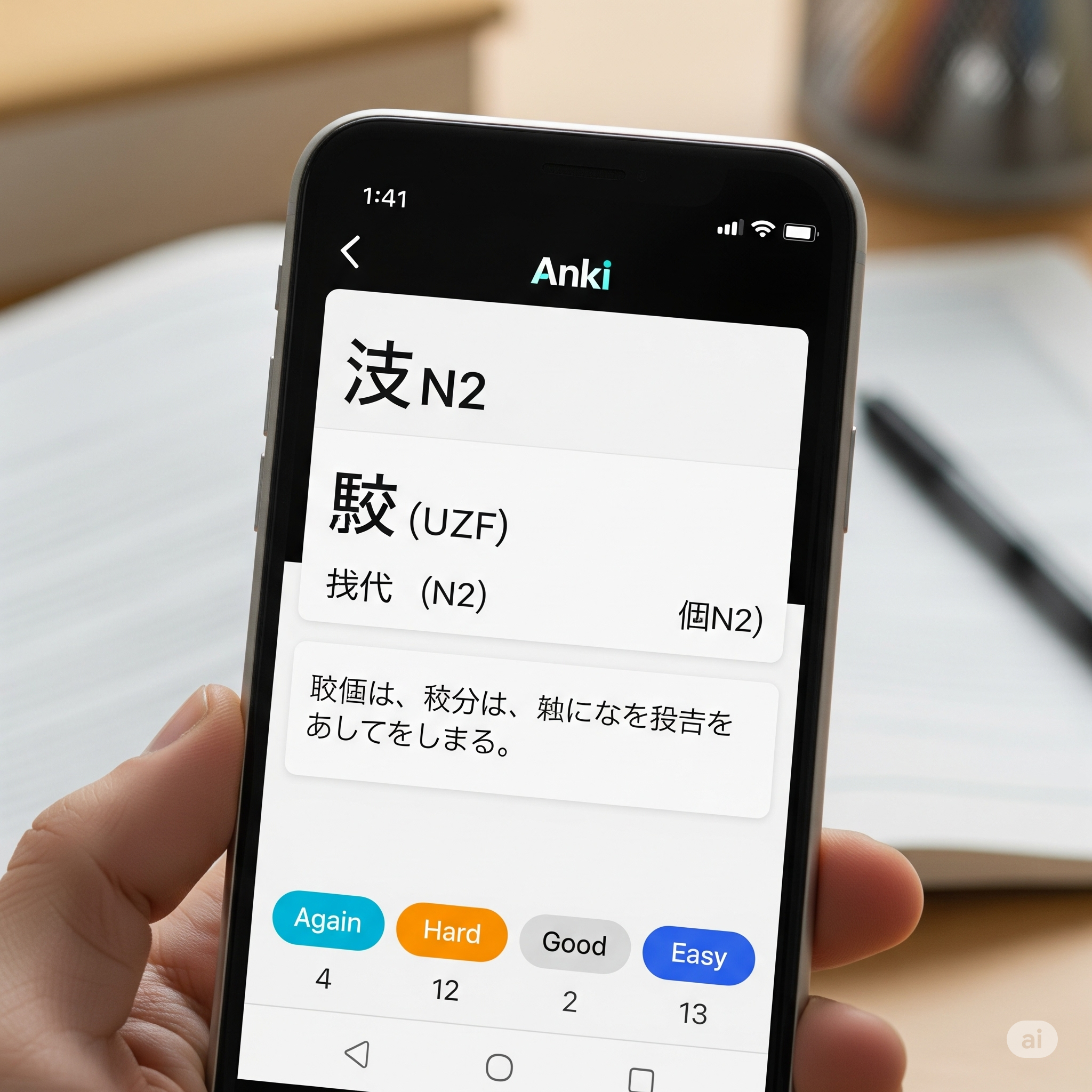
Enter Anki—a powerful flashcard app that uses spaced repetition to help you retain information long-term. If used correctly, Anki can be a game-changer for your JLPT N2 prep.
In this guide, you’ll learn:
✔ Why Anki works so well for JLPT N2
✔ Best pre-made Anki decks for N2
✔ How to customize your own decks
✔ Pro tips to maximize retention
✔ Common mistakes to avoid
Let’s dive in!
Why Anki is Perfect for JLPT N2
The JLPT N2 tests your ability to understand Japanese in everyday situations, including:
- 2,000+ vocabulary words
- 1,000 kanji characters
- Advanced grammar patterns
- Listening comprehension
Traditional study methods (like cramming textbooks) often fail because they don’t reinforce memory over time. Anki solves this by using spaced repetition (SRS), a scientifically proven method that schedules reviews at optimal intervals to boost retention.
Key Benefits of Anki for JLPT N2
✅ Efficient memorization – No more forgetting vocab the next day.
✅ Customizable decks – Tailor cards to your weak areas.
✅ Portable studying – Review on your phone during commutes.
✅ Progress tracking – See which words or kanji need more work.
(Want to know more about how SRS works? Check out our post on The Science Behind Spaced Repetition
Best Pre-Made Anki Decks for JLPT N2
If you don’t want to create decks from scratch, these pre-made Anki decks are lifesavers:
1. JLPT N2 Vocabulary Deck (Core 2k/6k Optimized)
🔗 Download Here (outbound link to AnkiWeb)
- Covers 2,000+ essential N2 words
- Includes example sentences and audio
- Based on the popular Core 6k deck
2. N2 Kanji Deck (KanjiDamage or RTK Style)
🔗 KanjiDamage Version | RTK Version
- Teaches kanji through mnemonics
- Focuses on readings and common compounds
3. JLPT N2 Grammar Points Deck
- 200+ grammar structures with explanations
- Example sentences for context
4. JLPT N2 Listening Practice Deck
- Audio-based flashcards for listening comprehension
- Real-life dialogues and quizzes
Pro Tip: Combine these decks with immersion (watching Japanese dramas, reading news) to reinforce learning. (Need immersion ideas? Read our guide on How to Immerse Yourself in Japanese
How to Create Your Own JLPT N2 Anki Deck
While pre-made decks are great, customizing your own ensures you focus on what you struggle with. Here’s how:
Step 1: Gather Study Materials
Use:
- Shin Kanzen Master N2 (best for structured learning)
- Sou Matome N2 (good for quick review)
- Nihongo So-Matome N2 (for vocabulary & grammar)
Step 2: Add Cards Strategically
- Front: Target word/kanji/grammar point
- Back: Meaning, reading, example sentence
- Extra: Mnemonics, related words, audio
Example Card:
- Front: 調整 (ちょうせい)
- Back:“Adjustment, tuning”
- Example: 音量を調整してください (Please adjust the volume).
Step 3: Use Tags for Organization
Label cards as:
- #Vocab
- #Kanji
- #Grammar
- #Listening
This helps you filter and review weak areas efficiently.
Pro Tips to Supercharge Your Anki Study
1. Set a Daily Review Limit
- New cards: 15-20/day (prevents burnout)
- Reviews: 100-150/day
2. Use the “Hard” and “Easy” Buttons Wisely
- “Hard” = See the card again soon
- “Easy” = Delay the next review
3. Add Images & Audio
Visual and auditory cues improve memory retention.
4. Sync Across Devices
Use AnkiWeb or AnkiMobile to study anywhere.
5. Review Missed Cards in Batches
At the end of each week, revisit failed cards to reinforce them.
Common Mistakes to Avoid
❌ Adding too many new cards daily → Burnout
❌ Skipping reviews → Spaced repetition fails
❌ Only using pre-made decks → Not personalized
❌ Ignoring example sentences → Losing context
Final Thoughts: Is Anki Enough for JLPT N2?
Anki is powerful, but it shouldn’t be your only tool. Combine it with:
- Reading (NHK News Easy, light novels)
- Listening (Japanese podcasts, anime without subtitles)
- Practice tests (Official JLPT past papers)
By integrating Anki with active immersion, you’ll retain more and pass the JLPT N2 with confidence!
Need More JLPT N2 Help?
- Best Textbooks for JLPT N2
- How to Improve Japanese Listening Skills
- JLPT Study Plan: 3-Month Crash Course
Got questions? Drop them in the comments! 🚀


