Konnichiwa, future Japan traveler!
I want you to picture this: You’re standing in the bustling, neon-lit heart of Shinjuku, a map on your phone and a world of wonder around you. You step into a tiny, steaming ramen shop, the kind that doesn’t have an English menu. The server greets you warmly. Instead of fumbling and pointing, you smile and say, “Sumimasen, chūmon onegai shimasu.” (Excuse me, I’d like to order).
The server’s face lights up. You’ve just shown respect. You’ve connected. Your entire experience shifts from being a passive observer to an engaged participant.
This is the power of learning even a little Japanese before you travel. It’s not about fluency; it’s about confidence, respect, and unlocking a deeper layer of your journey.
But I get it. You’re busy. You don’t have time for complex grammar textbooks or memorizing thousands of kanji. You need a focused, practical, and effective way to learn. That’s where the right app comes in.
After testing dozens of apps and guiding hundreds of students toward their travel goals, I’m breaking down the absolute best app to learn Japanese for travel and how to use it to get real-world results.
What Makes an App “The Best” for Travelers?
Not all language apps are created equal, especially for a specific goal like travel. The best travel-focused Japanese app needs to be:
- Practical & Phrase-Based: Teaches you immediately useful phrases like “Where is the toilet?” (“Toire wa doko desu ka?”) rather than starting with “The pen is on the table.”
- Audio-Centric: Provides crystal-clear, native speaker audio so you can master pronunciation. Japanese is a pitch-accent language, and saying a word with the wrong inflection can lead to confusion.
- Cultural Context: Explains why you say something, not just what to say. Understanding the culture of respect (e.g., using “san” after a name) is just as important as the words themselves.
- Offline-Capable: You won’t always have data, so being able to download lessons is a must.
- Not Overwhelming: It should prioritize the 20% of language you’ll use 80% of the time.
And the Winner Is… Pimsleur: The Hands-Free, Pronunciation Powerhouse
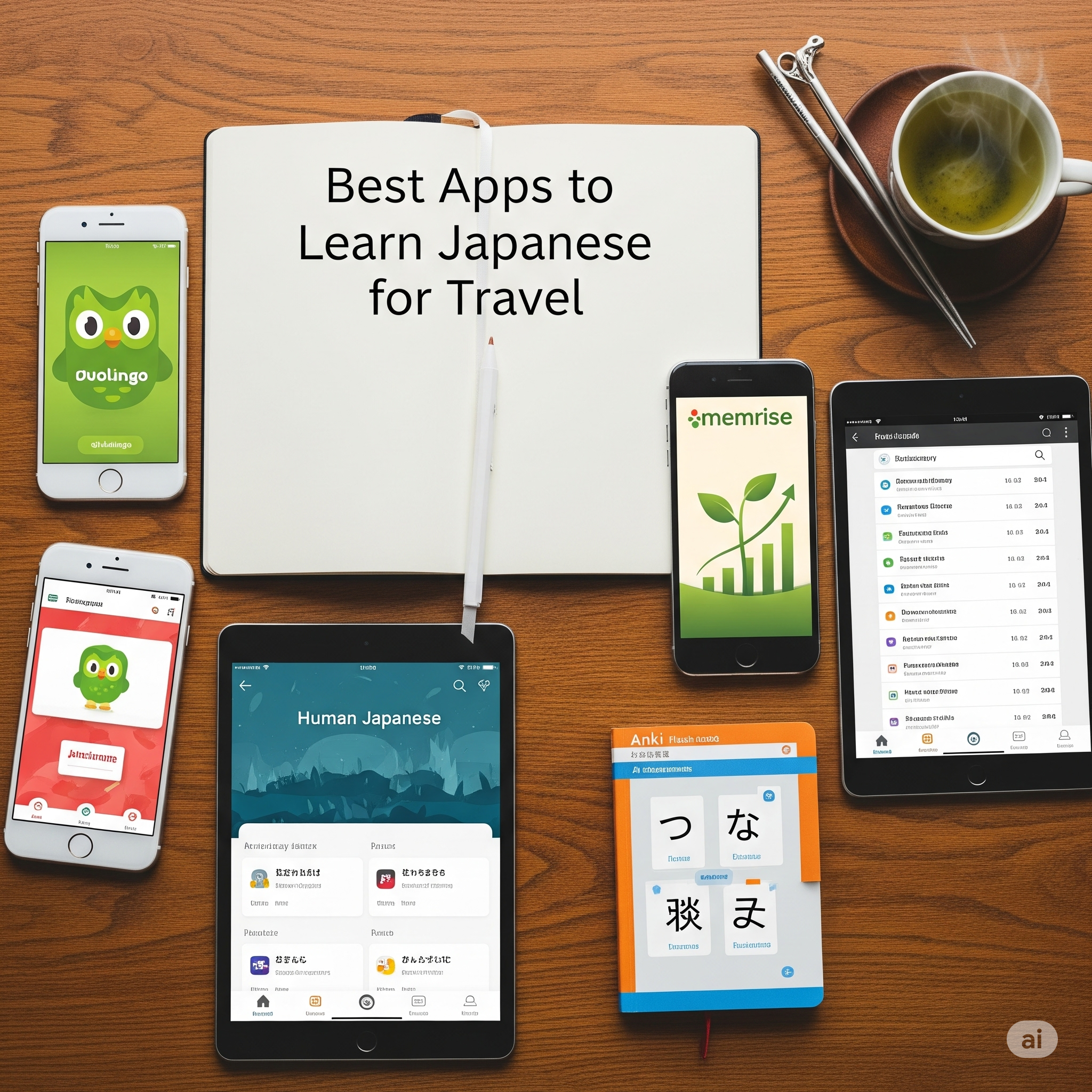
While apps like Duolingo are great for gamified vocabulary building and Memrise excels with real-life video clips, the app that consistently delivers the fastest results for speaking and listening—the two most critical skills for a traveler—is Pimsleur.
Here’s why Pimsleur is my top recommendation, especially for absolute beginners:
The Unique Pimsleur Method: Science for Speaking
Pimsleur is based on two core principles: Anticipated Recall and Gramented Interval Recall. Sounds fancy, but it’s brilliantly simple.
- You’re Forced to Participate: The narrator gives you a prompt in English, then you have a designated time to say the phrase out loud in Japanese. There’s no passive scrolling. It’s an active, conversational workout. This builds the muscle memory you need to recall phrases under pressure—like at a train station ticket counter.
- It Builds Your Pronunciation from Day One: Pimsleur introduces new words gradually and has you repeat them at precisely timed intervals to move them from your short-term to your long-term memory. You’re not just seeing words; you’re constantly speaking and correcting yourself against native speakers.
Practical Application: Why This Works on the Ground
I’ll never forget a student of mine, Sarah. She spent three months using a flashcard app and knew hundreds of words but couldn’t string a sentence together. She switched to Pimsleur for one month before her trip. She emailed me from Tokyo: “I just successfully asked a shopkeeper if they had something in a different size and understood her response! I almost cried!”
Pimsleur builds your confidence because it mirrors real conversation. You’re not just learning to say “eki” (station); you’re learning to ask “Eki wa doko desu ka?” (Where is the station?) and understand the directional response (“ massugu” for straight, “ migi” for right).
The One Drawback and How to Fix It
Pimsleur is weak on teaching you to read Japanese script (Hiragana, Katakana, Kanji). For a traveler, this is actually okay—your primary goal is speaking. However, being able to read basic Hiragana and Katakana is a game-changer. It allows you to read menus, street signs, and train station names.
My Pro Tip: Pair Pimsleur with a dedicated app for learning the Japanese alphabets. My favorite is Dr. Moku’s Hiragana & Katakana Mnemonics. Its visual memory tricks help you learn both syllabaries in a weekend. It’s the perfect supplement.
Other Strong Contenders & How to Use Them
While Pimsleur is my #1, other apps are fantastic for specific purposes. A well-rounded approach might use a combination.
1. Duolingo: The Vocabulary Builder
- Best For: Learning vocabulary and basic sentence structures in a fun, addictive way. Its new AI-powered roleplay feature is great for practicing conversations.
- Travel Use: Great for building a foundational vocabulary. Use it for 10-15 minutes a day to drill words for food, transportation, and numbers. Don’t rely on it solely for speaking practice, as the audio can sometimes be robotic.
- Internal Link: For a deeper dive, read our post on How to Use Duolingo Effectively for Japanese Learning.
2. Memrise: For Real Japanese from Real People
- Best For: Hearing Japanese spoken by real people in real situations. Their “Learn with Locals” video clips are invaluable for understanding natural speed and expression.
- Travel Use: Excellent for picking up colloquial phrases and getting your ear accustomed to the rhythm of the language. It makes the transition from app to real life much smoother.
3. Google Translate: Your Digital Safety Net
- This is not a learning app. But it is the most important travel tool you can have.
- Travel Use: Use the ** camera translation feature** to instantly translate menus, signs, and labels. Use the conversation mode for more complex exchanges. Pro Tip: Download the Japanese language pack offline before you go. It’s a lifesaver.
Your 4-Week Pre-Travel Japanese Learning Plan
You don’t need to be fluent. You just need to be functional. Here’s a practical plan using mostly Pimsleur:
- Goal: Complete Pimsleur Japanese Level 1 (30 lessons).
- Schedule: One 30-minute lesson per day. Do it during your commute, while making coffee, or walking the dog. The hands-free nature makes this easy.
Week 1-2 (Lessons 1-14): Survival Foundations
You’ll learn greetings, numbers, asking for directions, and basic questions like “Do you speak English?” (“Eigo o hanasemasu ka?”). Focus on nailing the pronunciation. Don’t be afraid to repeat lessons.
Week 3-4 (Lessons 15-30): Practical Scenarios
You’ll dive into ordering food and drinks, shopping (“How much is this?” – “Kore wa ikura desu ka?”), talking about family, and using past and future tenses. This is where it all comes together.
Daily Supplement (5 mins): Use Dr. Moku or Duolingo to practice reading Hiragana. Start recognizing words like りんご (ringo – apple) or びーる (biiru – beer).
Cultural Insights: It’s More Than Words
As a JLPT expert, I can tell you that passing a test is one thing, but understanding culture is another. Your efforts will be appreciated infinitely more if you remember these three things:
- Always Use “Please” and “Thank You”: “Onegaishimasu” (I kindly request) and “Arigatou gozaimasu” (Thank you very much) are magic words. Use them constantly.
- Politeness Levels: Japanese has different levels of formality. For travelers, the standard polite form (“-masu” form, which Pimsleur teaches) is perfect for 99% of situations. It’s always better to be too polite than not polite enough.
- A Little Goes a Long Way: Even a badly pronounced “Sumimasen” (Excuse me) is better than none. Japanese people are incredibly gracious and will honor your effort. Don’t be shy. Try.
Key Phrases to Master Before You Go (Your Cheat Sheet)
Practice these out loud:
- Hello / Good day: Konnichiwa (こんにちは)
- Thank you (very much): Arigatou (gozaimasu) (ありがとう ございます)
- Excuse me / Sorry: Sumimasen (すみません) – Your most useful word!
- Where is…? …wa doko desu ka? (…は どこですか?)
- How much is this? Kore wa ikura desu ka? (これは いくらですか?)
- Please give me this: Kore o onegaishimasu (これを おねがいします) – Perfect for ordering!
- Check, please: Okaikei onegaishimasu (おかいけい おねがいします)
- Do you speak English? Eigo o hanasemasu ka? (えいごを はなせますか?)
- I don’t understand: Wakarimasen (わかりません)
- It was delicious! Gochisōsama deshita! (ごちそうさまでした!) – Say this after eating!
Final Verdict: Speak Your Way to a Better Trip
Your goal isn’t to pass the JLPT N5 exam (though that’s a great next step if you get hooked!). Your goal is to enrich your travel experience, show respect, and navigate situations with confidence.
For that, the best app to learn Japanese for travel is Pimsleur. Its focus on active speaking, pronunciation, and practical dialogue is unmatched for getting you conversation-ready quickly.
Pair it with a reading app like Dr. Moku for a week to learn the alphabets, and have Google Translate in your pocket as a backup.
Remember, every phrase you learn is a key that unlocks a deeper connection to the incredible culture of Japan. Your effort is the greatest sign of respect you can show.
Start today. Your future self, standing confidently in that ramen shop, will thank you for it.
Kore de, ii ryokō o! (Have a good trip!)
Loved this guide? Share your own travel language tips in the comments below! And if you’re thinking of continuing your Japanese journey beyond travel, check out our guide on The Best Resources to Pass the JLPT N5. Want to avoid cultural faux pas? Read our post on 5 Japanese Cultural Mistakes Every Traveler Should Avoid.