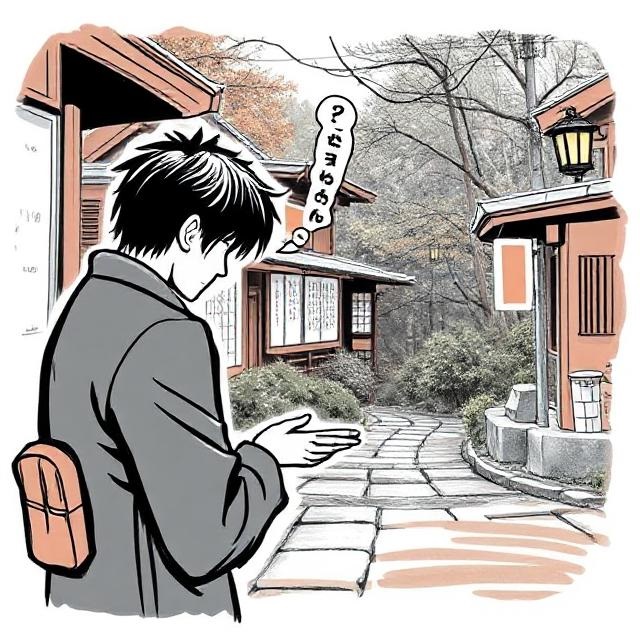
We’ve all been there. You’re sitting in front of your screen, cursor blinking, staring at a blank draft addressed to a Japanese client. You know what you want to say in English, but as you try to translate it into Japanese, you hit a wall. Is Desu/Masu enough? Should I use Osewa ni narimasu even if I’ve never met them? Why are there five different ways to say “sorry”?
In my years of teaching Japanese and preparing students for the JLPT N1 and N2, I’ve found that the hardest part of business Japanese isn’t the vocabulary—it’s the distance. In Japanese culture, an email isn’t just a carrier of information; it is a digital handshake, a bow, and a sign of respect all wrapped into one.
If you want to move beyond being “the foreigner who tries” to “the professional who understands,” mastering Essential Japanese Business Email Phrases is your first step. Let’s dive deep into the phrases that will make your emails look like they were written by a Tokyo native.
Why “Good Enough” Japanese Isn’t Enough in Business
Before we get into the list, let’s get real. Why does it matter? In many Western cultures, brevity is king. We like “Hi John, see attached. Thanks!” In Japan, that same email would be considered abrupt, if not outright rude.
Business Japanese relies on Keigo (honorific language). It’s about “reading the air” (kuuki wo yomu). When you use the correct phrases, you aren’t just being polite; you are showing that you respect the other person’s status and that you understand the social harmony (Wa) required for a successful partnership.
If you are just starting out, you might want to look at Japanese Business Email Examples for Beginners (Copy‑Ready Templates) to see how these phrases fit into a basic structure.
1. The Opening: More Than Just a “Hello”
In English, we might start with “Dear” or “Hi.” In Japanese, the opening is a multi-step ritual.
The Universal Key: Osewa ni narimasu (お世話になります)
This is arguably the most important phrase in your toolkit. It doesn’t have a direct English translation, but it roughly means, “Thank you for your ongoing support/kindness.”
- Standard: Osewa ni narimasu. (Always safe.)
- More Formal: Itsumo taihen osewa ni natte orimasu. (Use this for long-term clients.)
If you are writing to someone for the very first time, you cannot use osewa. Instead, use:
- Hajimete renraku sasete itadakimasu. (I am contacting you for the first time.)
For a deeper dive into how to start your message, I highly recommend reading Japanese Business Email Greetings: Correct Openings, Closings & Formal Styles.
2. The Core: Essential Japanese Business Email Phrases for Every Scenario
When we talk about Essential Japanese Business Email Phrases, we need to categorize them by intent. Here are the “Power Phrases” I teach my JLPT students.
A. When You Need to Request Something (The Art of Asking)
In Japan, asking for something directly can feel aggressive. We use “cushion words” to soften the blow.
- Otesū desu ga… (I’m sorry to trouble you, but…)
- Go-kentō itadakereba saiwaidesu. (I would be grateful if you could consider this.)
If you are in the real estate industry, these requests are vital. For instance, when asking about a listing, you’ll need specific wording. You can find these in our guide on Property Inquiry Email Templates in Japanese: Polite & Effective Examples.
B. When You Are Attaching a File
Don’t just say “See attached.” It sounds like a command. Instead, use:
- Shiryo wo添付itashimashita no de, go-kakunin kudasai. (I have attached the document, so please take a look.)
- Go-shōshō negaimasu. (Please check/verify—highly formal.)
For those using specific tools, like Microsoft’s suite, you might want to see The Best Business Email Templates for Outlook (Japanese + English Versions) for integrated layouts.
C. When You Are Apologizing (The “Deep Bow” Phrases)
In Japan, apologies aren’t just for when you’ve done something wrong; they are for when you’ve caused an inconvenience.
- Mōshiwake gozaimasen. (I am deeply sorry—standard formal.)
- O-matase itashimashita. (Sorry to have kept you waiting—essential for late replies.)
3. The Follow-Up: Building the Relationship
Persistence is respected in Japanese business, but it must be polite. If you haven’t heard back, you don’t ask “Why haven’t you replied?” You say:
- Saisen no ken de go-renraku itashimashita. (I am contacting you regarding the previous matter.)
For sales professionals, the follow-up is where the deal is made. I suggest looking at 5 Sales Email Templates That Actually Work (Japanese + English) or the more specialized Business Sales Email Templates for Japanese Clients (High‑Response Examples) to see how to balance persistence with politeness.
4. Navigating Real Estate and Commercial Transactions
One area where Essential Japanese Business Email Phrases are incredibly rigid is real estate. Whether you are dealing with office rentals or residential purchases, the language must be impeccable to build trust.
If you are managing properties, you should bookmark Real Estate Japanese Email Templates: Professional Phrases & Sample Messages. And for those on the B2B side, Free Commercial Real Estate Email Templates for Fast Client Conversions offers specialized terminology that goes beyond standard JLPT textbooks.
5. The Closing: Leaving a Lasting Impression
The way you end an email is just as important as the beginning. You never just end with “Thanks.” You use a closing that looks forward to the future relationship.
- Yoroshiku onegaishimasu. (The classic: “Please treat me well/I look forward to working with you.”)
- Hiki-tsuzuki yoroshiku onegaishimasu. (Please continue to treat me well—used for ongoing projects.)
- Go-kentō no hodo, yoroshiku onegaishimasu. (I look forward to your favorable consideration.)
To avoid common mistakes during this final step, check out Japanese Email Etiquette: The Do’s and Don’ts of Professional Communication.
Expert Insights: The “JLPT” Perspective on Emails
As a JLPT expert, I often tell students that the N3 level teaches you how to be understood, but the N2 and N1 levels teach you how to be respected.
In the N2/N1 grammar syllabus, you learn structures like ~shidai (as soon as) or ~katawara (while doing). In an email, these become:
- Kakunin-shidai, go-renraku itashimasu. (I will contact you as soon as I have confirmed.)
This level of precision shows your recipient that you aren’t just using a translation app—you actually understand the mechanics of the language. For more pre-written structures, you can use 7. Japan Email Templates for Work: Professional Messages You Can Copy Today.
Common Pitfalls to Avoid (The “Human” Side)
Even with the best phrases, I see three big mistakes foreigners make:
- Over-Keigo: Using too much honorific language can actually make you sound suspicious or sarcastic. If you are talking to a close colleague, keep it to Teineigo (standard polite form).
- The “English-Style” Directness: Avoid starting sentences with “I want” (~tai desu). Instead, use “I would be happy if…” (~itadakereba saiwai desu).
- Ignoring the Season: In very formal Japanese letters, people mention the weather or the season. In email, this is less common but still appreciated in the first mail of the month.
For more practical “dos and don’ts,” refer to How to Write a Polite Japanese Email: 15 Ready‑to‑Use Sample Messages.
Humanizing Your Communication
At the end of the day, remember that there is a human being on the other side of that screen. While the Essential Japanese Business Email Phrases provide the “armor” for your professional identity, your sincerity (seisotsu) is what builds the bridge.
If you make a small mistake in your Keigo, don’t panic. Most Japanese professionals are incredibly forgiving to non-native speakers as long as the effort and the “heart” (kokoro) are visible in the effort you took to be polite.
For a comprehensive bird’s-eye view of everything we’ve discussed, don’t forget to visit our pillar post: The Ultimate Guide to Business Japanese Email Templates (With Real Examples & Free Downloads).
Extra Resources for Success
To further your studies, I recommend checking out reputable external resources. Understanding the official standards for Japanese proficiency can give you a massive edge:
- JLPT Official Website – The gold standard for measuring your Japanese progress.
- Japan Times: Bilingual Business – Excellent for contemporary business trends and language usage in Japan.
- NHK World-Japan: Easy Japanese for Work – Great audio resources for hearing these phrases in action.
Final Thoughts
Writing a business email in Japanese doesn’t have to be an agonizing chore. By mastering a few Essential Japanese Business Email Phrases, you shift the focus from “Am I saying this right?” to “How can we work together?”

![[Vocabulary] 800 Essential Words: Best JLPT N5 Vocabulary Anki Decks](https://jlptsamurai.com/wp-content/uploads/2026/03/j2-768x429.png)