The JLPT N5 is the gateway. It tests your ability to understand basic Japanese, learned typically in about 200-250 hours of study. While vocabulary and kanji are important, grammar is the skeleton that holds the language together.
Think of it like this: vocabulary words are the bricks, but grammar is the mortar and the blueprint. Without it, you just have a pile of bricks. Mastering N5 grammar means you can start building simple but correct sentences. You can introduce yourself, ask for directions, order food, and describe your day. These are powerful, motivating achievements!
Practicing with a dedicated JLPT N5 Grammar Test PDF forces you to apply the rules in a structured way, just like you’ll have to on exam day. It reveals your weak spots so you can turn them into strengths.
Your Free Gift: The JLPT Samurai N5 Grammar Practice Test (PDF)
I believe in learning by doing. That’s why I’ve created a mini-simulated test covering 15 essential N5 grammar points. This isn’t just a random list of questions; it’s designed to mimic the format and style of the real JLPT.
👉 Click here to download your FREE JLPT N5 Grammar Practice Test PDF! 👈
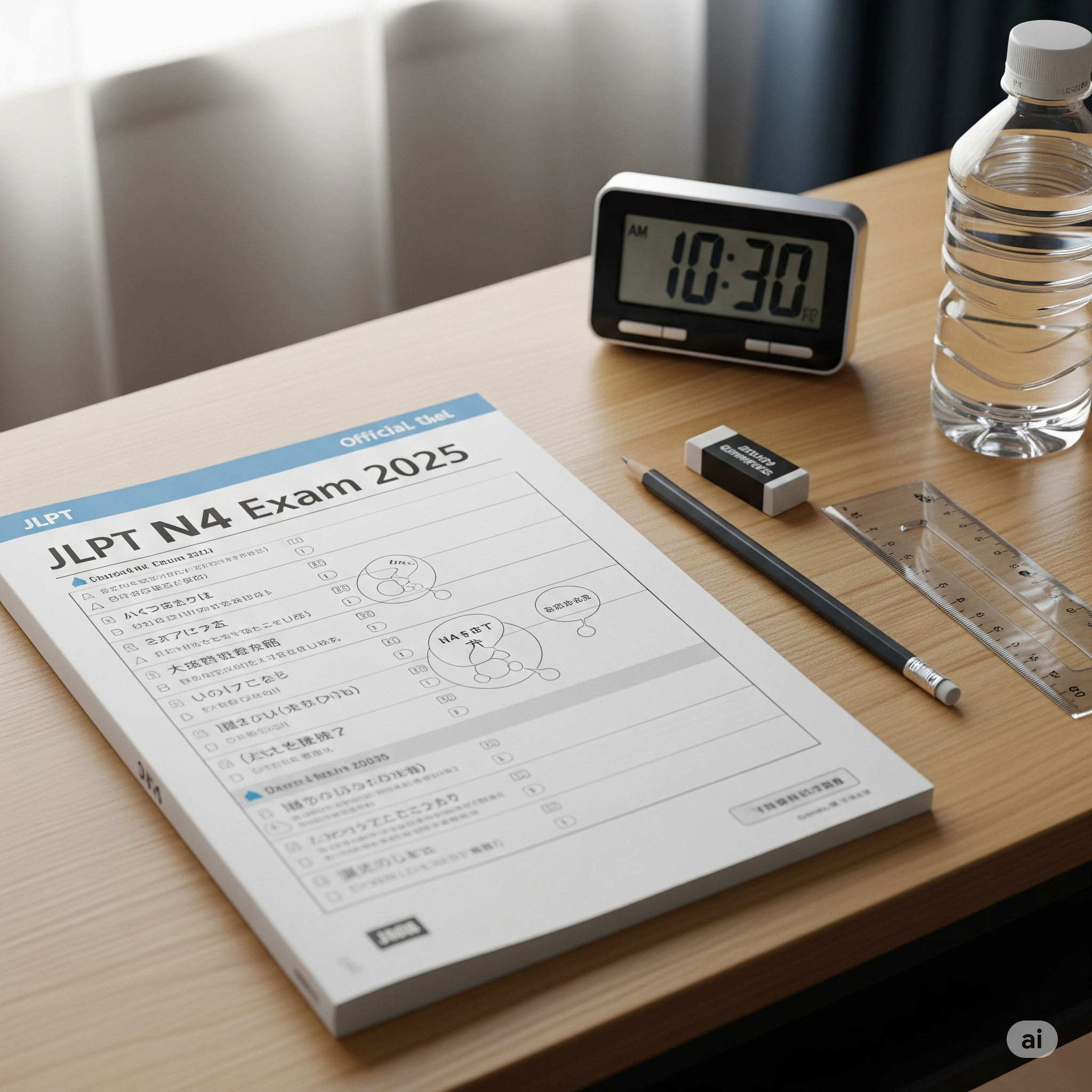
This PDF includes:
- 15 carefully crafted questions covering particles, verb conjugations, and sentence structure.
- A clean, easy-to-read format.
- A separate answer key and explanation sheet so you understand why an answer is correct.
How to use this practice test effectively:
- Simulate Exam Conditions: Set a timer for about 15-20 minutes. Find a quiet space. This isn’t just about getting the right answers; it’s about building your test-taking stamina.
- Answer Honestly: Don’t look up answers while you’re taking it. The goal is to see what you really know.
- Review Thoroughly: This is the most important step. Use the answer sheet to check your work. For every mistake, and even for questions you got right by guessing, read the explanation carefully. Understand the logic behind the correct particle or verb form.
Beyond the Test: Making N5 Grammar Come Alive
Passing the test is one thing, but using grammar in real life is another. Let’s look at some core N5 grammar points not just as rules, but as tools for communication.
1. The Power of Particles: は (wa) vs. が (ga)
This is the classic struggle for every beginner. The textbook rule is: は (wa) is the topic marker (what the sentence is about), and が (ga) is the subject marker (who/what is performing the action).
But what does that feel like in conversation?
- わたしはサムライです。 (Watashi wa Samurai desu.) – “As for me, I am a Samurai.” (Introducing yourself, stating your identity).
- だれがきますか?サムライがきます。 (Dare ga kimasu ka? Samurai ga kimasu.) – “Who is coming? The Samurai is coming.” (Identifying a specific subject, often in response to a question).
Insight: Think of は as pointing to a sign that says “Today’s Topic.” Think of が as pointing a spotlight directly at someone on a stage.
2. を (o) – The Direct Object Marker
It’s simple: it marks the direct object of a verb. But mastering it means you can finally do things in Japanese!
- おさけをのみます。 (Osake o nomimasu.) – “I drink sake.” (The sake is what is being drunk).
- にほんごをべんきょうします。 (Nihongo o benkyou shimasu.) – “I study Japanese.” (Japanese is what is being studied).
This tiny particle unlocks a world of action. Every time you use it, you’re moving from a static state to describing an activity.
3. Verb Conjugations: The Heart of the Sentence
N5 requires you to know the Mas-form (Present/Future), Nai-form (Negative), and Ta-form (Past). These aren’t just for tests; they are for telling stories.
- まいあさ、はんばーガーをたべます。 (Maiasa, hanbāgā o tabemasu.) – “Every morning, I eat a hamburger.” (Habit)
- きのう、はんばーガーをたべました。 (Kinō, hanbāgā o tabemashita.) – “Yesterday, I ate a hamburger.” (Past event)
- あした、はんばーガーをたべません。 (Ashita, hanbāgā o tabemasen.) – “Tomorrow, I will not eat a hamburger.” (Future intention/negative)
See how changing the verb ending changes the entire meaning of time and intention? This is powerful magic!
For a deeper dive into building your vocabulary to use with this grammar, check out my post on Essential JLPT N5 Vocabulary Lists.
More Free Resources & Where to Find Them
My practice test is a great start, but you should expose yourself to a variety of questions. Here are some truly excellent (and free!) resources from reputable sources:
- Japan Foundation & Japan Educational Exchanges and Services (JEES): The official organizers of the JLPT. Their website offers official sample questions. This is as real as it gets without taking the actual exam. Check out the official JLPT sample questions here.
- Tofugu: A fantastic website for Japanese learners. They have great breakdowns of grammar points and often include practice quizzes. Their approach is very human and easy to understand.
- Tae Kim’s Guide to Learning Japanese: A legendary free online resource that explains grammar in a very logical way. It’s perfect for complementing your practice tests.
Remember, using a mix of resources prevents your studying from becoming stale and gives you a more well-rounded understanding.
Crafting Your Study Plan: The Samurai Way
How do you go from a practice test to being exam-ready? Here’s a battle plan:
- Diagnose: Take my practice test or an official sample. Be brutally honest about your score.
- Isolate: Identify the grammar points you struggled with. Was it particles? Past tense? Adjectives?
- Study: Don’t just re-read. Actively study. Use a trusted resource like our blog’s Complete Guide to JLPT N5 Grammar or the Genki textbook to review those specific points. Write example sentences.
- Immerse: Listen to beginner Japanese podcasts like Nihongo Con Teppei or watch shows for kids. Try to hear the grammar points you’ve just studied “in the wild.” You’ll be amazed how often you hear ~ています (te imasu) or ~たいです (tai desu).
- Repeat: Find another practice test a week later and try again. Track your progress. Celebrate your improvements!
Final Words of Encouragement
Learning Japanese is a marathon, not a sprint. The JLPT N5 is your first check-in point. Every grammar point you master is a new tool in your belt, allowing you to express more of yourself in this beautiful language.
That feeling when you read a sentence or hear a phrase and instantly understand the grammar structure? That’s the victory we’re chasing. It’s what makes all the hard work worth it.
Download your practice test, give it your best shot, and don’t be discouraged by mistakes. Every mistake is a lesson learned. You’ve got this, future samurai!
がんばってください!(Ganbatte kudasai! – Do your best!)