Kon’nichiwa, fellow learners! Have you ever stared at a page of Japanese text, your eyes glazing over at the sea of kanji, and felt a wave of intimidation? You’re not alone. We often treat reading as this lofty, end-goal skill, something we’ll “get to” after we’ve memorized enough vocabulary and grammar.
But what if I told you that you should start reading now, no matter your level? Reading isn’t the reward for learning Japanese; reading is the vehicle that will drive you to fluency.
The beauty of learning through reading is its active immersion. You’re not just reviewing isolated facts; you’re seeing how the language lives and breathes—how grammar connects ideas, how kanji combine to form meaning, and how nuance is expressed. It’s the difference between learning about music theory and actually playing a song.
Ready to turn the page on your learning journey? Let’s begin.
The Mindset: Embracing the “Struggle” and the “Flow”
Before we dive into resources, we need to adjust our mindset. Reading in a foreign language is hard, especially at first. You will not understand everything. You will need to look up words. Constantly.
This is not failure; this is the process.
Embrace the struggle. Every word you look up is a tiny victory. Every sentence you finally decipher is a level-up for your brain. Your goal isn’t to understand 100% of a text on the first try. Your goal is to find material where you can understand enough to stay engaged—this state is known as comprehensible input.
Aim for a 70-80% comprehension rate. If it’s much lower, the material might be too difficult and frustrating. If it’s much higher, you might not be challenging yourself enough to grow.
Your Arsenal: Choosing the Right Material for Your Level
Choosing material at the right level is crucial. Picking up a copy of Haruki Murakami’s *1Q84* as an N5 beginner is a surefire path to burnout. Here’s how to match your reading to your JLPT level (even if you’re not taking the test, these are helpful guidelines).
For the Beginners (N5-N4): Building the Foundation
At this stage, you know hiragana and katakana and a handful of kanji and basic grammar. Your mission is to reinforce these fundamentals.
- Graded Readers: This is your #1 most powerful tool. These are books written specifically for language learners, using limited vocabulary and grammar. They are incredible for building confidence.
- Practical Application: Read a story all the way through without stopping, guessing the meaning of unknown words from context. Then, read it a second time, looking up the 2-3 most crucial words you couldn’t figure out. Finally, read it a third time aloud for pronunciation practice.
- Recommendations: The Tadoku (多読) Graded Readers are the gold standard and many are free online! Also, check out series like “Level 0” by White Rabbit Press.
- Children’s Books: Don’t underestimate them! Books for very young children use limited kana and simple sentences.
- Insight: Focus on picture books where the images provide direct context, helping you intuit the meaning of new words.
- Manga for Absolute Beginners: Not all manga is created equal! You need series with simple, everyday dialogue.
- Recommendations:
- よつばと! (Yotsuba&!): The holy grail for beginners. It’s about a curious little girl exploring her world, so the dialogue is natural but simple. The art is also fantastic at conveying meaning.
- しろくまカフェ (Shirokuma Cafe – Polar Bear Cafe): Features cute animals and slow, clear dialogue about everyday topics.
- Pro Tip: Avoid action/shonen manga (like One Piece or Naruto) for now. They are full of made-up words, complex fight terminology, and slang that will confuse you.
- Recommendations:
For the Intermediates (N3-N2): Stepping into the Real World
You have a solid foundation. Now it’s time to build upon it with more complex sentences and a wider range of vocabulary.
- Slice-of-Life Manga & Light Novels: This is where the fun really begins.
- Recommendations: Manga like さんかれあ (Sankarea) or 銀の匙 (Gin no Saji – Silver Spoon) have more plot than beginner manga but are still grounded in reality. For light novels, consider starting with キノの旅 (Kino no Tabi – Kino’s Journey) which has relatively short, philosophical stories.
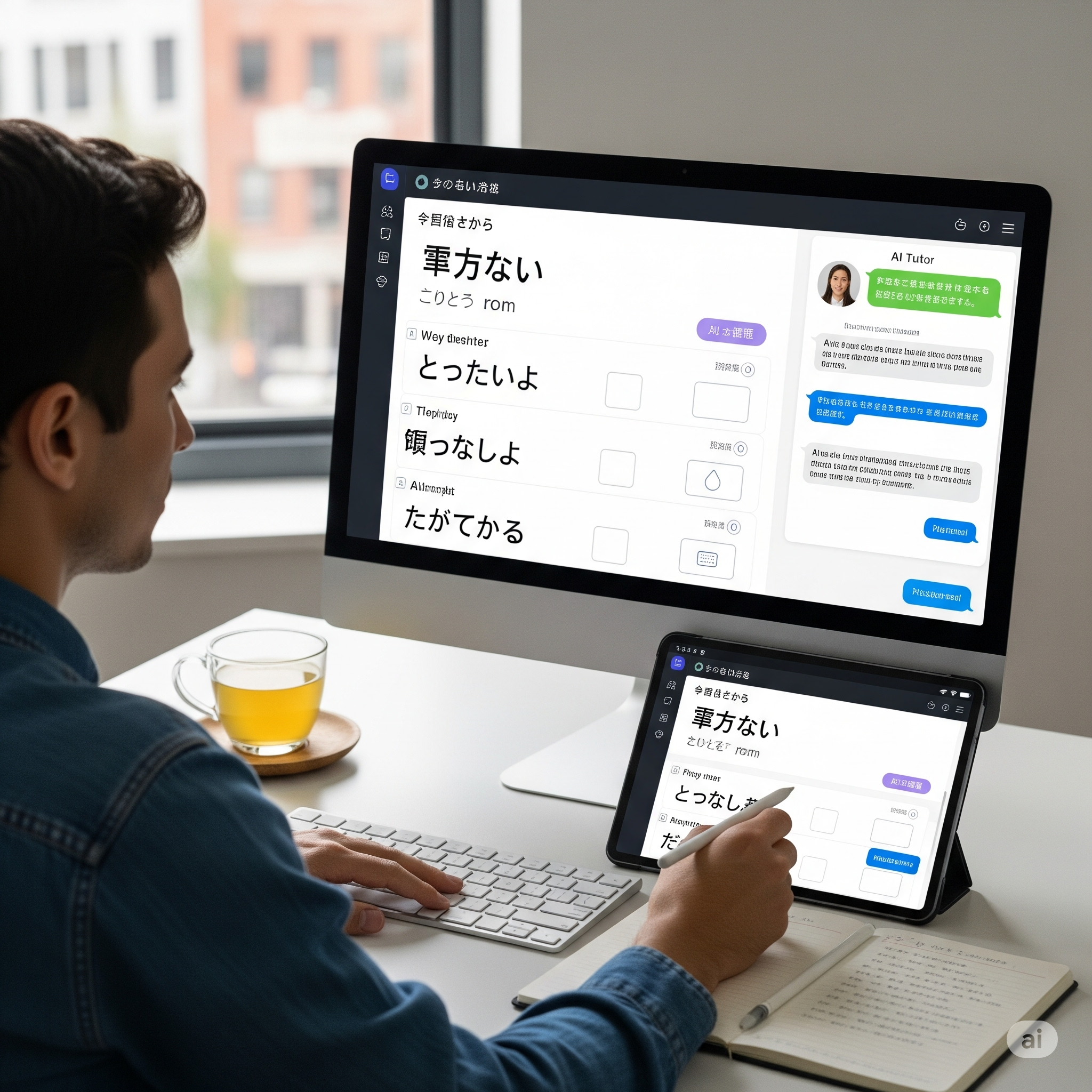
- Practical Application: Use a tool like Yomichan (a browser pop-up dictionary) if you’re reading digitally. It allows you to hover over a word for an instant definition, making the lookup process 10x faster.
- Young Adult (YA) Novels: Books aimed at teenagers often deal with relatable themes and use modern language without being overly literary or difficult.
- Recommendation: Look for authors like 住野よる (Yoru Sumino) – 君の膵臓をたべたい (I Want to Eat Your Pancreas).
- News Articles for Learners:
- Recommendations: NHK News Web Easy is a fantastic resource. It rewrites current news stories with simpler kanji (all with furigana) and simpler grammar. It’s real-world content made accessible.
- Practical Application: Try reading one article a day. First, read it for gist. Then, read it again, noting down 5-10 new words or phrases into your SRS (Spaced Repetition System) like Anki or Memrise.
For the Advanced (N2-N1 & Beyond): Mastering Nuance
Your goal now is to understand nuance, opinion, and sophisticated writing styles. You’re ready for the deep end.
- Regular News & Articles: Dive into mainstream Japanese news sources like 朝日新聞 (Asahi Shimbun) or opinion pieces on sites like NewsPicks. The vocabulary will be specialized, but it’s essential for fluency.
- Literary Fiction: This is the ultimate challenge. Authors like 村上春樹 (Haruki Murakami) or 川端康成 (Yasunari Kawabata) use beautiful, complex Japanese.
- Insight: Don’t just translate; analyze. Why did the author choose this specific word? What is the feeling or image it evokes? This is how you move from understanding words to understanding culture.
- Specialized Non-Fiction: Read about your hobbies in Japanese! Love cooking? Read Japanese food blogs. Into tech? Read Japanese tech news. This makes learning relevant and motivating.
The Samurai’s Reading Strategy: How to Actually Do It
Finding the material is only half the battle. Here’s a practical, step-by-step method to get the most out of your reading session.
- First Pass: Read for Gist. Read a page or a chapter without stopping. Underline or circle unknown words, but don’t look them up yet. Your goal is to answer: Who is doing what? What is the main idea? This trains your brain to use context clues, a critical fluency skill.
- Second Pass: Investigate. Now, go back. Look up the key words you circled—the ones that seem essential to understanding the sentence. Add these to your SRS deck. Pay attention to the grammar. Is there a new pattern you haven’t seen before?
- Third Pass: Read Aloud. This is non-negotiable for improving your rhythm and pronunciation. It connects your eyes, brain, and mouth, cementing the language in your memory. It will feel awkward at first, but push through!
- Review and Revisit. The magic happens with repetition. Re-read a story you tackled a month ago. You’ll be amazed at how much easier it is and how many of those “hard” words are now familiar friends. This provides a huge motivational boost.
Essential Tools for the Modern Reader
- Yomichan: As mentioned, this browser extension is a game-changer for reading on PCs and laptops.
- Kindle / Amazon Japan: Buying a Japanese Kindle and creating an Amazon.co.jp account is one of the best investments you can make. You can instantly look up words by tapping on them and access a huge library of content.
- Physical Dictionary (for a change of pace): Sometimes, the physical act of searching for a kanji in a dictionary like Kodansha’s Kanji Learner’s Dictionary can help you remember it better. It forces you to analyze the components.
A Word of Encouragement from Your Sensei
There will be days when it feels slow. There will be a paragraph that takes you 30 minutes to decipher. This is normal. Remember why you started learning Japanese. Was it to read your favorite manga in its original language? To understand the lyrics of a song? To read historical texts?
Let that passion be your fuel. Every page you turn, every sentence you understand, is a step forward on your path. You are not just learning a language; you are gaining a new lens through which to see the world.
Now, stop reading this blog post and go read something in Japanese! Start small, be consistent, and watch your skills blossom.
Share your current reading project in the comments below! I’d love to hear what you’re working on.
Continue your training with these related posts:
- The Best Japanese Learning Resources You’re Not Using (But Should Be)
- How to Use Anki Like a Pro: A Guide for Japanese Learners
- From Anime to Fluency: Can You Really Learn Japanese from Anime?
頑張ってください (Ganbatte kudasai)! Fight on!
– JLPT Samurai