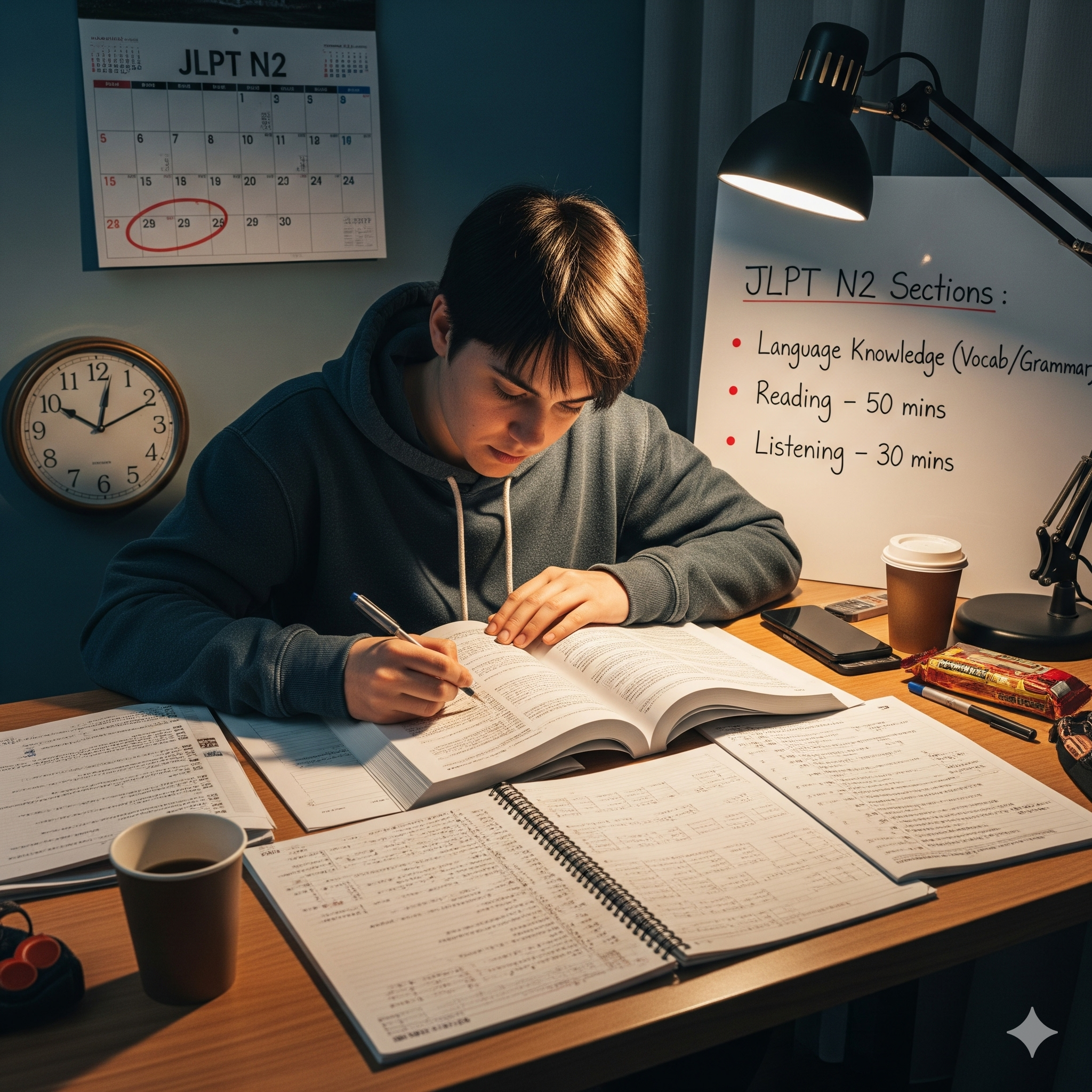
So, you’ve set your sights on the JLPT N2. That’s huge! It’s the gateway to advanced Japanese fluency, a major resume booster, and a personal milestone that speaks volumes about your dedication. But let’s be real: between mastering those complex kanji and getting the hang of nuanced grammar, one of the biggest anxieties students have is simple—will I have enough time?
The short answer is: it’s tight, but absolutely manageable if you know what to expect and how to prepare. As someone who has both taken and coached students through the JLPT N2, I can tell you that understanding the exam’s structure is just as crucial as knowing the material itself.
In this guide, we’re going to go beyond just listing the time limits. We’ll dive deep into the JLPT N2 duration for each section, unpack what really happens in the exam room, and I’ll share the insider strategies that can make the difference between a frantic rush and a confident, controlled performance.
First, let’s get the overview. The JLPT N2 is split into two separate sections with a break in between. You cannot work on the next section during the break, and you absolutely cannot go back to a previous section once time is called.
The total JLPT N2 test time is 2 hours and 55 minutes.
But wait, that’s not all spent testing. Here’s how it breaks down:
Section 1: Language Knowledge (Vocabulary & Grammar) and Reading
Time Allotted: 105 minutes
This is a marathon first section. You need to manage your time within this block wisely.
Break Time: Approximately 10-15 minutes
Use this! Go to the bathroom, stretch, clear your head. Don’t sit there stressing about the reading section.
Section 2: Listening
Time Allotted: 50 minutes
This section is played from a CD, and the timing is fixed. You have no control over the pace, which is a blessing and a curse.
Now, let’s dissect each part.
Section 1 Deep Dive: The 105-Minute Marathon
This first section is where battles are won and lost. It tests your foundational knowledge and your ability to apply it quickly under pressure. It’s divided into two parts, but you manage the time between them yourself.
Part A: Language Knowledge (Vocabulary & Grammar) – ~30 mins
This part is typically the first half of the test booklet. It includes:
Kanji Reading: Identifying the correct hiragana for a kanji word.
Orthography: Choosing the correct kanji for a hiragana word.
Word Formation: Figuring out which compound word fits the sentence.
Contextual Interpretation: Choosing the word that best fits the meaning of the sentence.
Paraphrases: Finding the word closest in meaning.
Usage: Selecting the sentence where the word is used correctly.
Grammar: The famous sentence rearrangement questions and choosing the correct particle/grammar point.
My Pro Tip: This section should be your “sprint.” The answers are generally quick to identify if you know the material. Aim to complete this entire Vocabulary/Grammar section in under 30 minutes. This is not the place to get stuck pondering a single kanji. If you’re unsure, mark it, guess, and move on. Every minute you save here is a precious gift to your future self struggling with a long reading passage.
This is it. The beast. The Reading Comprehension section is why the N2 has a reputation for being time-pressured. You’ll face several short, medium, and long passages, plus integrated comparison texts.
A rough time allocation guide is crucial:
Short Passages (3-4 questions):~4-5 minutes each. These are quick reads but often contain tricky logical twists.
Medium Passages (3-4 questions):~7-9 minutes each. Don’t get lulled into a false sense of security. Read quickly but carefully.
Long Passages (4-5 questions):~10-12 minutes each. This is where you need to employ skimming techniques. Read the questions first, then scan the text for answers.
Integrated Comparison Texts (2-3 questions):~8-10 minutes. The key here is to not read both texts fully first. Skim to understand the main topic and contrasting opinions of each author.
Information Retrieval (1-2 questions):~4-5 minutes. This is often the easiest section if you stay calm. You’re just looking for specific information in a flyer, notice, or brochure. Scan for keywords like dates, times, prices, and requirements.
The Golden Rule of N2 Reading:You do not have time to read every word slowly and carefully. You must become a strategic reader. Your goal is not to savor the literature; it’s to efficiently extract information to answer questions.
Section 2: The Listening Comprehension – 50 Minutes
After the break, you’ll face the Listening section. The JLPT N2 listening time is a fixed 50 minutes. The audio CD controls the pace, and you answer as you go. There are no repeats. This is a test of focus and immediate processing.
The question types are:
Task-Based Comprehension: Understanding the appropriate thing to do in a situation.
Point Comprehension: Grasping the key points of a conversation.
General Comprehension: Getting the gist of a longer talk.
Quick Response: Choosing the most natural reply. (These are very fast!)
Integrated Comprehension: Following a longer conversation and understanding the opinions and details.
My Pro Tip: Use the time given before each question to skim the answer choices. The printed options are huge clues! They tell you what the conversation will be about—is it about time, location, a problem? This pre-reading allows you to listen for specific information rather than listening to everything equally, dramatically increasing your accuracy.
Also, don’t change your answers after the fact. Your first instinct, especially in listening, is often the correct one. The pace is relentless, so trust your training.
Beyond the Clock: Unique Insights from an Exam Room Veteran
Knowing the JLPT N2 exam time limit is one thing; handling the reality is another. Here’s what you won’t find in the official guide:
The Physical and Mental Drain: 105 minutes of intense focus is exhausting. Practice full-length mock tests under timed conditions. This isn’t just practice for the material; it’s practice for your brain’s stamina. The official JLPT Worldwide site offers sample questions to get you started.
The Answer Sheet is a Time-Suck: You won’t be writing in the booklet. You’ll have a separate answer sheet for the first section. Practice bubbling in answers quickly. Some students answer a page at a time and then transfer their answers to save time, but this is risky if you lose your place. Find what works for you in practice tests.
There’s No Going Back in Listening: This is critical. The listening section moves forward only. You must answer each question as it comes, and then let it go. Dwelling on a previous question will only make you miss the next one.
The Clock is Your Friend, Not Your Enemy: Wear a watch (analog is best as digital watches with alarms are often prohibited). Keep an eye on it and stick to your personal time allocation plan. Seeing that you’re 10 minutes ahead of schedule is a massive confidence boost.
Your Game Plan: Practical Time Management Strategies
Take Full-Length Practice Tests: This is non-negotiable. Use official practice workbooks or reputable sources. Simulate the entire experience—break and all.
Develop a Personal Time Budget: Based on your practice tests, know your weaknesses. Do you spend too long on grammar? Allocate less time to it and more to reading. Create a strict time budget for each question type and stick to it during the exam.
Master the Art of Strategic Skipping: If you stare at a vocabulary question for more than 60 seconds and have no clue, guess, mark it in your booklet, and move on. If you have time at the very end, you can come back, but you likely won’t. A single point isn’t worth missing an entire reading passage.
Stay Hydrated and Energized: Eat a good meal before the exam. Bring water and a quiet snack (like a banana or a granola bar) for the break. Your brain needs fuel.
Final Words of Encouragement
The JLPT N2 duration is designed to be challenging. It’s meant to distinguish those who merely know the material from those who can use it effectively and efficiently. By understanding the structure, respecting the clock, and preparing strategically, you transform the exam from a terrifying sprint into a paced, manageable marathon.
You’ve put in the hard work studying the kanji, grammar, and vocabulary. Now, invest that same effort into mastering the exam format. Walk into that test room with a plan, a watch, and the confidence that you’ve prepared for every aspect of the challenge, including the clock.
Good luck (頑張って!), and I look forward to hearing about your success!
Introduction So, you’ve taken the Japanese Language Proficiency Test (JLPT) N2—congratulations! Whether this was your first attempt or a retake, the wait…