Introduction
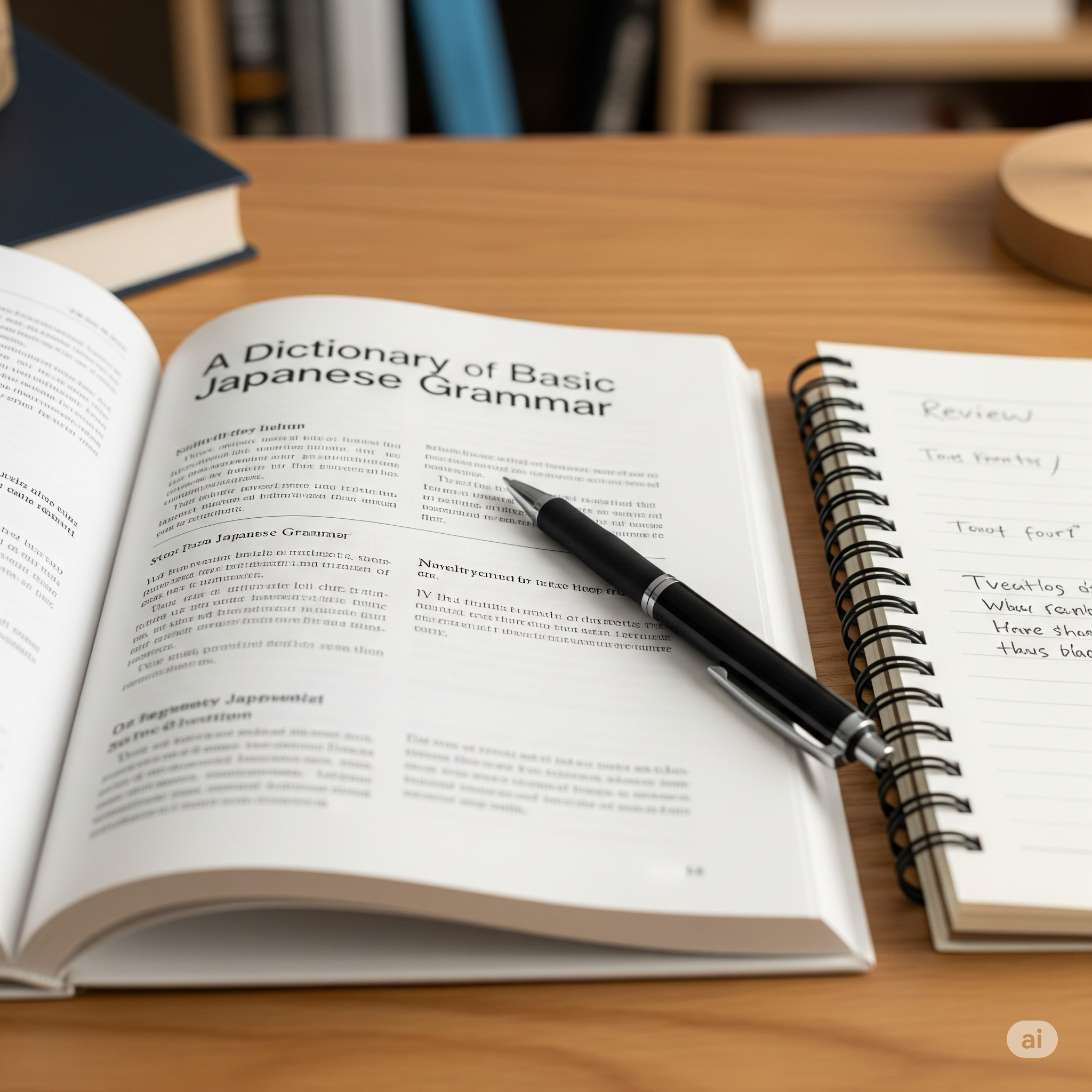
Learning Japanese grammar can be a daunting task, especially when textbooks don’t explain things clearly. If you’ve been searching for a reliable grammar reference, you’ve probably come across A Dictionary of Basic Japanese Grammar by Seiichi Makino and Michio Tsutsui.
But is it really worth the investment?
As someone who has used this book extensively in my Japanese studies, I’ll break down its pros, cons, and how to get the most out of it. Whether you’re a beginner or an intermediate learner, this review will help you decide if this book deserves a spot on your shelf.
(Looking for more Japanese learning resources? Check out our best books for learning Japanese guide!)
What Is A Dictionary of Basic Japanese Grammar?
Published by The Japan Times, this book is part of a three-part series:
- A Dictionary of Basic Japanese Grammar (Beginner)
- A Dictionary of Intermediate Japanese Grammar
- A Dictionary of Advanced Japanese Grammar
The Basic version covers essential grammar points, making it ideal for beginners and early intermediate learners. Unlike traditional textbooks, it’s structured like a dictionary, allowing you to quickly look up grammar points as you encounter them.
Key Features of the Book
1. Clear and Detailed Explanations
One of the biggest struggles in learning Japanese is understanding subtle grammar nuances. This book excels at breaking down complex concepts into digestible explanations.
For example, the difference between は (wa) and が (ga)—a common headache for learners—is explained with multiple examples and contextual usage.
2. Example Sentences with Translations
Each grammar point comes with real-life example sentences in Japanese, romaji, and English translations. This helps reinforce understanding and shows how grammar is used naturally.
3. Notes on Common Mistakes
The book highlights frequent errors learners make, helping you avoid pitfalls early on. For instance, it explains why saying “わたしは学生です” (I am a student) is correct, but “わたしが学生です” can sound unnatural in certain contexts.
4. Cross-Referencing Related Grammar
If a grammar point connects to another, the book provides references, making it easier to see relationships between concepts.
5. Useful Appendices
The back of the book includes:
- Verb conjugation charts
- Lists of counters, adverbs, and compound particles
- A comparison of similar expressions
(Want more grammar practice? Try these free Japanese grammar exercises.)
Pros of Using This Book
✅ Comprehensive Coverage – Covers all essential beginner grammar in one place.
✅ Easy to Navigate – Alphabetical organization makes finding grammar points quick.
✅ Practical Examples – Helps with both understanding and real-world usage.
✅ Minimal Fluff – Straight to the point without unnecessary filler.
Cons to Consider
❌ No Exercises – This is a reference book, not a workbook. You’ll need additional practice materials.
❌ Dense for Absolute Beginners – If you’re just starting, pairing this with a structured textbook (like Genki) may help.
❌ Romanization Included – While helpful at first, relying on romaji can slow down reading progress.
Who Is This Book Best For?
✔ Self-learners who need a reliable grammar reference.
✔ Classroom students looking for extra clarification.
✔ Intermediate learners reviewing fundamentals.
If you’re an absolute beginner, I’d recommend starting with a textbook like Genki or Minna no Nihongo and using this book as a supplement.
(Not sure which textbook to choose? Read our Genki vs. Minna no Nihongo comparison.)
How to Use This Book Effectively
1. As a Quick Reference
Stuck on a grammar point while reading or listening? Flip to the relevant entry for instant clarification.
2. For Systematic Study
Pick a few grammar points each week, study the explanations, and practice writing your own sentences.
3. Alongside Other Resources
Pair it with:
- Anki (for spaced repetition)
- Bunpro (for interactive grammar practice)
- Japanese podcasts (to hear grammar in context)
Alternatives to Consider
If this book isn’t for you, here are some alternatives:
📖 “Japanese Grammar Guide” (Tae Kim) – Free online resource, great for beginners.
📖 “Genki” Textbook Series – Structured lessons with exercises.
📖 “Nihongo Sou Matome” – Good for JLPT-focused study.
Final Verdict: Is It Worth It?
Yes, if:
- You want a detailed, reliable grammar reference.
- You prefer learning through examples rather than drills.
- You’re serious about mastering Japanese grammar.
No, if:
- You need interactive exercises.
- You’re looking for a step-by-step textbook.
- You’re on a tight budget (it’s around $30–$40).
For most learners, this book is an invaluable tool that will serve you well beyond the beginner stage.
Where to Buy
You can find A Dictionary of Basic Japanese Grammar on:
- Amazon
- The Japan Times Store
- Local bookstores (check availability)
Conclusion
If you’re serious about learning Japanese, A Dictionary of Basic Japanese Grammar is one of the best investments you can make. While it’s not a standalone course, its clear explanations, practical examples, and thorough coverage make it a must-have reference.
Have you used this book before? Share your thoughts in the comments!
(For more Japanese learning tips, check out our guide to mastering kanji.)
Mastering “でも (Demo)” in Japanese Grammar: Contrast, Offers & Practical Usage