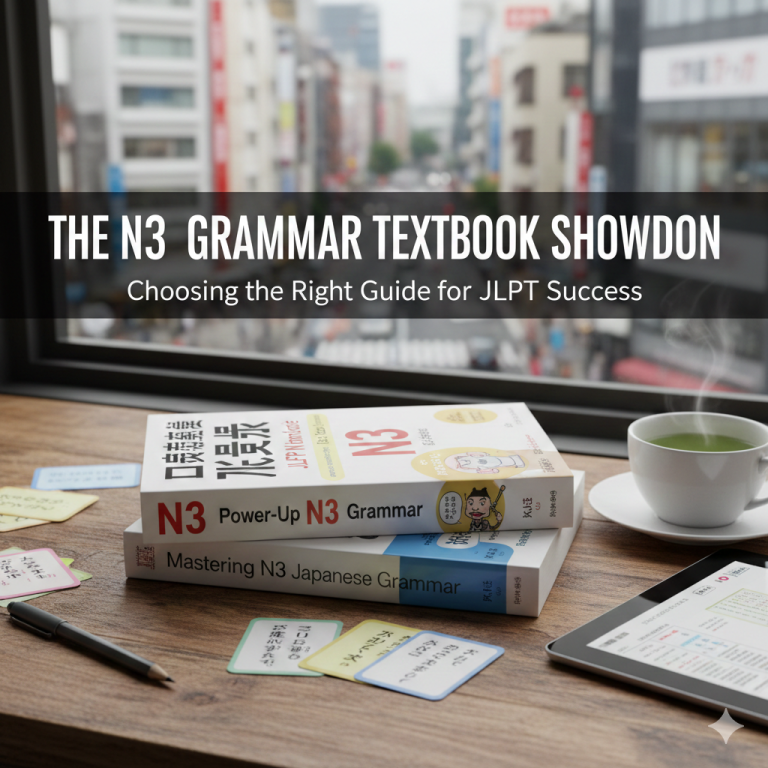
Introduction: Why Your Study Materials Matter
So, you’ve decided to take the JLPT N3 in 2025? That’s awesome! The N3 level is a sweet spot—it’s where you transition from basic to intermediate Japanese, opening doors to better job opportunities, smoother travel experiences, and deeper cultural understanding.

But here’s the thing: choosing the right study materials can make or break your success. With so many books out there, how do you know which ones are worth your time and money?
Don’t worry—I’ve got your back! As someone who’s helped hundreds of students pass the JLPT (and a former test-taker myself), I’ve handpicked the best JLPT N3 books for 2025. I’ll also share study strategies, common mistakes to avoid, and how to maximize your score.
Before we dive into the specific resources, make sure you’re clear on the exam itself. The strategy behind your book selection must align with the test’s demands. For a full breakdown of the exam’s sections, timing, and scoring, check out our definitive guide: [Your Ultimate JLPT N3 Full Test Guide: Structure, Scoring, and Success Strategies]
Let’s dive in!
Why Choosing the Right JLPT N3 Books Matters
The selection of your core materials is the foundation of your study plan. Good resources offer far more than just a list of words.
- Structured Learning: Good textbooks break down grammar, vocabulary, and kanji in a logical, level-appropriate way, preventing information overload.
- Practice Tests: The best books include mock exams that mimic the real JLPT N3 format.
- Time Efficiency: You don’t want to waste time on outdated or ineffective materials. Choosing high-quality books is one of the [Best JLPT N3 Books for Self-Study and Exam Preparation] secrets to efficient learning.
Now, let’s look at the top JLPT N3 books for 2025.
Core Resources: The Best Overall JLPT N3 Prep Books
These books are universally recommended and should form the backbone of your preparation.
1. Best Overall JLPT N3 Prep Book: “Shin Kanzen Master N3” Series
🔹 Why It’s Great:
- Covers grammar, reading, listening, and vocabulary in separate books, allowing you to focus on specific weak areas.
- Detailed explanations in English (a lifesaver for self-learners).
- Realistic practice questions that match the JLPT format, especially in the tricky Language Knowledge section.
🔹 Best For: Learners who want comprehensive, in-depth preparation and plan to spend 4–6 months on the N3 level.
🔹 Drawbacks:
- Can feel a bit dry—not the most exciting read.
- Requires discipline since it’s dense and structured like a reference work.
🔹 Pro Tip: Combine this with the “Sou Matome” series (more on that below) for a balanced approach.
2. Best for Structured Daily Study: “N3 Sou Matome” Series
🔹 Why It’s Great:
- Built around a 6-week study plan—perfect if you’re short on time or need rigid accountability.
- Daily lessons keep you consistent and cover small, manageable chunks of information.
- Visual-friendly layout with charts and illustrations aids quick learning and review.
🔹 Best For: Busy learners who need a clear, manageable study schedule and prefer a faster pace before their [JLPT N3 Exam Date 2025: Complete Guide for Test Takers]
🔹 Drawbacks:
- Some say it’s too easy—always supplement with harder practice tests.
- Less detailed explanations than Shin Kanzen Master.
🔹 Pro Tip: Use this as a warm-up before diving into more challenging books, or as a final review tool in the month before the exam.
👉 Get N3 Sou Matome on Amazon
Specialty Books: Targeting Specific JLPT Sections
While the core series cover everything, specialty books offer the depth needed for true mastery.
3. Best for Vocabulary & Kanji Context: “Try! JLPT N3 Grammar”
🔹 Why It’s Great:
- Story-based learning—grammar points are taught in context, which is essential for the N3.
- Free audio downloads for listening practice that is directly tied to the grammar points.
- Includes a full practice test.
🔹 Best For: Learners who hate memorizing and prefer natural acquisition through reading and listening to sentences.
🔹 Drawbacks:
- Not as many rote exercises as Shin Kanzen Master.
🔹 Pro Tip: Pair this with [Best JLPT N3 Anki Decks for Vocabulary, Kanji & Grammar (Free Download)] flashcards for better long-term retention.
4. Best for Listening Practice: “Nihongo So-Matome N3 Listening”
🔹 Why It’s Great:
- Gradual difficulty increase—starts easy, gets challenging, tuning your ear gradually.
- Natural-speed dialogues (unlike some older textbooks that sound robotic).
🔹 Best For: Anyone struggling with JLPT N3 listening comprehension.
🔹 Pro Tip: Supplement this book by leveraging resources available on your phone. See our guide: [Best App for JLPT N3 Prep: Top Recommendations for Learners]
5. Best for Grammar & Sentence Patterns: “A Dictionary of Basic Japanese Grammar”
🔹 Why It’s Great:
- Not strictly JLPT-specific, but invaluable for understanding nuances and the difference between similar grammar points (e.g., ~tai vs. ~tagaru).
- Example sentences show real-world usage and formal vs. informal context.
🔹 Best For: Learners who want deep grammar mastery beyond the JLPT, especially useful when transitioning to N2.
🔹 Pro Tip: Use this as a reference book, not a main study guide. Keep it next to your Shin Kanzen Master book for clarification.
👉 Get the Dictionary of Japanese Grammar on Amazon
Free & Foundational Resources: Maximize Your Value
Official Practice Tests: “JLPT Official Practice Workbook”
🔹 Why It’s Great:
- Published by the JLPT organizers—most accurate to the real test.
- Free downloadable PDF (but buying the book supports physical practice).
🔹 Best For: Everyone! Never skip official practice tests.
🔹 Pro Tip: Take these under timed conditions to simulate exam pressure.
👉 Download the Official JLPT N3 Practice Test
Can I Use My Old Books? (Genki & Minna no Nihongo)
Many N3 students start their journey with classic beginner textbooks. While fantastic for the basics, they are not enough for the N3’s unique demands.
- Genki and JLPT N3: While Genki teaches conversational Japanese masterfully, it doesn’t cover the full 600+ N3 kanji or the complex sentence structures required. For more detail, read: [Genki and JLPT N3: Is This Classic Textbook Enough to Pass the Exam?]
- Minna no Nihongo: This series covers some of the required N3 grammar, but you’ll need the advanced volumes or a dedicated N3 book to cover the full syllabus. See our usage guide here: [JLPT N3 Minna no Nihongo Book: How to Use It for N3 Preparation]
For a collection of affordable materials, explore: [Free JLPT N3 Books and PDF Resources for Self-Study]
Study Strategies to Maximize Your N3 Score
Now that you’ve got the [Best JLPT N3 Books for Self-Study and Exam Preparation], how do you use them effectively?
1. Take a Diagnostic Test First
Before diving in, take a full-length practice test to identify weak spots. If you score well on vocabulary but struggle with reading, you know where to allocate your study time.
2. Follow the 80/20 Rule
Focus 80% of your time on your weakest areas (e.g., listening or kanji). The JLPT N3 Full Test Guide (Pillar Post Link) reminds us that you must pass every section, not just the total score.
3. Use Spaced Repetition (Anki is Your Friend!)
Flashcards help retain vocabulary long-term and combat the forgetting curve. Anki is the gold standard for Spaced Repetition Software (SRS). Learn how to integrate this crucial tool: [How to Use Anki for JLPT N3: Study Smarter with Spaced Repetition]
4. Mimic Real Test Conditions
The N3 is a test of stamina and time management.
- Time yourself strictly.
- No distractions (just like the real exam).
5. Join a Study Group or Find a Partner
Studying with others keeps you accountable and provides opportunities to practice speaking and test out grammar concepts.
Common Mistakes to Avoid (The N3 Traps)
Don’t let these common pitfalls derail your study efforts, regardless of which books you choose:
- 🚫 Only using one book → Mix resources for balanced learning, especially across reading and listening.
- 🚫 Ignoring listening practice → The N3 listening section is tricky because the speed increases dramatically from N4. It demands daily, active practice.
- 🚫 Cramming last-minute → The JLPT tests long-term retention and contextual usage, not short-term memory.
- 🚫 Focusing only on grammar structures → N3 heavily tests vocabulary and kanji reading. Dedicate significant time to character recognition.
Final Thoughts: The Journey to N3 Proficiency
Passing the JLPT N3 in 2025 is totally doable—if you have the right books and strategy. Stick with Shin Kanzen Master for depth, Sou Matome for structure, and official practice tests for realism.
Remember, the goal is not just to pass the test, but to achieve the level of functional fluency the N3 represents. The books you choose are simply the tools for that journey. Choose wisely, study consistently, and you will see the results.
Good luck with your studies! 頑張ってください!