Keigo for Business Emails: Polite Japanese Made Simple
Writing emails in a foreign language is always a bit nerve-wracking. But writing a business email in Japanese? That can feel like navigating an intricate obstacle course. If you’ve ever found yourself staring at a blank screen, wondering whether you should use suru (する), nasaru (なさる), or itashimasu (いたします), you are far from alone.
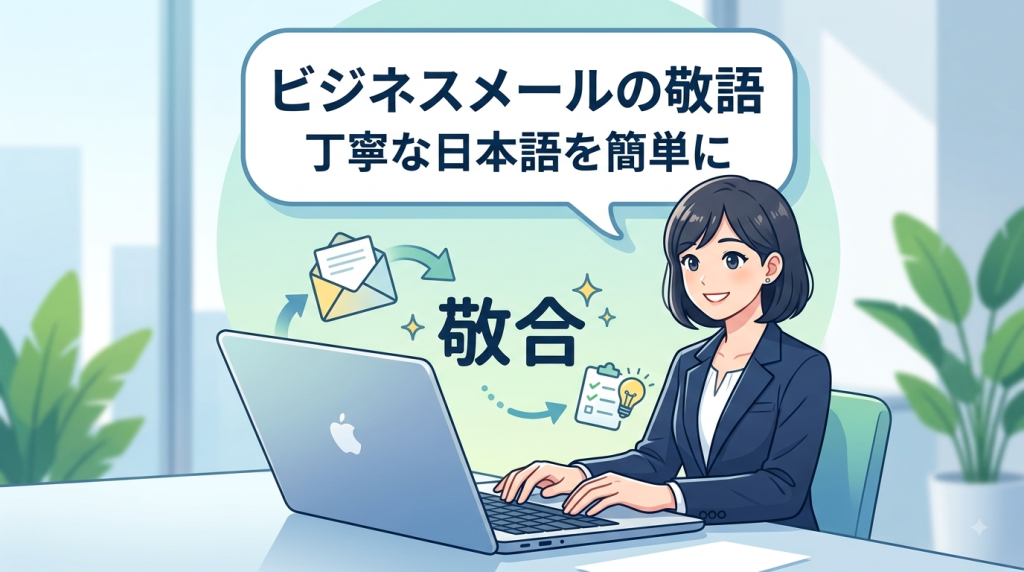
Mastering Keigo for business emails is one of the most critical milestones for any foreign professional working in Japan or communicating with Japanese clients. Keigo (敬語)—the Japanese system of honorific speech—is not just about grammar; it is the fundamental bridge of trust, respect, and social distance (uchi vs. soto) that keeps professional relationships running smoothly.
In this comprehensive guide, we will demystify Keigo for business emails. You will learn the core framework of honorific language, exact email formulas, essential business verbs, real-world copy-and-paste examples, and the subtle cultural nuances that turn rigid textbook Japanese into natural, effective workplace communication.
Why Keigo Matters in Japanese Business Email Communication
In Western business culture, brief and direct emails are often praised as efficient. In Japan, however, an email serves a dual purpose: it delivers information, but more importantly, it establishes and maintains harmony (wa 和).
When you write a business email in Japan, your recipient reads between the lines to gauge:
- Your respect for their position and company
- Your understanding of workplace etiquette
- Your reliability as a business partner
A mistake in grammar is usually forgiven, but dropping into casual Japanese (tameguchi) or confusing humble speech with honorific speech can create unintended awkwardness. By understanding how Keigo functions in written text, you show your colleagues and clients that you respect Japanese professional standards—a skill that dramatically accelerates your career growth.
If you are preparing for a career transition or applying for corporate positions in Japan, having a firm grip on written Keigo directly aligns with what employers look for when evaluating candidates through qualifications like the JLPT. For a full breakdown of how language benchmarks impact your hiring potential, explore our detailed guide on JLPT for Jobs in Japan: Salary, Career Paths & Opportunities Explained.
The 3 Pillars of Keigo: A Quick Refresh for Business Writing
Before diving into specific email templates, let’s quickly break down the three main categories of Keigo used in written business communication.
┌────────────────────────────────────────────────────────┐
│                   THE KEIGO TRIAD                      │
├───────────────────┬──────────────────┬─────────────────┤
│    TEINEIGO       │    SONKEIGO      │    KENJŌGO      │
│   (Polite Form)   │ (Honorific Form) │  (Humble Form)  │
├───────────────────┼──────────────────┼─────────────────┤
│ Elevates general  │ Elevates the     │ Lowers yourself │
│ tone with -masu   │ recipient or     │ or your in-group│
│ and -desu         │ client           │ (uchi)          │
└───────────────────┴──────────────────┴─────────────────┘
The Agency for Cultural Affairs established updated guidelines that subdivide Keigo into five official sub-categories (adding Teichōgo and Bikago), but for day-to-day business writing, mastering these three main branches gives you 95% of what you need:
1. Teineigo (丁寧語) – Polite Language
- Purpose: Standard polite tone used with peers, acquaintances, or equal business partners.
- Key Markers: Verb endings in -masu (~ます) and noun copulas in -desu (~です).
- Email Role: Forms the structural backbone of every sentence in your email.
2. Sonkeigo (尊敬語) – Honorific / Respectful Language
- Purpose: Elevates the actions, choices, state, or belongings of the recipient, client, or superior.
- Key Markers: Prefixes like o- (お) or go- (ご), special honorific verbs (e.g., oshori ni naru for taberu), and pattern structures like お + verb stem + になる.
- Golden Rule: NEVER use Sonkeigo for yourself or your own company’s employees.
3. Kenjōgo (謙譲語) – Humble Language
- Purpose: Lowers your own actions, your team’s actions, or your company’s state to express humility and indirectly elevate the recipient.
- Key Markers: Special humble verbs (e.g., mōshiageru for iu, itashimasu for suru), and patterns like お + verb stem + する / いたします.
- Golden Rule: ALWAYS use Kenjōgo when describing what you or your team will do for a client or boss.
Understanding Uchi (In-Group) vs. Soto (Out-Group) in Email
The biggest stumbling block for non-native speakers using Keigo for business emails is the concept of Uchi (内 – inside) and Soto (外 – outside).
In a Japanese organization:
- Uchi: You, your department, your colleagues, and your company.
- Soto: Clients, vendor partners, external stakeholders, and prospective customers.
When you write an email to an external client (Soto):
- You treat your own CEO as part of your Uchi group.
- Therefore, you lower your CEO’s actions using humble speech (Kenjōgo) when speaking to the client.
- You never attach honorific titles like -san (さん) or -shachō (社長) to your internal team members when emailing an outside client.
Incorrect: 弊社の田中社長が確認されました。(Heishano Tanaka-shachō ga kakunin sareshimashita. – Using honorific for your own boss to a client)
Correct: 弊社の田中に確認いたしました。(Heisha no Tanaka ni kakunin itashimashita. – Lowering your boss to show respect to the client)
Understanding this boundary is foundational to Japanese organizational dynamics. To learn more about how this applies in face-to-face interactions, read our guide on Japanese Business Etiquette: Culture Rules You Must Know.
Key Verb Conversions for Business Emails
Bookmark this table. These key verb transformations represent the core toolkit for drafting emails to clients and managers.
| Plain Verb | Meaning | Sonkeigo (Recipient’s Action) | Kenjōgo (Your Action) |
| Suru (する) | To do | なさる / おこなっていただく | いたします |
| Iku / Kuru (行く/来る) | To go / To come | いらっしゃる / お越しになる | 参る (mairu) / 伺う (ukagau) |
| Iu (言う) | To say | おっしゃる | 申す (mōsu) / 申し上げます |
| Miru (見る) | To see / look | ご覧になる | 拝見する (haikensuru) |
| Kiku (聞く) | To hear / ask | お聞きになる | 伺う (ukagau) / 拝聴する |
| Shiru (知る) | To know | ご存知だ (gozonji da) | 存じております (zonjite orimasu) |
| Morau (もらう) | To receive | ― | いただく / 頂戴する (chōdai suru) |
| Ageru (あげる) | To give | お渡しになる | 差し上げる (sashiageru) |
Anatomical Blueprint of a Professional Japanese Business Email
A standard Japanese business email follows a precise 6-part structure. Skipping any of these steps can make your email feel abrupt or unpolished.
1. Subject Line (件名 - Kenmei)
2. Addressee Name & Title (宛名 - Atena)
3. Opening Greeting (挨拶 - Aisatsu)
4. Main Body Content (本文 - Honbun)
5. Closing Remarks (結びの言葉 - Musubi no Kotoba)
6. Email Signature (署名 - Shomei)
Step 1: Crafting a Clear Subject Line (件名)
Japanese business professionals handle massive email volumes daily. Your subject line must be specific, brief, and clearly state whether action or simply awareness is needed.
- Bad Subject Line: お疲れ様です (Too vague)
- Good Subject Line: 【ご報告】新プロジェクト進捗状況について(株式会社〇〇・山田)(Report: New Project Progress Status – ABC Co., Ltd. / Yamada)
Common Subject Line Tags:
【お礼】(Orei – Thank you)【ご相談】(Gosōdan – Consultation / Advice needed)【ご案内】(Goannai – Announcement / Invitation)【重要】(Jūyō – Important)【要返信】(Yōhenshin – Response Required)
Step 2: Addressee Name (宛名)
Always address the person starting with their company name, department, title, and full name followed by 様 (Sama).
Format:
[Company Name] 株式会社
[Department Name] 部
[Title] [Last Name] 様
Example:
株式会社ABC
営業部 部長
鈴木 一郎 様
If addressing multiple people at once:
各位(Kakui – To all concerned)営業部皆様(Eigyōbu Minasama – To everyone in the Sales Department)
Step 3: Standard Opening Greetings (挨拶)
In Western emails, you might jump straight into “Hi John, hope you’re having a great week.” In Japanese, you must use standard polite opening set-phrases.
For External Clients (Soto):
いつもお世話になっております。
(Itsumo osewa ni natte orimasu.)
“Thank you for your continued support and partnership.”
For Internal Colleagues/Bosses (Uchi):
お疲れ様です。
(Otsukaresama desu.)
“Thank you for your hard work.”
Step 4: Stating the Purpose & Main Body (本文)
Transition into the purpose of your email using a smoothing phrase (Kushikotoba クッション言葉).
Example Transition:
本日は、~の件でご連絡いたしました。
(Honjitsu wa, … no ken de gorenraku itashimashita.)
“I am writing to contact you today regarding…”
For a deeper dive into structural templates across different business scenarios, check out our companion breakdown on Japanese Business Email Format (With Real Examples).
Step 5: Essential Closing Formulas (結びの言葉)
Never end an email with just “Thanks” or “Best.” Use the classic, timeless business closing:
引き続き何卒よろしくお願い申し上げます。
(Hikitsudzuki nanitozo yoroshiku mōshiage-masu.)
“Thank you very much for your continued cooperation and support.”
Real-World Email Examples: 3 Business Scenarios
Here are realistic, natural business email templates for the three most common situations you will face at work.
Scenario 1: Requesting a Meeting with a New Client
Plaintext
件名:【ご相談】新規プロジェクトのお打ち合わせのお願い(株式会社XYZ・山田)

株式会社ABC
マーケティング部 部長
佐藤 健太 様

いつも大変お世話になっております。
株式会社XYZの山田でございます。

先日は展示会にて貴重なお時間をいただき、誠にありがとうございました。

本日は、先日お話しいたしました「Webマーケティング支援」につきまして、
詳細のご提案とお打ち合わせのお願いでご連絡いたしました。

ご多忙のところ大変恐縮ではございますが、
下記日程の中で、1時間ほどお時間をいただくことは可能でしょうか。

【候補日時】
1. 10月15日(火) 14:00〜16:00
2. 10月17日(木) 10:00〜12:00
3. 10月18日(金) 13:00〜15:00

上記日程でご都合が悪い場合は、お手数ですが候補日時をいくつかご提示いただけますと幸いです。
オンライン(Zoom等)での実施も可能でございます。

お忙しいところ恐れ入りますが、ご検討のほど何卒よろしくお願い申し上げます。

--------------------------------------------------
株式会社XYZ 営業部
山田 太郎 (Yamada Taro)
TEL: 03-1234-5678 / EMAIL: t-yamada@xyz-corp.jp
--------------------------------------------------
Scenario 2: Politely Following Up on a Pending Decision
When following up, maintaining a gentle, non-accusatory tone is vital. Use cushion words like 恐れ入りますが (Osore-irimasu ga) to soften the reminder.
Plaintext
件名:【確認のお願い】お見積書のご確認状況について(株式会社XYZ・山田)

株式会社DEF
購買部 高橋 様

いつも大変お世話になっております。
株式会社XYZの山田でございます。

先週10月5日にお送りいたしました「システム改修お見積書」につきまして、
その後のご検討状況はいかがでしょうか。

ご多忙中、催促するようで誠に恐縮ではございますが、
社内確認の進捗状況につきまして、一度ご連絡いただけますと幸いです。

もしご不明な点やご質問などがございましたら、
お気軽にお問い合わせくださいませ。

お手数をおかけいたしますが、何卒よろしくお願い申し上げます。
Scenario 3: Apologizing for a Delay or Mistake
Apologies in Japanese business culture require high-level humble speech (Kenjōgo) and absolute accountability. Avoid making excuses (iiwake).
Plaintext
件名:【お詫び】提出資料の不備および再送のご連絡(株式会社XYZ・山田)

株式会社GHI
事業開発部 中村 様

いつも大変お世話になっております。
株式会社XYZの山田でございます。

本日送付いたしました「新商品企画書」につきまして、
記載内容に一部誤りがございました。
重大な不備がありましたことを、深くお詫び申し上げます。

修正いたしました正しい資料を添付ファイルにて再送させていただきます。
ご査収のほどお願い申し上げます。

今後は確認作業を徹底し、再発防止に努めてまいります。
中村様および貴社関係者の皆様に多大なご迷惑をおかけしましたことを、
重ねてお詫び申し上げます。

誠に申し訳ございませんでした。
When handling high-stakes communications, overall corporate decorum plays a massive role alongside written language. To ensure your real-life or video interactions match your written tone, consult our guide on Business Meeting Etiquette in Japan: Do’s & Don’ts.
Top 5 Keigo Email Mistakes Foreign Professionals Make (And How to Fix Them)
Even advanced Japanese language learners often stumble into a few common Keigo traps. Here is how to catch and correct them.
┌───────────────────────────────────────────────────────────────┐
│                    COMMON KEIGO PITFALLS                      │
├───────────────────────────────┬───────────────────────────────┤
│    INCORRECT EXPRESSION       │       CORRECT FORMULA         │
├───────────────────────────────┼───────────────────────────────┤
│ 二重敬語 (Double Keigo)       │ Single concise Keigo form     │
│ "おっしゃられました"          │ "おっしゃいました"            │
├───────────────────────────────┼───────────────────────────────┤
│ Using "ご苦労様です"          │ Use "お疲れ様です"            │
│ to a supervisor               │ for superiors and colleagues  │
├───────────────────────────────┼───────────────────────────────┤
│ Using "了解しました"          │ Use "承知いたしました"         │
│ to clients                    │ or "かしこまりました"          │
└───────────────────────────────┴───────────────────────────────┘
1. Using “Ryōkai shimashita” (了解しました) with Clients or Superiors
While very common in casual settings, Ryōkai shimashita carries an implicit tone of granting approval from a position of authority.
- ❌ Don’t write: 了解しました。(Ryōkai shimashita)
- ✅ Do write: 承知いたしました (Shōchi itashimashita) OR かしこまりました (Kashikomarimashita).
2. Confusing “Gokurōsama desu” (ご苦労様です) with “Otsukaresama desu” (お疲れ様です)
Gokurōsama desu is spoken by a superior to a subordinate for completing a task. Using it with your boss or a client is an etiquette misstep.
- ❌ Don’t write: ご苦労様です。(Gokurōsama desu)
- ✅ Do write: お疲れ様です (Otsukaresama desu).
3. Overusing Double Honorifics (二重敬語 – Nijū Keigo)
In an effort to sound polite, learners often stack two honorific structures onto one verb.
- ❌ Incorrect: 社長がおっしゃられました。(Shachō ga osshararemashita – Combining ossharu + -rareru)
- ✅ Correct: 社長がおっしゃいました。(Shachō ga osshaimashita)
4. Forgetting Cushion Words (クッション言葉)
Writing “Please check the attached file” as 添付ファイルを確認してください (Tenpu fairu wo kakunin shite kudasai) can sound like an order. Always cushion direct commands.
- ❌ Abrupt: 添付ファイルを確認してください。
- ✅ Polite: お手数ですが、添付ファイルをご確認いただけますと幸いです。(Osore-irimasu ga, tenpu fairu wo go-kakunin itadakemasu to saiwai desu.)
5. Misusing Personal Pronouns
In business emails, avoid generic pronouns like watashi or anata.
- For “I/We”: Use 私 (Watakushi) or 弊社 (Heisha – Our company).
- For “You / Your company”: Use 貴社 (Kisha – Written) or 御社 (Onsha – Spoken).
Essential Cushion Words (クッション言葉) Reference Cheat-Sheet
Cushion words sit before requests or bad news to soften the impact and convey thoughtfulness (omotenashi).
- When making a request:
お手数をおかけいたしますが、(Osore-irimasu ga,) — “I apologize for taking up your time, but…”ご多忙中恐れ入りますが、(Gobatōchū osore-irimasu ga,) — “I know you are very busy, but…”
- When declining or stating an inability to do something:
あいにくではございますが、(Ainiku de wa gozaimasu ga,) — “Unfortunately…”大変心苦しいのですが、(Taihen kokorogurusui no desu ga,) — “It pains me to say this, but…”
- When asking for clarification or confirmation:
念のため確認でございますが、(Nen no tame kakunin de gozaimasu ga,) — “Just to confirm…”
Integrating these natural expressions prevents your Japanese from feeling transactional or stiff. When meeting clients in person to exchange contacts after an initial email exchange, ensure your face-to-face etiquette matches this written level of respect—read our detailed guide on Japanese Business Card Etiquette: Meishi Rules Explained.
Practical Tips to Humanize and Elevate Your Business Emails
Writing clear Keigo for business emails is about striking a balance between protocol and natural warmth. Here are professional techniques to ensure your emails read like they were written by an experienced professional:
- Vary Sentence Endings: Avoid repeating
〜と思います(to omoimasu) or〜いたします(itashimasu) at the end of three consecutive sentences. Mix in nominal endings or passive conditional structures like〜と考えております(to kangaete orimasu) or〜いただけますと幸いです(itadakemasu to saiwai desu). - Acknowledge Seasonality or Current Events: In longer formal communications, adding a brief line acknowledging the season or busy end-of-quarter periods shows empathy and cultural awareness.
- Read It Aloud: If a Keigo construction feels like a tongue-twister, it might be overly complex or contain double-Keigo errors. Keep it clean, accurate, and structured.
For standardized testing benchmarks, language certification standards, and official study syllabus guides, consult the Official JLPT Website or explore broader educational resources provided by the Japan Foundation Language Resources.
Frequently Asked Questions (FAQ)
What is the single best phrase to memorize for business emails?
If you memorize only one phrase, make it いつもお世話になっております (Itsumo osewa ni natte orimasu). It opens almost every external business email in Japan and instantly establishes a professional tone.
Is it acceptable to use automated tools or AI to generate Keigo?
AI tools can draft basic text, but they frequently make errors with Uchi/Soto boundaries (such as elevating your own boss when writing to a client) or generating overly rigid, archaic Keigo. Always manually check your verb forms against the context of your relationship with the recipient.
How long should a typical Japanese business email be?
Keep it concise and clear. Include the standard greetings, state your purpose within the first two sentences, use bullet points for dates or lists, and wrap up with a polite closing phrase. Avoid unnecessary narrative context unless relevant to the business topic.
Final Thoughts: Building Confidence with Keigo
Learning Keigo for business emails is a journey of practice and refinement. Don’t let the fear of making a minor honorific mistake hold you back from communicating. Japanese clients and colleagues greatly respect foreign professionals who make a genuine effort to apply business etiquette correctly.
By keeping this guide handy, utilizing standard templates, and mastering core verb conversions, you will build the confidence needed to handle any corporate email exchange with professional poise.