If you are planning a move to Japan, you have likely run into a wall of acronyms and conflicting advice on online forums. At the center of most debates is the Japanese-Language Proficiency Test (JLPT).
Some expats will swear that you cannot land a decent job in Tokyo without a pristine JLPT N1 certificate in hand. Others will tell you they have lived, worked, and prospered in Japan for over a decade without ever taking a single formal language test.
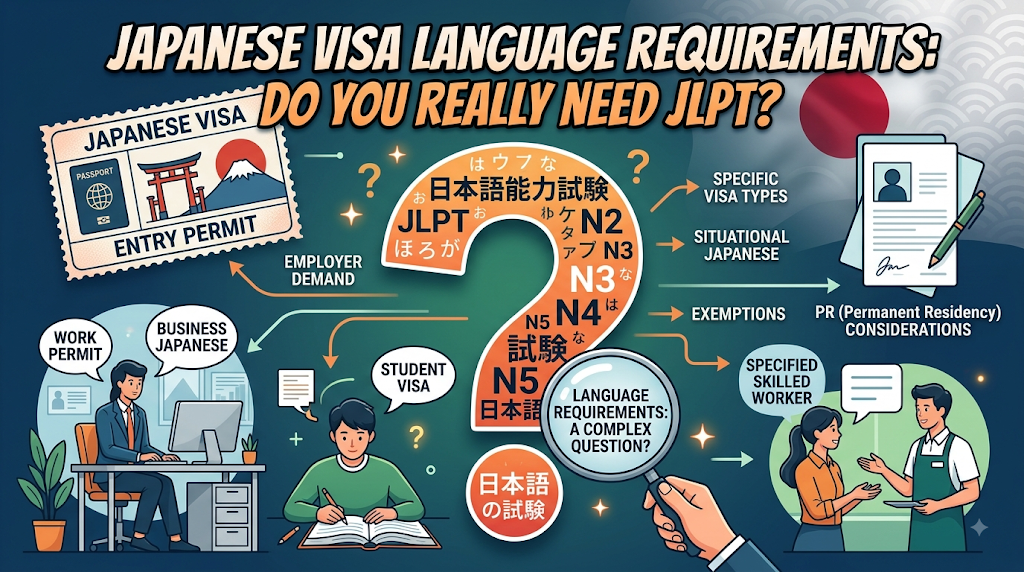
So, who is right? Do you really need the JLPT to get a Japanese visa?
As a Japanese language specialist and long-time observer of Japan’s immigration frameworks, I can give you the honest, nuanced answer: It depends entirely on the visa track you choose.
For several popular immigration pathways, Japanese certification is an explicit legal mandate. For others, it is purely optional on paper—though essential in practice for securing the actual job offer behind the visa.
Let’s break down the legal realities, practical workplace expectations, alternative language exams, and strategic advantages of language testing for your move to Japan.
The Legal Reality: When Language Proficiency Is (and Isn’t) Mandatory
Japan’s Ministry of Justice (MOJ) and the Immigration Services Agency (ISA) regulate visa issuance based on specific status categories. Japanese language ability is handled very differently across these categories.
┌────────────────────────────────────────────────────────────────────────┐
│                   JAPANESE VISA LANGUAGE REQUIREMENTS                  │
├───────────────────────────────┬────────────────────────────────────────┤
│ MANDATORY CERTIFICATION       │ OPTIONAL (LEGAL REQS)                  │
│ • Specified Skilled Worker (1)│ • Engineer / Specialist in Humanities  │
│ • Business Manager Visa       │ • Intra-Company Transferee             │
│ • Student Visa (Select Cases) │ • Highly Skilled Professional (HSP)*   │
│ • EPA Medical Candidates      │ • Dependent & Spouse Visas             │
└───────────────────────────────┴────────────────────────────────────────┘
  *Note: Highly Skilled Professional visas don't strictly require JLPT, but N1/N2
   grants major bonus points toward approval.
1. Visas with Strict, Mandatory Language Requirements
For these categories, failing to provide official proof of language proficiency results in an automatic visa rejection:
- Specified Skilled Worker (SSW Type 1 / 特定技能1号): Applicants must prove foundational Japanese language proficiency. You must hold at least a JLPT N4 or pass the Japan Foundation Test for Basic Japanese (JFT-Basic) at the A2 level.
- Business Manager Visa (経営・管理): Following recent policy updates by Japanese immigration, business founders and managers must demonstrate sufficient language ability (typically benchmarked around CEFR B2 / JLPT N2 level) or employ full-time staff who possess this level of fluency to ensure compliant business operations in Japan.
- Medical Practitioners & Nurses (EPA Framework): Healthcare professionals entering via Economic Partnership Agreements or taking Japanese national medical licensing boards must hold JLPT N1.
- Student Visas (for certain nationalities/institutions): While language schools teach you Japanese, immigration authorities often require proof of at least 150 hours of formal Japanese study or a JLPT N5 certificate during the Certificate of Eligibility (COE) screening to ensure genuine academic intent.
2. Visas Where Language Certificates Are Not Legally Required
For Japan’s most common professional visa routes, the government does not legally require a language certificate:
- Engineer / Specialist in Humanities / International Services: This is the flagship visa for tech workers, humanities professionals, marketers, and foreign language teachers. The legal prerequisites focus on your university degree or relevant professional experience, not your JLPT score.
- Intra-Company Transferee: If your employer transfers you from an overseas office to a branch in Japan, no government language test is enforced.
- Highly Skilled Professional (HSP): The HSP visa operates on a points-based evaluation. While language certification is not a strict prerequisite, holding an N1 or N2 certificate awards lucrative points that significantly speed up your path to permanent residence.
To see how these points stack up for your profile, explore our complete breakdown on How JLPT Points Work for Japanese Immigration.
De Jure vs. De Facto: Why You Might Need JLPT Even When the Law Says You Don’t
There is a massive difference between what the Immigration Bureau demands and what the Japanese job market requires.
Even if your visa category doesn’t legally mandate an N2 or N1 certificate, 80% to 90% of Japanese companies will require it before extending a job offer. Without a job offer or a corporate sponsor, you cannot secure a Certificate of Eligibility (COE) or a work visa in the first place.
Here is how language expectations break down across industries:
┌────────────────────────────────────────────────────────────────────────┐
│               JAPANESE WORKPLACE LANGUAGE EXPECTATIONS                 │
├───────────────────────┬──────────────────────┬─────────────────────────┤
│ Industry / Role       │ Formal Legal Req?    │ Real-World Job Market   │
├───────────────────────┼──────────────────────┼─────────────────────────┤
│ Software Engineering  │ No                   │ Conversational / None   │
│ ALT / English Teacher │ No                   │ Basic / None            │
│ Hotel / Hospitality   │ Depends on Visa      │ JLPT N3 - N2            │
│ Corporate Marketing   │ No                   │ JLPT N2 - N1            │
│ Finance / Consulting  │ No                   │ JLPT N1                 │
│ SSW Blue Collar       │ Yes (N4 / JFT)       │ JLPT N4 / JFT A2        │
└───────────────────────┴──────────────────────┴─────────────────────────┘
If you are aiming to work in domestic corporate environments, understanding job visa specifics is vital. Read our clear guide on [JLPT Required for Japanese Work Visa (Explained Clearly)#] to map out your exact career path.
Alternative Language Tests Recognized by Japanese Immigration
If you need official language proof for your visa application or university admission, the JLPT is the gold standard, but it is not your only option.
The JLPT is offered only twice a year globally (July and December). Missing a test registration deadline can delay your immigration plans by six months to a year. Fortunately, immigration authorities accept alternative tests for specific visa statuses:
- JFT-Basic (Japan Foundation Test for Basic Japanese): Designed specifically for the Specified Skilled Worker (SSW Type 1) visa. It uses Computer-Based Testing (CBT), offers frequent testing dates, and yields instant results.
- BJT (Business Japanese Proficiency Test): Highly respected by corporate employers and recognized by immigration. It measures practical communication skills in business settings using a score-based system (0–800) rather than a pass/fail model.
- NAT-TEST & EJU: Commonly used by international students applying for higher education institutions or language schools in Japan.
If you are torn between test formats for an entry-level work visa, check out our comparative breakdown: [JLPT vs JFT: Which Test Is Better for Visa Applications?#].
The Strategic Advantage: How Language Certificates Fast-Track Permanent Residence
Beyond landing your first visa, holding a high-level JLPT certificate plays a massive role in your long-term security in Japan—specifically when applying for Permanent Residence (PR).
                     FAST-TRACK PATHWAY TO PERMANENT RESIDENCE

 Standard PR Requirement ───────────────────────────────> 10 Years Residence

 HSP System (70-79 Points) ───────> 3 Years Residence

 HSP System (80+ Points) ───> 1 Year Residence
   └─ Includes +15 Bonus Points for JLPT N1
   └─ Includes +10 Bonus Points for JLPT N2
Under standard rules, living in Japan continuously for 10 years is usually required before applying for PR. However, the government’s Points-Based Preferential Immigration Treatment System allows skilled foreign professionals to fast-track this timeline to 3 years (with 70 points) or just 1 year (with 80 points).
Language credentials offer a substantial shortcut:
- JLPT N1: Grants 15 points.
- JLPT N2: Grants 10 points.
- Foreign University Degree in Japanese Studies: Grants 10 points.
A developer with 5 years of experience, a university degree, and a JLPT N1 certificate can hit the 80-point threshold effortlessly—cutting a decade-long wait down to a single year.
For the complete legal roadmap to settling down permanently, dive into our master guide: [JLPT for Permanent Residence in Japan: Full Guide#].
Practical Application: How to Target the Right Level for Your Goals
As an expert who has coached thousands of students through language exams and career transitions, my advice is to align your study plan directly with your visa objective rather than burning out trying to reach N1 right away.
┌────────────────────────────────────────────────────────────────────────┐
│                        JLPT LEVEL ROADMAP & USE CASES                  │
├──────┬───────────────────────────────┬─────────────────────────────────┤
│ Level│ Focus Area                    │ Target Visa / Outcome           │
├──────┼───────────────────────────────┼─────────────────────────────────┤
│ N5   │ Basic survival phrases        │ Student Visa verification       │
│ N4   │ Basic everyday conversations  │ SSW Type 1 Visa requirement     │
│ N3   │ Intermediate bridging level   │ Practical workplace minimum     │
│ N2   │ Business fluencies & nuances  │ Work Visas & Corporate Jobs     │
│ N1   │ Advanced professional native  │ Fast-Track PR & Medical Licensing│
└──────┴───────────────────────────────┴─────────────────────────────────┘
- If you are applying for Specified Skilled Worker (SSW): Target JLPT N4 or JFT-Basic A2. Focus heavily on everyday operational vocabulary, simple grammar structures, and workplace safety terms.
- If you are a Software Engineer or IT Specialist: Focus on building a strong portfolio first. Aim for JLPT N3 for everyday social comfort, and N2 if you want to unlock higher-paying roles at traditional Japanese tech firms.
- If you are in Marketing, Management, or Finance: Prioritize JLPT N2 or N1. In these roles, reading business correspondence, navigating nuanced discussions, and understanding company culture are essential.
Summary Checklist: Do You Need the JLPT?
To determine your next step, ask yourself these three simple questions:
- Is your target visa in a regulated category (SSW, Business Manager, EPA)?
- Yes: JLPT/JFT is mandatory. Start preparing for N4 or N2 immediately.
- Are you applying for a general work visa without an English-only job lined up?
- Yes: JLPT N2 is highly recommended. While immigration won’t demand it, recruiters and HR managers will.
- Are you aiming to get Permanent Residence in record time?
- Yes: JLPT N1 or N2 is your best friend. The bonus points will save you years of waiting.
For a complete overview of Japan’s evolving immigration ecosystem, explore our main pillar resource: [JLPT for Immigration to Japan: Visa, PR & Work Permit Guide#].